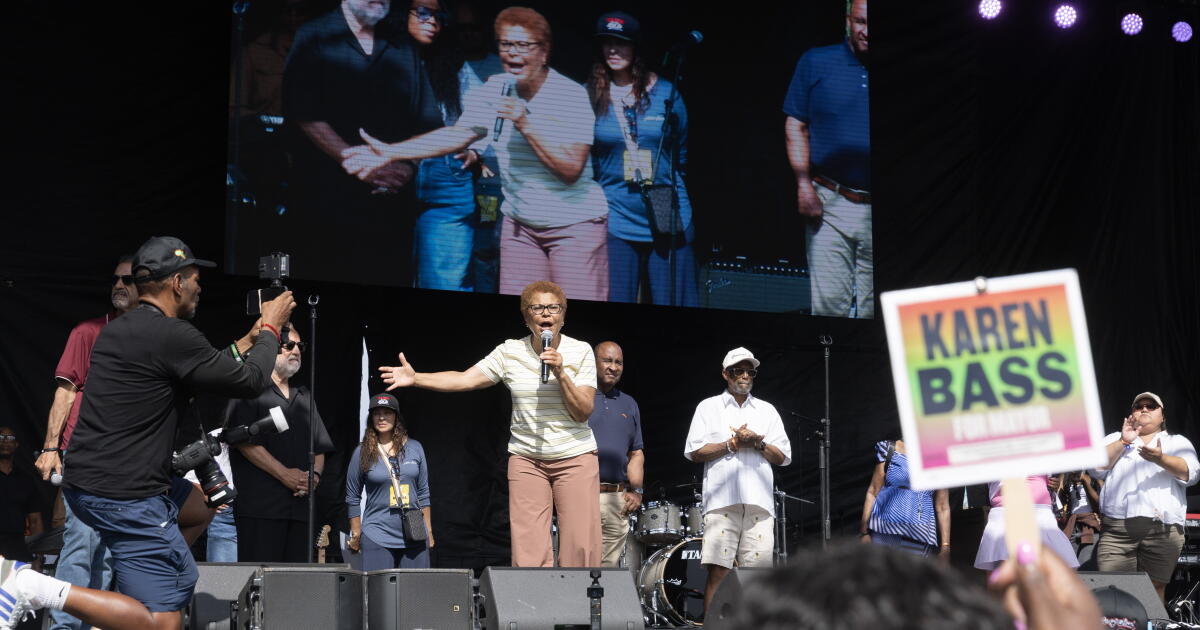
Standing on a stage stretched across Crenshaw Boulevard amid 90-degree mid-October heat, Mayor Karen Bass delivered a familiar campaign pitch to a sprawling street festival crowd in the cultural heart of Black Los Angeles. As the first Black woman to lead the city, she recounted her roots in South L.A. and pointed to her administration’s crusade against homelessness, reminding voters that while Black Angelenos make up roughly 9% of the city’s population, they account for over 30% of the individuals living in tents.
Yet behind that campaign energy lies a stark political vulnerability. A Berkeley IGS/L.A. Times poll published by the Los Angeles Times shows Bass has closed an 11-point deficit to enter a dead heat with challenger Councilmember Nithya Raman, but stubbornly high disapproval numbers have left Black civic leaders increasingly uneasy. This anxiety comes at a pivotal moment when political representation for Black communities at City Hall is actively shrinking.
A Shrinking Footprint at City Hall
The numerical decline of Black leadership on the L.A. City Council is already locked in for the near future. City Councilmember Curren Price, who is Black, steps down at the end of the year, and his eventual successor will be Latino regardless of the mayoral election’s outcome. Archivists in the City Clerk’s office confirm this shift will leave the 15-member council with just two Black members for the first time since 1963, excluding temporary vacancies.
L.A.'s Black leaders uneasy about Bass' prospects amid declining clout at City Hall https://t.co/x3IS1o9R8I
For community figures like Karim Webb, a principal at Webb Investments and a former airport commissioner under Bass, watching a lifelong champion of South L.A. face such an uphill battle is deeply jarring.
To have a Black woman champion, a native Angeleno who’s been involved in politics since high school, potentially taken out in this way — it’s heartbreaking. It’s angering. It’s how a lot of us feel about America.
That sense of urgency has divided endorsements across the city’s political landscape. While City Council President Marqueece Harris-Dawson has firmly backed Bass, citing a 50% drop in citywide homicides and visible commercial investments along corridors like Crenshaw Boulevard, Raman has cultivated distinct institutional backing.
The Debate Fallout and Voter Fractures
The race took an intense turn following an NBC4/Telemundo 52 debate where Raman described the LAPD under former Police Chief Daryl F. Gates as the “gold standard” for noncooperation with federal immigration agencies. The remarks triggered immediate backlash. Bass and a coalition of Black leaders gathered at campaign headquarters to demand an apology, accusing Raman of glorifying an era marked by heavy-handed policing under Gates.

Raman quickly issued video statements and later told CNN she should not have used the former chief’s name because it causes real pain in Los Angeles, clarifying that she was praising Special Order 40—the 1979 directive barring officers from stopping people solely to check immigration status—rather than Gates himself. Former City Councilmember Bernard C. Parks, a former police chief who has endorsed Raman, dismissed the controversy by arguing that Raman’s intent was clearly focused on Special Order 40.
Despite the contentious political crosscurrents, Bass retains a commanding 71% to 13% advantage over Raman among likely Black voters, according to the Berkeley IGS/L.A. Times poll. Supporters like Trina Traylor, a manager with the Los Angeles Black Worker Center, credit the mayor’s Inside Safe initiative with clearing long-standing, neglected encampments near her home, giving her walkable streets once again.
With ballots arriving in mailboxes and the election closing in, the central question for Los Angeles is whether Bass can successfully consolidate her core base in South L.A. fast enough to hold off a well-funded challenge reshaping the city’s political geography.

22-Year-Old Charged With Murder After Fatal Louisville Hit-and-Run
Louisville Hit-and-Run Leaves Woman Dead on Bardstown Road as Driver Faces Murder Charge A Louisville Halloween celebration turned...

WVU Tech vs. Tennessee: Women’s Basketball Play-by-Play Highlights
In a closely contested early-season matchup on October 31, 2026, the WVU Tech women's basketball team faced off...

Wisconsin Badgers Seek to End Losing Streak Against Iowa Hawkeyes
The Wisconsin Badgers head into Kinnick Stadium at 11:00 a.m. on Saturday for a high-stakes clash with the...
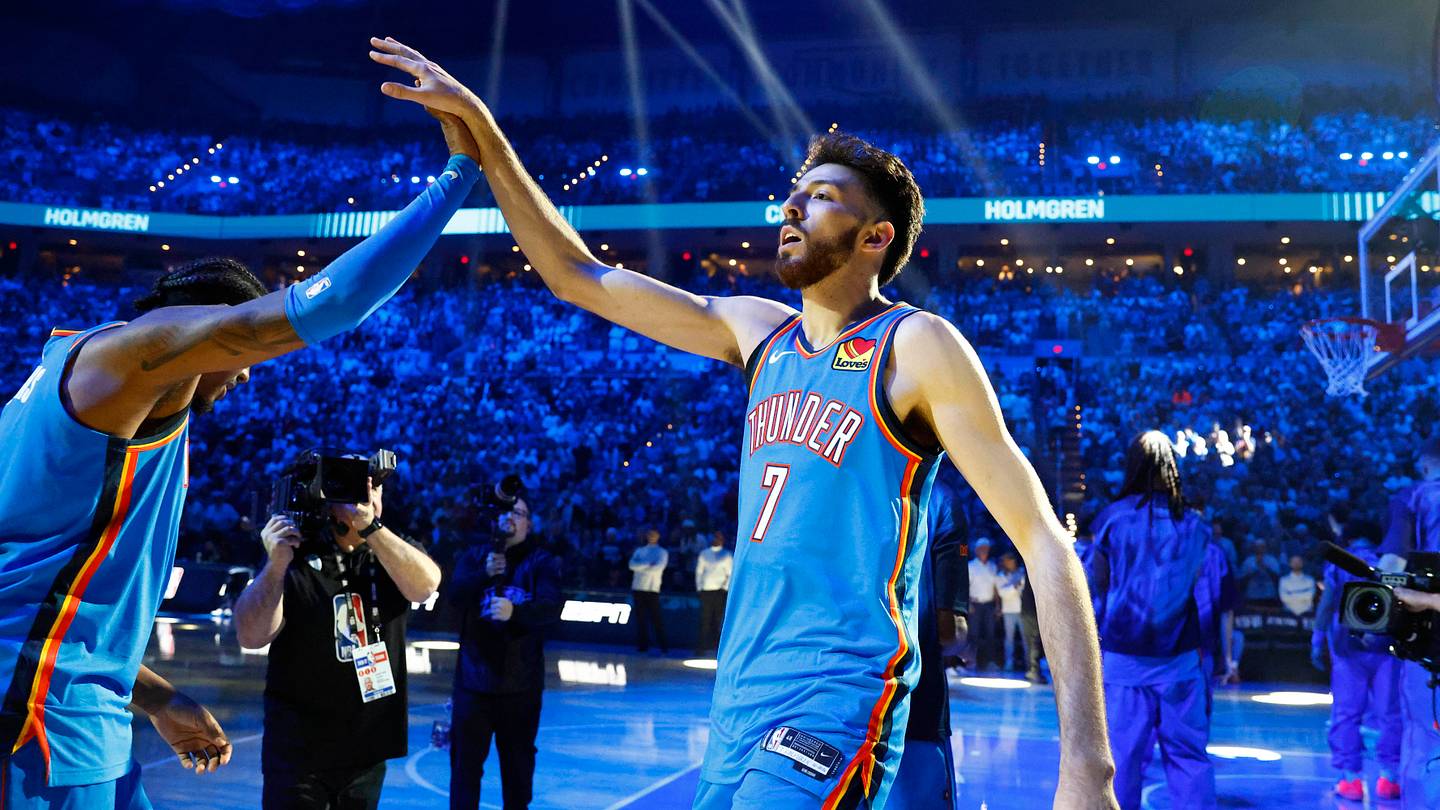
Chet Holmgren Injury Update: Fantasy Basketball Impact and Waiver Wire Targets
Chet Holmgren Injury Forces Fantasy Managers to Pivot as Thunder Center Misses 8-10 Weeks The timeline leaves a...