
LAIKA Studios motion control operator and special effects development artist Matt Emmons detailed the painstaking production of the stop-motion film “Wildwood” in an interview broadcast by KLCC.
Emmons described a workflow built on precision rather than iteration. Unlike computer-generated animation, where artists can tweak a performance endlessly, stop motion moves straight ahead — frame by frame — with no safety net. “You start at the beginning and work your way through a shot, and when it’s done, it’s done,” Emmons told KLCC. “You can’t go back and finesse and adjust things after the fact.”
That constraint creates a peculiar energy on set. On “Wildwood,” more than 100 stages operated simultaneously, each one a miniature world demanding constant attention. “There’s always some new challenge to take on, so it never really feels tedious,” he said.

“It’s almost like a high-wire act, where there’s this sense of peril: Is it actually going to get to the end without something going wrong and having to start over? So I think it just has this inherent energy to it.”
The stop-motion animated film “Wildwood” is set in Portland. For Emmons, who lives in the city, the boundary between set and surroundings blurred. “I’d leave work for the day and maybe stop on my way home for a hike in Forest Park and see an extension of the world I’d been living in all day at work,” he told KLCC. “It really makes you look at your surroundings differently.”
Emmons enters at the effects development stage, translating static concept art and sculpture into mechanical rigs that can perform on camera. The goal is visual consistency: effects must feel like they belong in the same handmade world as the puppets and sets.
“Everything in a stop-motion film is designed and built from scratch, and it all has this overarching stylistic consistency to it,” Emmons explained. “The special effects need to adhere to that same aesthetic quality.”
Each shot passes through phases of extreme poses and refined blocking before the final take. “At each one of those stages, things are added and subtracted, and it’s all homing in on what is going to be the best thing to tell the story in that particular moment,” Emmons said.
Founded in July 2005 when Phil Knight rebranded the acquired Will Vinton Studios, LAIKA Studios took its name from the Soviet space dog launched in 1957. The Hillsboro, Oregon studio released its first feature, Coraline, in 2009 and has since produced ParaNorman, The Boxtrolls, Kubo and the Two Strings, Missing Link and Wildwood. In 2014 it spun off its commercial division to focus exclusively on stop-motion feature film production.
When the finished film screens, the months of microscopic focus dissolve. “You spend all this time focusing on the details, but when you see it all together and can just let the story wash over you, it really…” Emmons said, trailing off in the interview.
Worth a look
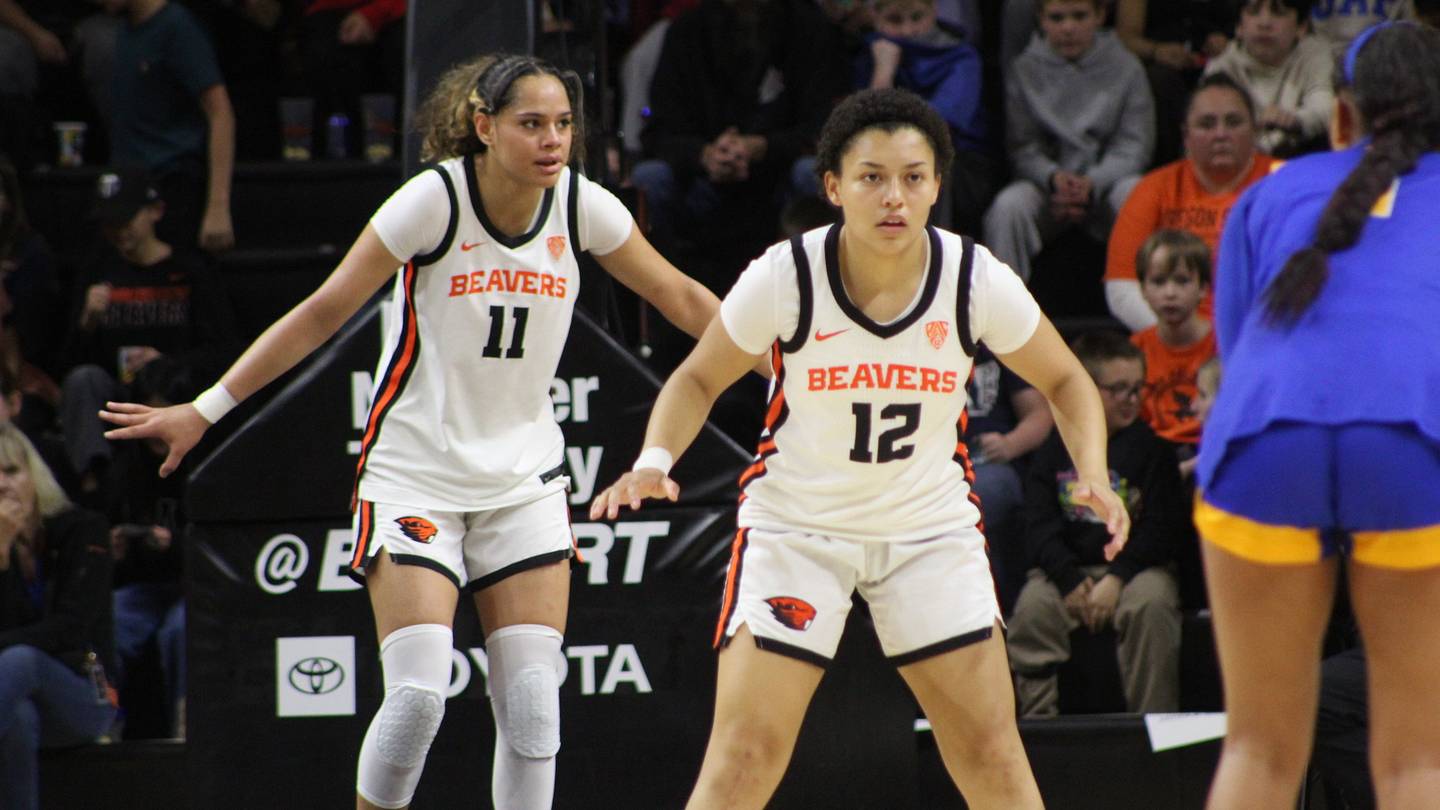
Oregon State Scrapes Past UC Riverside 64-57 at Gill Coliseum
Oregon State scraped past UC Riverside 64–57 on Wednesday afternoon at Gill Coliseum, leaving the Beavers 3–2 on...

Idaho Working Group Recommends Lottery, Loans, Asset Monetization for College Sports Funding
Idaho’s four public universities are staring down an $18 million hole at Boise State alone, and the governor’s...

Arkansas DC Ron Roberts: Stopping Run Is ‘Surprisingly Simple’ Key to Slowing Arch Manning, No. 5 Texas
Arkansas defensive coordinator Ron Roberts has a surprisingly simple recipe for slowing down Arch Manning: stop the run...
Dorothy Louise Holston, 71, Atglen Educator and Valley Baptist Church Member, Dies November 12, 2026
"To be absent from the body is to be present with the Lord," the family of Dorothy Louise...