
Virginia’s expungement statute changes on Dec. 1, rewriting who can clear a criminal record in Virginia Beach and across the Commonwealth.
The revised law broadens the definition of eligible nonconviction matters but keeps a hard line on deferred dispositions that include a stipulation or finding of facts sufficient for guilt.
The overhaul, codified in Virginia Code § 19.2-392.2, replaces the current “manifest injustice” test that applies only to petitioners with prior convictions. Starting next month, the manifest-injustice standard becomes the baseline for every petition, and the statute explicitly says a prior conviction alone can no longer justify a denial.
The revised framework was reported this week, noting that the law in effect when relief is sought must be read against the actual Virginia Beach court record.
The firm wrote in its updated Virginia Beach Expungement & Criminal Record Relief Guide that the exact disposition, plea, factual findings, deferred-disposition procedure, and final order may determine whether traditional expungement is available.
That warning matters because a docket entry that simply says “dismissed” is not enough. A dismissal after a court finds facts sufficient for guilt — common in first-offender and deferred-disposition cases — has historically blocked traditional expungement. The new statute does not erase that distinction. It does, however, instruct judges to weigh manifest injustice for all petitioners, not just those with a record.
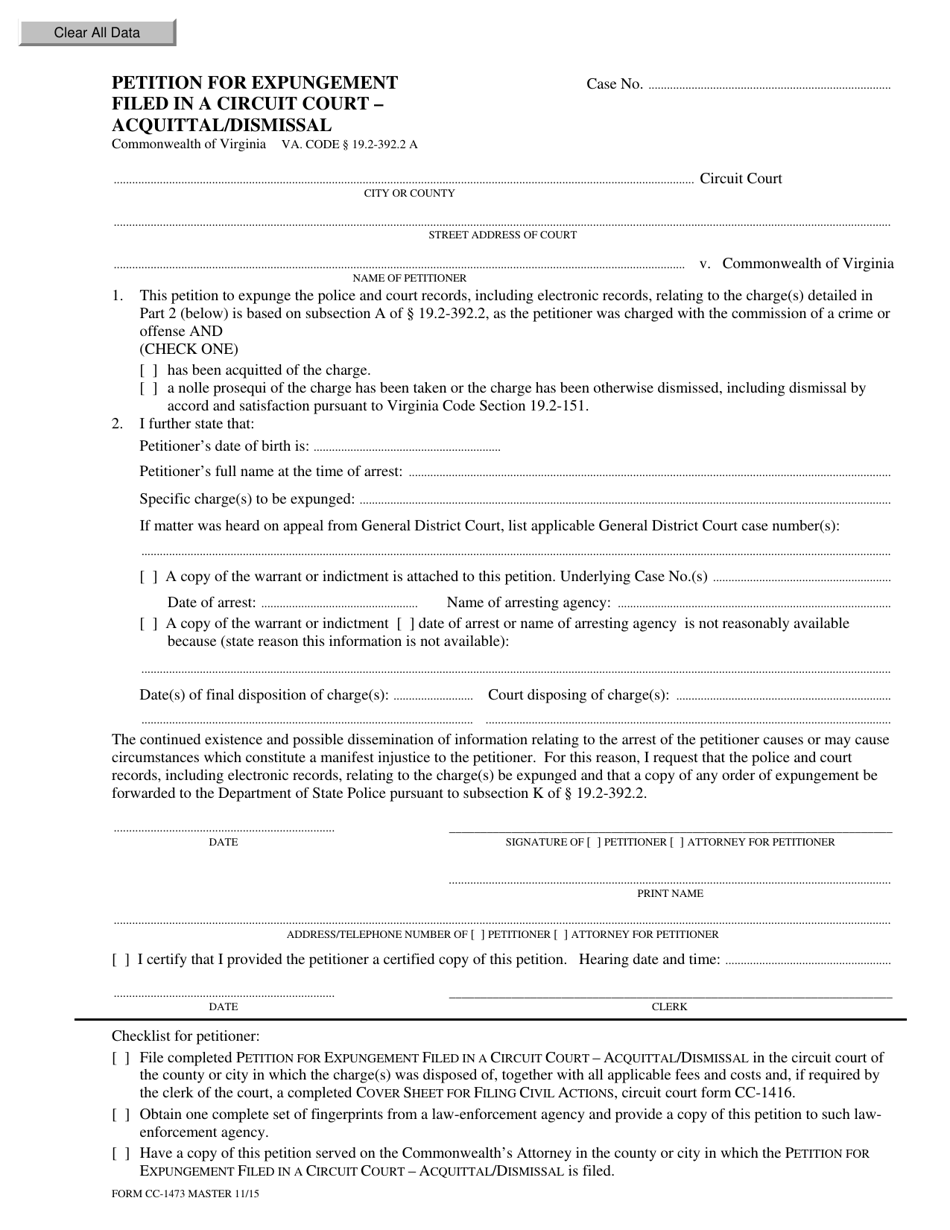
What Changes for Virginia Beach Petitioners
Petitions are still filed in Virginia Beach Circuit Court at 2425 Nimmo Parkway, part of the Second Judicial Circuit. The Commonwealth’s Attorney retains the right to object. Under the current law, an objection from the prosecutor often carries significant weight when the petitioner has a prior conviction. After Dec. 1, the judge must make an independent manifest-injustice finding regardless of the petitioner’s history.
The revised statute also keeps Virginia Code § 19.2-298.02 in play. That provision allows an eligible dismissal to be treated as “otherwise dismissed” for expungement purposes when the statutory requirements are met and the parties’ agreement on expungement eligibility is reflected in the final disposition order. Defense attorneys say the language of that final order is now the single most important document in the file.
Expungement vs. Sealing: Two Different Tracks
The statutory rewrite does not merge expungement with Virginia’s newer record-sealing laws. Expungement remains the remedy for charges that did not result in a conviction. Sealing, governed by separate statutes including Virginia Code § 19.2-392.12, covers certain convictions, deferred-and-dismissed dispositions, and qualifying misdemeanors and Class 5 or 6 felonies after conviction-free waiting periods — generally seven years for misdemeanors and ten for felonies.
Virginia’s Clean Slate program adds automatic sealing for a narrow band of offenses, but it does not apply to every dismissed charge or old conviction. A single Virginia Beach record may need to be evaluated under three different statutory regimes: traditional expungement, petition-based sealing, and automatic Clean Slate sealing.
Military and Federal Workers Face Higher Stakes
Virginia Beach’s concentration of military installations, federal contractors, and security-cleared personnel makes record relief unusually consequential here. A dismissed charge that remains publicly accessible can derail a security clearance renewal, a base-access badge, or a professional license. State law bars employers and licensing agencies from requiring disclosure of expunged matters, but private background-check databases do not update automatically when an expungement order enters.
Attorneys advise clients to obtain the final court order, the original charging document, any plea or deferred-disposition paperwork, and a current criminal-history report before filing. The arresting agency and the specific Virginia Beach court that resolved the case — General District, Juvenile and Domestic Relations, or Circuit — must be identified in the petition.
Virginia Beach, the commonwealth’s most populous city with 459,470 residents in 2020, anchors the Hampton Roads metropolitan area of more than 1.8 million people. Its concentration of military installations, federal contractors and security-cleared personnel gives the new expungement rules particular weight for service members and civilians whose careers depend on a clean record.
The next milestone is the Dec. 1 effective date. Clerks in the Virginia Beach Circuit Court are already preparing updated filing instructions.
Related reading

OSHA Proposes $340,479 in Penalties After Conveyor Belt Injures Two Workers at NJ Bakery
A single conveyor belt in Swedesboro has now injured two workers in four months, and the federal government...

Irmo Fire District Seeks Firing of Columbia Fire Chief, Assistant Chief in Muller Death Lawsuit Offer
The Irmo Fire District filed a settlement offer on November 16 that demands the firing of Columbia Fire...

OKCPS Payroll System Errors Dock Hundreds From Teacher Paychecks
Oklahoma City Public Schools educators are missing hundreds of dollars from their paychecks less than two months after...

Six Nebraska Players Claim Big Ten Record first-Team Honors
Six Nebraska players claimed First-Team All-Big Ten honors Thursday, a conference record that arrived hours after the Huskers...