Ancient Olympia Rewards the Traveler Who Stays Past the Stones
Most visitors treat Ancient Olympia as a checkbox: walk the stadium, glance at the Temple of Zeus, leave. But on 4 November 2026, the local guide Olympia Back in Time reported that the region’s real magic lives beyond the ticket booth — in a 3D reconstruction of the sanctuary, a mountain tavern above the ruins, a honey farm where dessert is fried in front of you, and a quiet beach locals still keep to themselves.
The archaeological site itself remains the draw. The stadium where athletes once sprinted barefoot still holds the starting stone slabs, and the workshop of Phidias, where the colossal Statue of Zeus was assembled, sits nearby. Yet the six experiences Olympia Back in Time recommends turn a half-day visit into a full day rooted in the living Peloponnese.
See the Sanctuary Rebuilt in 3D, Then Eat Where the View Does the Work
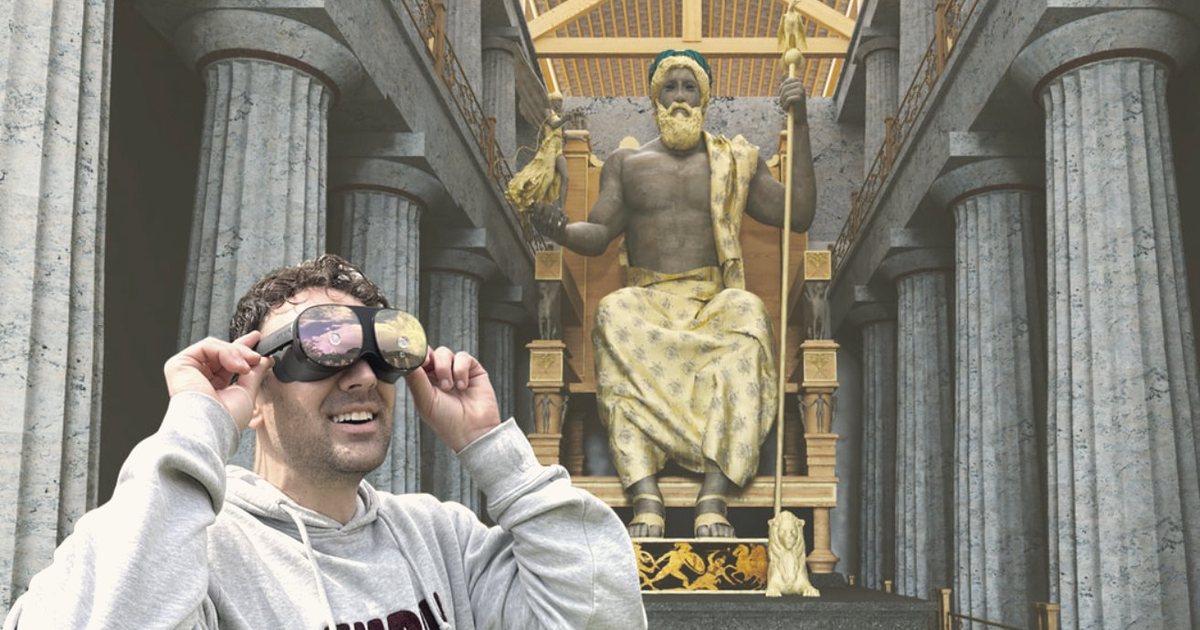
The first stop is counterintuitive: before entering the site, visitors can pick up virtual-reality glasses and an eight-language audio guide at Olympia Back in Time, located across from Olympia’s main church, a roughly ten-minute walk from the ruins. Walking the grounds with the headset on, thirteen monuments rise again in 3D where they once stood, and hand-tracking lets you lift and inspect virtual artifacts. The effect is startling — the Statue of Zeus, one of the Seven Wonders of the ancient world, looms at full scale.
Afterward, a five-minute drive, about 3 km, takes you up to the village of Ancient Pisa (Miraka) on the east side of Cronios Hill, where Bacchus Tavern serves panoramic mountain views alongside dishes built from local producers’ ingredients — the homemade moussaka and the lamb slow-cooked in olive oil and oregano are the plates to order.
Closer to the ruins, Klio’s Honey Farm offers a different kind of hospitality. Klio and her mother, Mrs. Roula, host guests in a garden of fruit trees, pour fresh juice and Greek coffee, and talk through beekeeping — how the hive yields royal jelly and propolis — before Mrs. Roula rolls out dough and fries diples, the crispy pastry, right there, finishing it with the farm’s own honey.
Trace the Olive Branch from Sacred Grove to Press, and Get Your Hands Dirty
Olive oil was not a commodity in ancient Olympia; it was sacred. Athletes were anointed with it, and the wild olive branch, the kotinos, was woven into the victors’ crowns in place of gold. At Agriturismo Magna Grecia, a fourth-generation family estate inside Olympia’s Protected Designation of Origin zone and ringed by thousands of olive trees, visitors can walk the groves, hear that history, and taste award-winning extra virgin oils paired with Peloponnesian wines.

For a hands-on counterpoint, Smili Art Workshop — the only public marble workshop in the Peloponnese, housed in a converted olive-oil factory in the town center — lets visitors of any age take up a chisel and work real marble and clay beside master artists. Nearby on Praxiteli Kondyli Street, the Archimedes Museum displays working replicas of the ancient engineer’s inventions and mechanical devices, with guides available in six languages and admission by voluntary donation.
And when the afternoon heat peaks on the drive back toward Katakolon port, Leventochori Beach offers an escape: thin golden sand, dramatic rock formations, and coves that stay calm and uncrowded, with Leventes beach bar pouring cold drinks into the sunset.
What ties these six stops together is that none of them require much imagination to enjoy — the VR headset supplies the past, the tavern and honey farm supply the present, and the beach supplies the evening. Olympia Back in Time’s point is simple: the ruins are the reason to come, but the region is the reason to stay.
Worth a look

Vietnam climate tech funding fell 52% in 2025, report says
In 2025, Vietnam's climate tech sector secured $49.86 million via 33 deals, marking a 52 percent fall from...

Wyoming Highway Patrol Limits Mileage and Overtime to Offset Budget Overrun
Wyoming Department of Transportation Director Darin Westby told lawmakers at a meeting last week that the agency has...
Democrats Gain Seats in West Virginia Legislature Amid GOP Supermajorities
Democrats Gain a Dozen Seats in West Virginia Legislature as Republicans Keep Supermajorities Democrats picked up 12 seats...

UW-Platteville volleyball beats Cornell College in five sets
The University of Wisconsin-Platteville volleyball team dug out of a two-set hole and beat Cornell College 25-17, 22-25,...