In 2025, Vietnam’s climate tech sector secured $49.86 million via 33 deals, marking a 52 percent fall from $104.2 million across 60 deals in 2024, and the most revealing figure in the decline is not the headline decrease but the void where growth-stage funding belongs: no investment deals valued between $350,000 and $1 million were recorded in 2025, compared with four deals in that range in 2024, according to the Vietnam Climate Tech Ecosystem Report 2026 series.
-
The Bottom Line:
- Climate tech funding in Vietnam fell 52 percent year over year in 2025, to $49.86 million across 33 deals, but stripping out the largest deal each year shows the underlying market shrank only 19 percent, from $34.2 million to $27.86 million.
- The “missing middle” is the real break: zero deals between $350,000 and $1 million closed in 2025 versus four in 2024, the exact range where startups must graduate from grants to commercial capital.
- Women-founded enterprises took 56 percent of grant money but only 1.7 percent of total investment capital, and none of 22 surveyed enterprises had secured a green loan from a domestic bank.
Why the Missing Middle Matters More Than the Headline Drop
The 52 percent decline looks like a collapse until you pull out Techcoop’s $70 million Series A round in 2024, which single-handedly accounted for most of the 2024 total. Excluding the largest deal in each year, funding fell by just 19 percent. Among the 15 funders polled for the 2026 report, 10 possessed either a Vietnam-specific climate investment mandate or were actively assessing market opportunities, while fresh funding providers from Japan, Singapore, Europe, and Taiwan joined the market in 2025.
Capital is present.

Tran Thi Phuong Thao, country director of New Energy Nexus Vietnam, noted that investors had signaled funding was available for climate tech startups in Vietnam while founders were keen to raise it, yet zero deals materialized in the $350,000-to-$1 million range in 2025 — a pivotal stage for businesses moving from grant support to their first major commercial investment.
The 2024 Baseline and the Grant-to-Commercial Cliff
In 2024, four deals landed in the $350,000-to-$1 million band; in 2025, that band went empty. Previous studies highlighted the same structural issue: per the Vietnam Climate Tech Funding Ecosystem Report 2025, merely 11.11 percent of climate tech enterprises had progressed beyond seed funding, versus 32.2 percent across the wider technology sector.
The team behind the 2026 series pinpointed three barriers to bridging the gap: an insufficient supply of financial instruments tailored to the $350,000-to-$1 million range, too few enterprises prepared to secure such financing, and poor coordination among grant providers, investment funds, and banks. Grants support early-stage work — developing technologies, testing products, establishing business models — while commercial financing demands stronger evidence of financial capacity and viability, and the products designed to bridge those two worlds remain limited.
Collateral Barriers Exclude Startup Financing
Bank financing is effectively closed to these startups. None of the 22 enterprises surveyed had secured a green loan from a domestic bank. Lending still relies heavily on collateral rather than business performance, which locks out startups with limited assets to pledge.
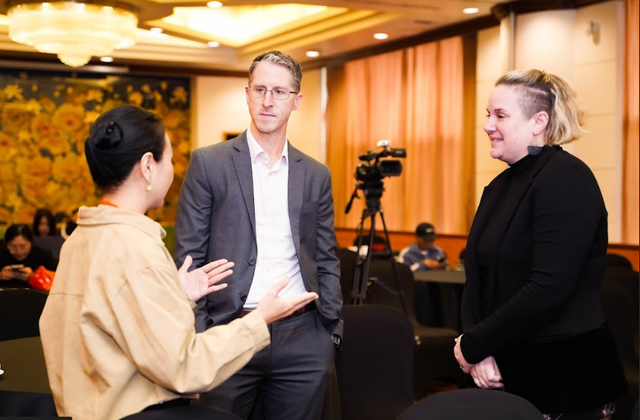
Women-founded enterprises account for 33 percent of active climate tech businesses and received 56 percent of total grant funding in 2025, yet secured just 1.7 percent of the sector’s overall investment capital. Sector concentration contributes to the gap: women-founded firms are more common in agriculture, food production, and the circular economy, where average deal sizes span $44,000 to $77,000, far below the $3.82 million to $7.35 million seen in energy and mobility. The report also points to collateral constraints, investor bias, and limited intermediary support; Thao noted that many women do not hold land titles in their own names, making bank lending requirements harder to meet.
Talent Shortages Compound the Financing Problem
Roughly 73 percent of surveyed businesses placed technical expertise within their top three workforce requirements, and 50 percent named it the most difficult talent category to recruit, while 86 percent had delivered in-house training over the prior two years, mainly via on-the-job learning. Lindsay Umalla, head of energy at SNV Vietnam, observed that capital was flowing into the sector more rapidly than the workforce could adapt, and that scaling demands more seasoned professionals with cross-disciplinary skills. Team capability is a key consideration for funders when assessing opportunities, though it is rarely built explicitly into formal investment scoring.
What Comes Next: Policy, Products, and the 2026 Watch Items
Vietnam introduced 29 policies related to climate action, investment, and innovation in 2025, but implementation guidelines, certification systems, and corresponding financial products are still being developed. To narrow the missing-middle gap, the researchers recommend financial instruments tailored to the $350,000-to-$1 million range, banks accepting equipment and contracts as collateral and moving toward cash-flow-based lending rather than land or real estate, and startup support organizations building clearer pathways from grants to commercial financing, including shared due diligence costs and investor-readiness preparation. For founders, the report advises building financing strategies for each growth stage, preparing investor-ready financial records early, and matching funding instruments to the business model.
The researchers conclude that bridging the financing gap requires more than investor interest. It also depends on appropriate financial instruments, investment-ready enterprises, and stronger coordination among funding providers.
Disclaimer: The information provided in this article is for educational and market analysis purposes only and does not constitute financial, investment, or legal advice. Always consult with a certified financial professional before making investment decisions.
Worth a look

Pennsylvania Reports Sixth Measles-Associated Death in 2026
Pennsylvania health officials confirmed on Wednesday that an unvaccinated resident of Jefferson County has died following a positive...

US Stock Futures Mixed as Investors Weigh Midterm Results and Oil Prices
U.S. equity futures traded mixed early Thursday, November 5, 2026, as Wall Street digested a powerful rally that...

SWAT Team Arrests Cheyenne Man Following Felony Strangulation Warrant
When the flash-bang detonated outside the house at 8512 Cowboy Road just after 8 a.m. Wednesday, the sound...

39 Best Art Galleries and Museums in Downtown Charleston: An Interactive Guide
Thirty-nine galleries and museums now anchor downtown Charleston's cultural landscape, stretching from the French Quarter down to Gallery...