The Resilience of the Ballot Box in Post-Redistricting Louisiana
Sonya Knox arrived home in Baton Rouge with a singular mission: retrieve her 18-year-old grandson. Having already cast her own ballot, the 65-year-old was not about to let the next generation sit on the sidelines. To Knox, the stakes were existential. She viewed the legal maneuvering surrounding the state’s congressional maps as a direct assault on the hard-won rights of her community. “They trying to take all our voting rights from us,” she told Capital B. “So that’s why I get out. I walk out and make sure I vote.”
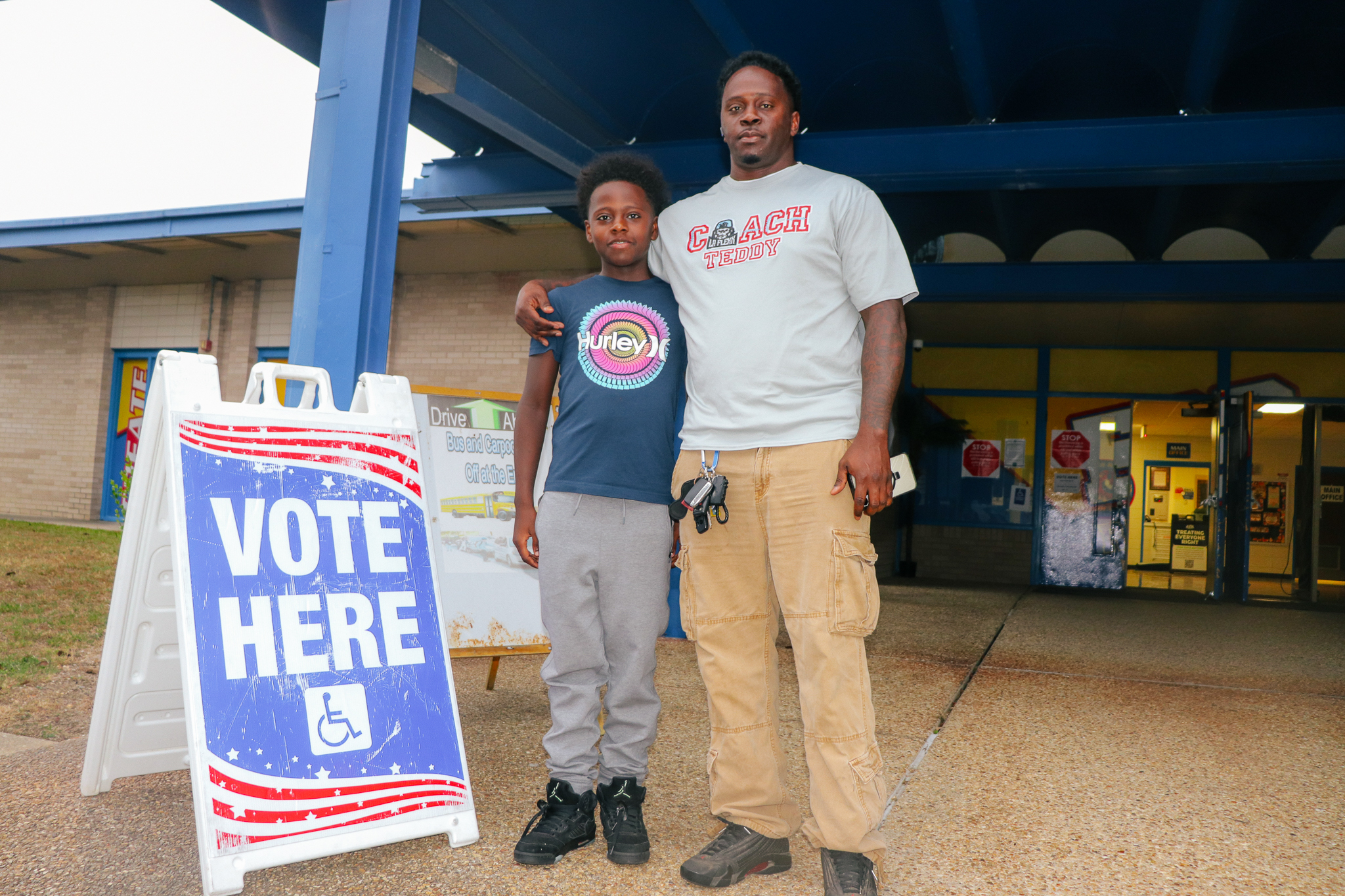
This sentiment of defiant participation defines the current political climate in Louisiana, where Black voters are showing up at the polls in numbers that defy the mathematical constraints of a newly redrawn congressional map. While the U.S. Supreme Court’s April 29 decision in Louisiana v. Callais dismantled the state’s second majority-Black district, the anticipated drop in civic engagement has failed to materialize. Instead, the ruling has acted as a catalyst for a surge in turnout, with Black voters accounting for nearly 35% of the state’s early electorate—a figure that notably exceeds their 31% share of registered voters.
A Legal Shift and a Local Response
The Supreme Court’s ruling did more than just strike down Louisiana’s 2024 congressional map on the grounds of unconstitutional racial gerrymandering. It fundamentally narrowed the legal pathways available to citizens aiming to challenge redistricting plans across the country. By making it more difficult to contest maps for racial vote dilution, the decision effectively reshaped the battlefield for political representation.
For many, this felt like an attempt to diminish their influence. Robert Collins, a political analyst at Dillard University, observed that the legal setback has paradoxically energized the base. “I think a lot of people feel that the Black voters in Louisiana feel under attack,” Collins noted. “When people feel under attack, that’s when they get more involved in the political process.”
The numbers bear this out. In the 17 parishes directly impacted by the redrawn districts, Capital B reported that Black voters participated at a higher rate—roughly 36%—compared to 33% in parishes unaffected by the ruling. This drive to participate is not merely about local house races; it is a broader movement to assert agency in an economy that many voters, like 46-year-old Unika Boatner, describe as inherently “one-sided.”
Testing Political Power at the Polls
The current cycle has seen a significant boost in overall engagement, with nearly 145,000 more ballots cast during the early voting period compared to the 2022 midterm elections. In New Orleans’ Ninth Ward, voters like 39-year-old Arlet Wylie are connecting the dots between individual ballots and the tangible realities of city and state governance. “You start to wonder, ‘How did that happen or how did that pass?'” Wylie said. “It’s because of elections like this.”
This momentum is also testing the viability of Democrat Jamie Davis, a Black farmer and former Tensas Parish police juror, in his bid to become the state’s first Black U.S. senator since Reconstruction. While the statewide race against Republican U.S. Rep. Julia Letlow remains outside the reach of the redistricting ruling, the outcome hinges on a razor-thin margin. Analysts suggest Davis must secure at least 90% of the Black vote and roughly 30% of the white vote to bridge the gap in a state where registered Republicans now outnumber Democrats for the first time in history.
The Generational Push for Representation
For voters like Mark Harris, 29, the act of voting has become a form of protest against those who seek to curtail it. “If it didn’t count, why are the people that’s in power trying to stop us from voting?” he asked. His perspective is shared by U.S. Rep. Cleo Fields, whose own district was shifted into a majority-white, Republican-leaning seat. Fields has been vocal in urging his constituents to view the redistricting not as a reason to disengage, but as an urgent mandate to amplify their voices.

The determination of voters like Knox, who spent the day pulling younger family members toward the ballot box, highlights a recurring theme: the belief that the future of their children is being written in the present election cycle. Whether this high rate of participation will be enough to overcome the structural changes imposed by the Supreme Court remains the defining question of this election. The data shows a population refusing to be pushed backward, but the ultimate impact of their turnout on the political composition of Louisiana’s delegation is a story still in progress.
Worth a look

Michigan Voters Approve Proposal 2 to Ban Utility and Contractor Political Donations
Michigan Voters Approve Proposal 2 to Restrict Political Donations Michigan voters approved a ballot proposal to ban utility...

Massachusetts State Police Suspend Trooper After Apartment Break-In
Massachusetts State Police Trooper Michael E. McGuire, 37, was arrested and suspended from duty on November 1 after...

Allison Pickard leads Anne Arundel County executive race
Anne Arundel County Set for New Leadership After Midnight Election Count Anne Arundel County is heading into a...

Preliminary Results Show Early Leaders in Portland RCV Election
Preliminary Ranked-Choice Results Track Portland Council and Multnomah County Contests Portland's latest election is taking shape as preliminary...