
Rick Allen retains Georgia’s 12th District seat amid shifting statewide trends
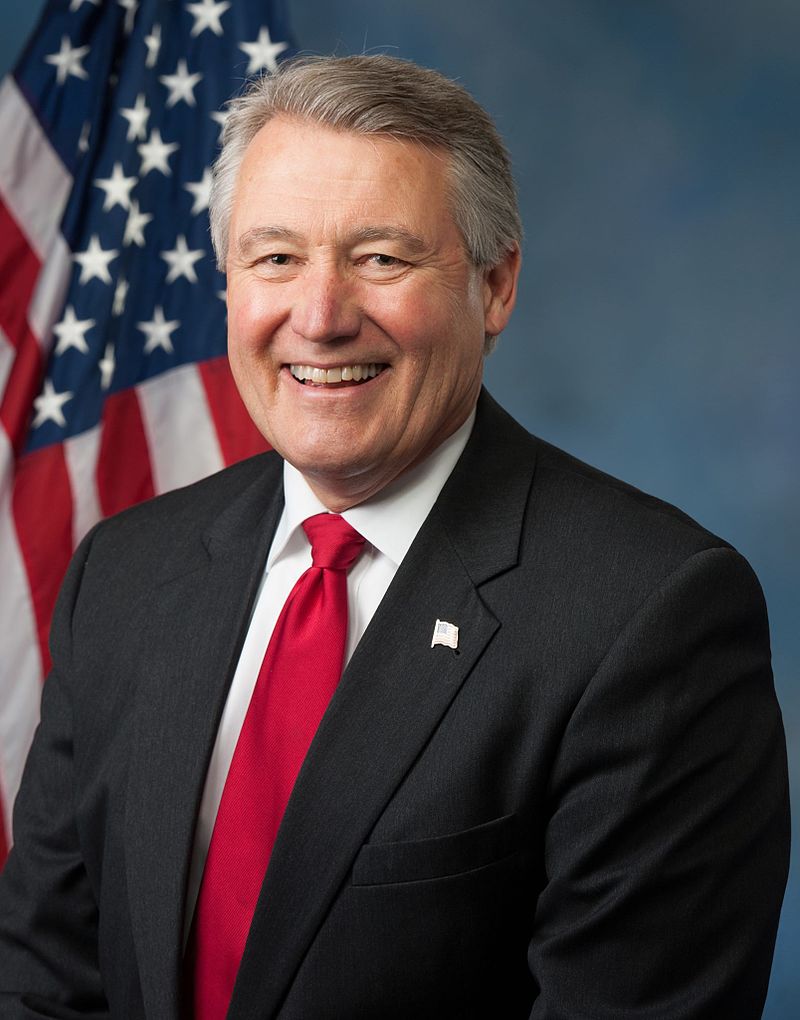
Republican U.S. Rep. Rick Allen secured his seat in Georgia’s 12th Congressional District on Tuesday, maintaining a hold on a constituency he has represented since 2015. Despite a broader “blue wave” moving through Georgia on election night, Allen finished with 51.9% of the vote, narrowly defeating Democratic challenger Ceretta Smith, who earned 48.1%, WRDW reported.
As Georgia’s 12th Congressional District heads toward the 2026 election, a growing field of candidates including five Democrats and one Republican is lining up to unseat Rep. Rick Allen. Read more: https://t.co/ZinuG1SszP
The results, which came in with 90.4% of the votes tallied late Tuesday, represent a tightening of the margins in a district that has historically leaned heavily toward the Republican Party. Smith, a former Grovetown City Council member, ran an uphill campaign in a region where Allen previously commanded much higher margins of victory. In the 2024 election cycle, Allen was reelected with 60.3% of the vote, suggesting that while he maintained his position, the competitive nature of the race increased significantly compared to his previous performance.
This local contest served as a microcosm for the broader struggle occurring across the United States as Democrats sought to regain control of Congress. While Smith struggled to overcome the district’s Republican tilt, the election results across Georgia’s various congressional districts showed a complex, fragmented landscape of political shifts.
Georgia congressional results show split partisan momentum
The 12th District was not an isolated battleground; rather, it was part of a statewide sweep that saw varying degrees of success for both major parties. While Allen held his ground in Augusta, other parts of the state saw decisive victories for Democrats, particularly in districts with high concentrations of urban or diverse populations. For instance, in District 5, Nikema Williams secured a dominant 90.3% of the vote against Republican John Salvesen, and in District 13, Jasmine Clark defeated Republican Jonathan Chavez with 79.8% of the vote.
Conversely, Republican candidates maintained strong holds in several other regions. The following table outlines the results from several key Georgia congressional races as reported:
| District | Winner | Party | Margin/Percentage |
|---|---|---|---|
| District 2 | Sanford Bishop | Democrat | 59.5% |
| District 3 | Brian Jack | Republican | 58.6% |
| District 7 | Rich McCormick | Republican | 56.3% |
| District 8 | Austin Scott | Republican | 60.4% |
| District 11 | John Cowan | Republican | 55.4% |
The closeness of the race in District 1, where Republican James Kingston held a 50.7% lead over Democrat Amanda Hollowell, highlights the volatility currently defining Georgia’s political map. Even in District 10, where Republican Houston Gaines won with 53.7% against Democrat Pamela Delancy, the margin remained narrower than the deep-red strongholds seen in previous cycles.
The political stakes in these races extend far beyond local representation. Because the balance of power in the U.S. House of Representatives often rests on a handful of seats in swing states like Georgia, every percentage point in a district like the 12th carries national weight. For Republicans, Allen’s victory was essential to maintaining their existing footprint; for Democrats, the narrowing gap in a traditionally safe Republican seat signals a potential, albeit incomplete, shift in voter alignment.
As the final tallies are certified by state election officials, the data suggests a state that remains deeply divided, with neither party able to claim a total sweep of the congressional delegation. In the 12th District, the outcome reinforces a long-standing incumbency, even as the political environment surrounding the seat continues to evolve.

Oldest Louisiana Creole recordings found in Indiana archive
Rediscovered Aluminum Discs Yield Oldest Known Recordings of Louisiana Creole More than 90 years after a linguist carried...

No. 11 Louisville wins 84-70 over Chattanooga in Flory Bidunga debut
Flory Bidunga dominates debut as No. 11 Louisville holds off Chattanooga 84-70 Flory Bidunga scored 16 points in...

Adam Hamilton elected as first Democratic Kansas Senator in Nearly a Century
Kansas Elects Adam Hamilton as First Democratic Senator in Nearly a Century Kansans have broken a 94-year political...

Iowa Secretary of Agriculture Race: Water Quality and Regulation Take Center Stage
Water Quality Takes Center Stage in Iowa Agriculture Race Iowa’s water quality has become a defining flashpoint in...