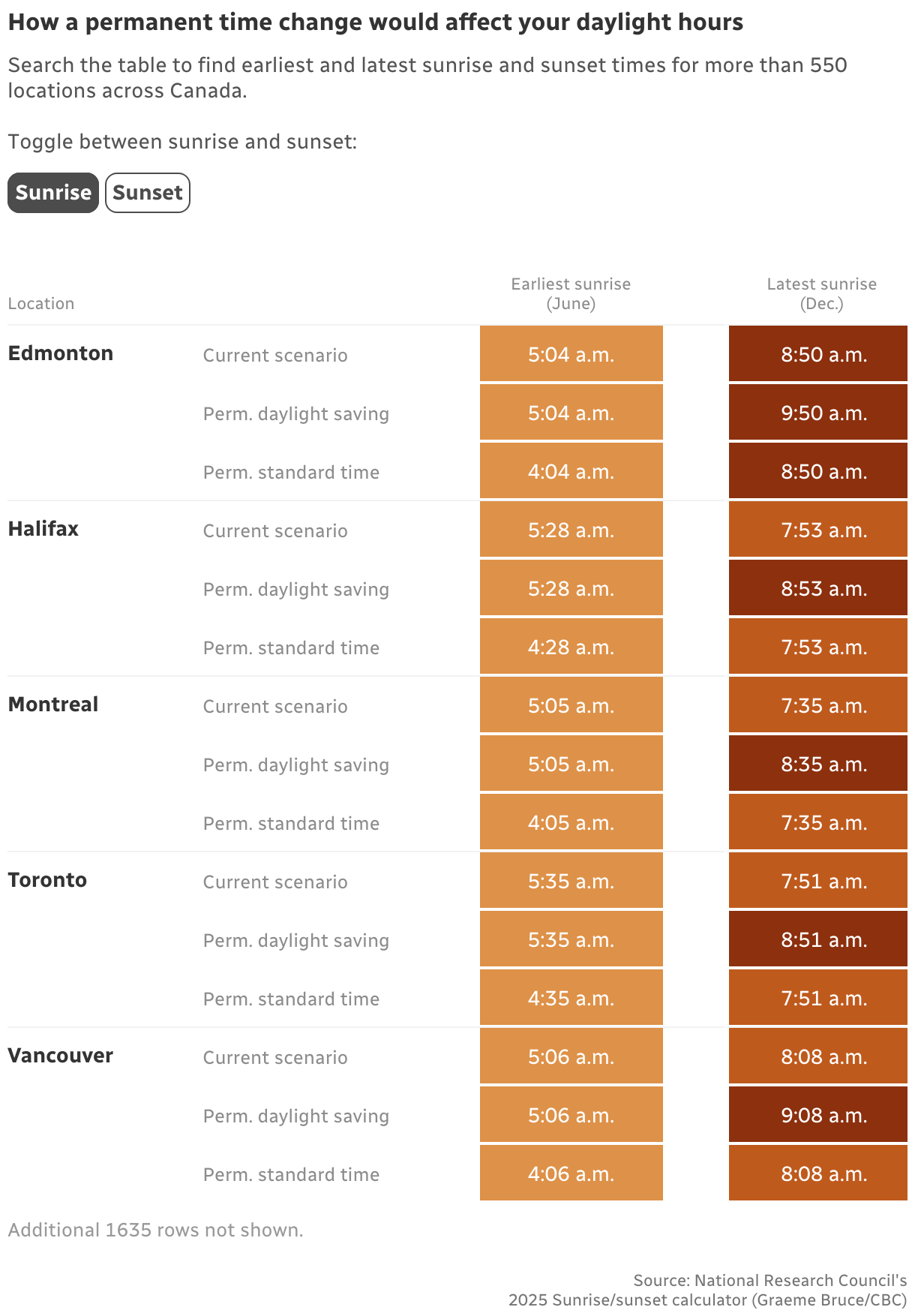
Manitoba is officially ending twice-yearly clock changes after nearly 72,000 survey respondents overwhelmingly backed permanent daylight saving time, Premier Wab Kinew announced Thursday. The historic shift takes effect this November, aligning Manitoba with several western Canadian provinces and territories that have abandoned seasonal adjustments.
Manitoba Shifting to Permanent Daylight Time Following Public Survey
Manitobans will not set their clocks back an hour this fall, ending a practice that has governed local time for more than a century as the province will remain on central daylight time. Premier Wab Kinew made the announcement in a news release, declaring that daylight time will be in place permanently starting this November.
The decision follows an online EngageMB survey launched in May to gauge public opinion on seasonal time changes. According to provincial data, nearly 72,000 votes were submitted, with 92 per cent of respondents calling for an end to seasonal time changes. Among those who voted to halt the practice, 58 per cent preferred permanent daylight time, while 34 per cent favored standard time.
Just six months prior, Kinew stated his administration was too busy with health care and cost-of-living priorities to consider modifying the clocks. However, as neighboring jurisdictions advanced their own plans, public pressure prompted the premier to reconsider and institute public consultations.
Western Canada Alignment and Regional Time Zone Shifts
With this decision, Manitoba joins several other provinces and territories that have already transitioned or committed to permanent time systems. Yukon adopted permanent time in 2020, Saskatchewan has remained on standard time since 1966, and British Columbia, Alberta, and the Northwest Territories have pursued similar permanent daylight shifts.
Manitoba’s final choice diverges from an earlier proposal floated by the premier. Kinew had initially expressed a preference for central standard time year-round to maximize morning light health benefits, which would have kept Manitoba in sync with Saskatchewan and Alberta. But that idea was defeated by public preference for evening daylight.
Manitoba will remain an hour ahead of Saskatchewan and Alberta all year, and two hours ahead of British Columbia. Meanwhile, Ontario and Quebec will sit one hour ahead of Manitoba during the summer months, but align with Manitoba’s time when eastern clocks fall back in November.
Health Arguments and Economic Impact on Local Businesses
The government referenced an analysis by Manitoba Health indicating that ending clock adjustments improves general population health by protecting circadian rhythms.
“Permanent daylight saving time is good for our health, good for business and good for parents… This change means one less adjustment families have to deal with each spring and fall. That’s why this November, your clocks won’t be changing.”
Premier Wab Kinew
Business organizations welcomed the predictability. Winnipeg Chamber of Commerce CEO Loren Remillard noted that extended evening sunlight provides tangible commercial benefits.
“More daylight in the evening means more opportunity for restaurants, retailers, farmers and communities across our province to make the most of the day. Ending the twice-a-year clock change reduces friction for companies working across provincial borders and offers all Manitobans greater predictability and stability.”
Winnipeg Chamber
While winter mornings in Winnipeg will feature later sunrises—such as a 9:24 a.m. sunrise on December 21 reported by Global News—evenings will benefit from extended daylight. The provincial government is now collaborating with industry partners, organizations, and businesses to manage the transition ahead of the November 1 deadline, ensuring clocks will not revert to standard time.
Related reading

Supreme Court Questions ECI Over Shiv Sena Symbol Allotment
During the ongoing Supreme Court hearings on the Shiv Sena leadership dispute, a bench led by Chief Justice...

UK Government to Install Cot Cameras in Neonatal Units Following Inquiry
Following a damning inquiry into the Countess of Chester Hospital, the UK government has announced plans to install...

Indonesian Wildfires Threaten Orangutan Research Station in Borneo
Intentionally set land-clearing fires driven by an extreme El Niño are sweeping through Indonesia's Gunung Palung National Park,...

Imran Khan’s Sons Accuse Army Chief Asim Munir of Vendetta Against Father
Imran Khan’s sons have accused Pakistan army chief Asim Munir of a personal vendetta and expressed fears that...