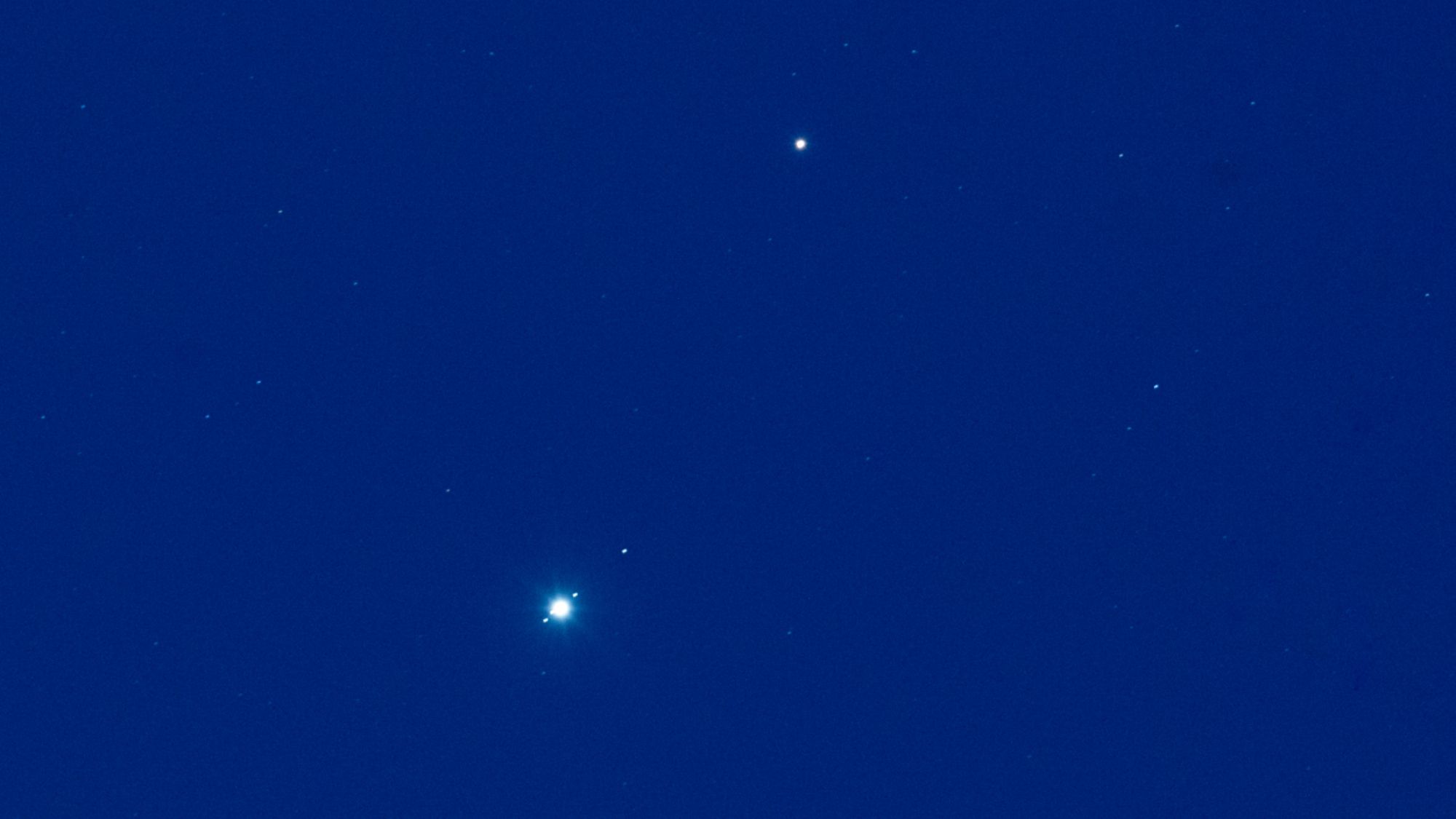
Mars and Jupiter reached their closest apparent separation in the night sky on Sunday appearing as a spectacular, close-knit pair within the heart of the constellation Leo.
Observers across China documented the planetary alignment in the early morning hours of November 16, 2026. Photographic evidence captured by various Xinhua photographers shows the planets shining above multiple locations in northeast China’s Heilongjiang Province. These sightings were recorded in cities including Shuangyashan, Daqing, Mudanjiang, Qiqihar, Yichun, Fujin, Bei’an, Jiamusi, and Fuyuan, as well as in Baiquan County and the tourism resort area of the Mongolian Autonomous County of Dorbod.
Alignment in the Constellation Leo
The two planets reached their point of closest apparent separation at 9:04 p.m. EST on November 15, 2026 (0204 GMT on November 16, 2026), according to data from the astronomy website In-The-Sky. While the planets were situated below the horizon for observers in the United States at the exact moment of the closest approach, the pair became visible to stargazers rising above the eastern horizon around midnight local time.
Jupiter appeared as the brighter of the two, positioned within one degree of the reddish light of Mars. The pair was situated near the bright star Regulus, which serves as the dot in the backward question mark stellar formation representing the head of the Great Lion in the constellation Leo.
Observation and Equipment Guidance
For those utilizing telescopes, the event provided an opportunity to view the planets separately as they rose higher from the horizon. Celestron’s StarSense Explorer LT114AZ, which features a 4.5-inch aperture and a 1000mm focal length, is noted as one method for viewing these planets, with its integrated smartphone app designed to assist in locating them.
Additional details regarding the gas giant include the visibility of its Great Red Spot, which rotated into view during the predawn hours of November 16, 2026. This feature is observable through a backyard telescope with an aperture of 4 inches or greater.
To enhance the visibility of the vast storm, observers are encouraged to use a light green color filter, while orange filters can assist in bringing out specific details within the planet’s sweeping cloud belts.
Future Planetary Movements
Astronomers indicate that a similar close approach will not occur again for another 2.5 years.

Worth a look
- Scientists Discover Dragonball Organelles in Deep-Sea Mollusc
- SLU Researchers Simulate Quantum Behaviors Using Classical Light Dynamics
- Lutnick to Join Trump on China Trip Following Chip Export Pressure (archyde.com)
- Suspected China spy linked to Nvidia's ex-boss left in 2025, Megaspeed says (newsarchyuk.com)

Scientists Discover Dragonball Organelles in Deep-Sea Mollusc
Deep inside an enigmatic ocean-floor animal, researchers have uncovered a tiny organelle that has no known counterpart anywhere...
SLU Researchers Simulate Quantum Behaviors Using Classical Light Dynamics
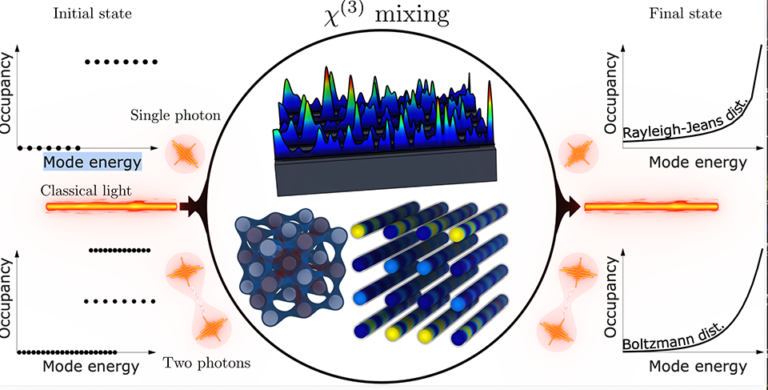
Researchers from Saint Louis University and two German institutions have demonstrated that classical nonlinear light dynamics can induce...

Expert Warns Summer Was a Wake-Up Call and Winter Could Be Dire for Food Supplies
Winter flooding threatens Wales' food supply just as summer droughts and wildfires exposed vulnerabilities in an import-reliant distribution...
NASA’s CHAPEA Mars Crew Finally Emerges After More Than a Year in Isolation
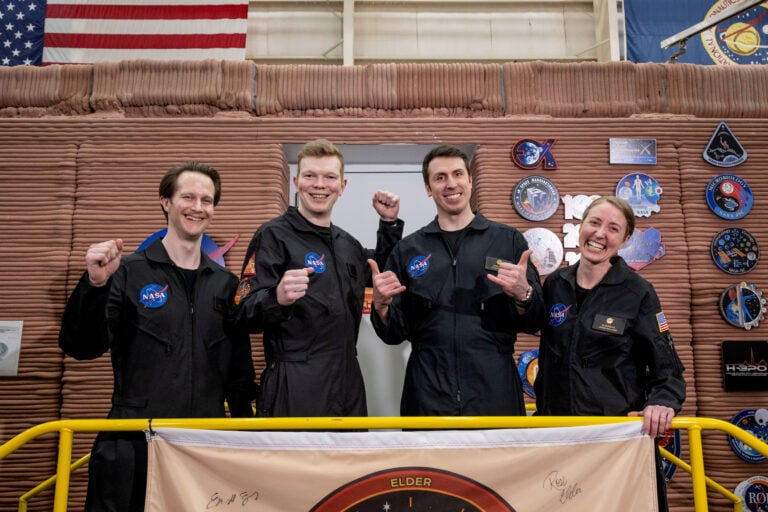
Four research volunteers stepped out of NASA’s Mars Dune Alpha habitat on Oct. 31, 2026, completing the agency's...