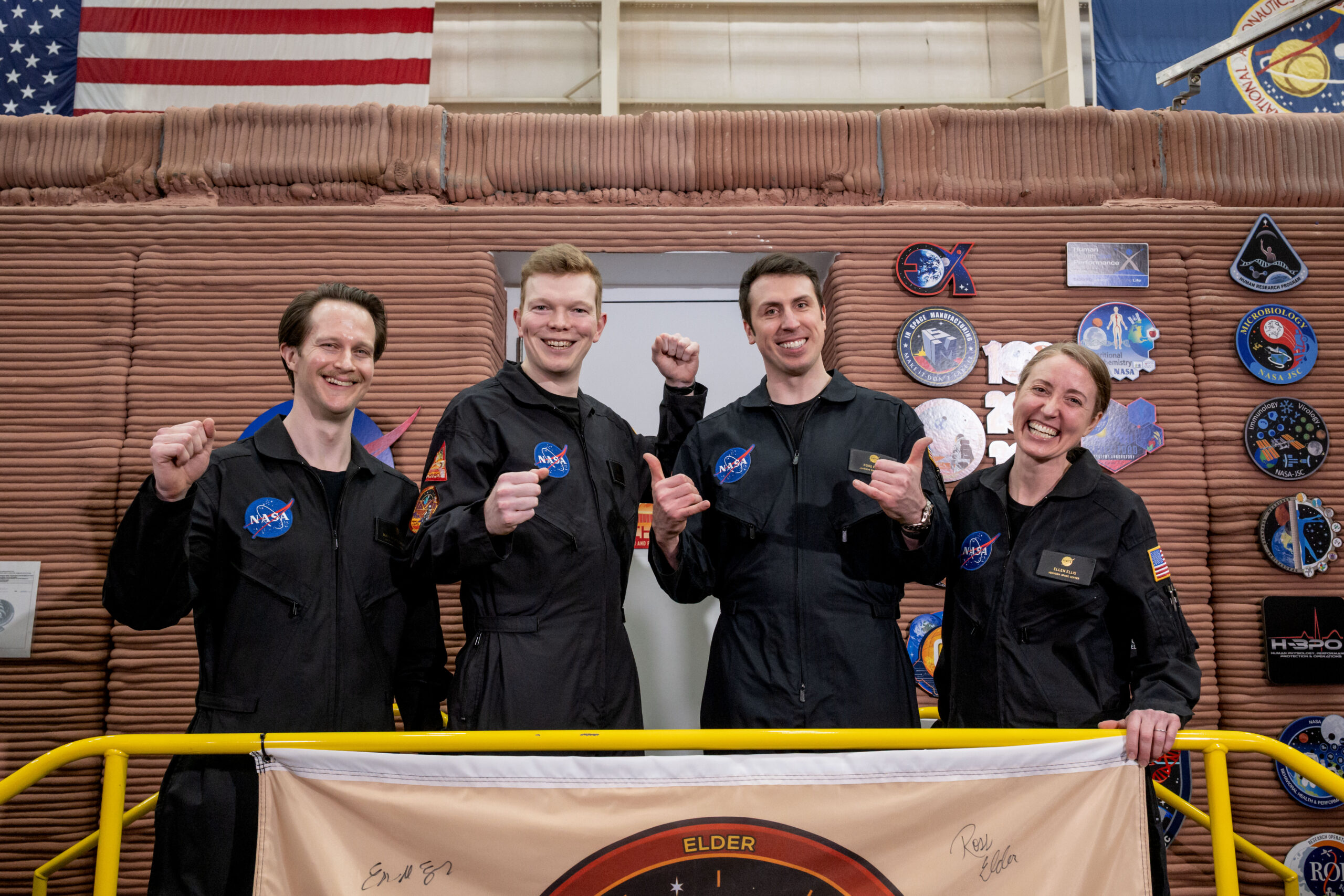
Four research volunteers stepped out of NASA’s Mars Dune Alpha habitat on Oct. 31, 2026, completing the agency’s second yearlong surface simulation.
Ross Elder, Ellen Ellis, James Spicer, and Matthew Montgomery spent 378 days cut off from the outside world inside the 1,700-square-foot, 3D-printed structure at the Johnson Space Center in Houston. The Crew Health and Performance Exploration Analog, known as CHAPEA, studies the physiological and psychological demands of long-duration space travel.
The crew managed their day-to-day existence within the confines of a three-bedroom house equivalent, maintaining their living quarters, tending to crops in simulated Martian soil, and executing simulated spacewalks (Houston Public Media). Operating under Earth gravity and atmosphere, the participants tested exploration technology while dealing with significant communication lags.
Messages sent to and from friends and family experienced one-way delays of up to 22 minutes. Supported by researchers and ground teams across the agency, the crew tracked consumables from dish soap to respirator filters and carefully managed food and water.
James Spicer served on the mission while friends and family kept the crew apprised of life on Earth through emails while information from the outside world remained limited. Mission director Vanessa Wyche noted that these hurdles demand patience, careful planning and greater independence — qualities that will be essential for future astronauts traveling millions of miles from home
.
The habitat module was constructed using 3D-printing technology at the Johnson Space Center in Houston and contains individual living quarters for four volunteer crew members. Crew members engaged in simulated Marswalks, robotic operations, habitat maintenance, exercise, and crop cultivation.
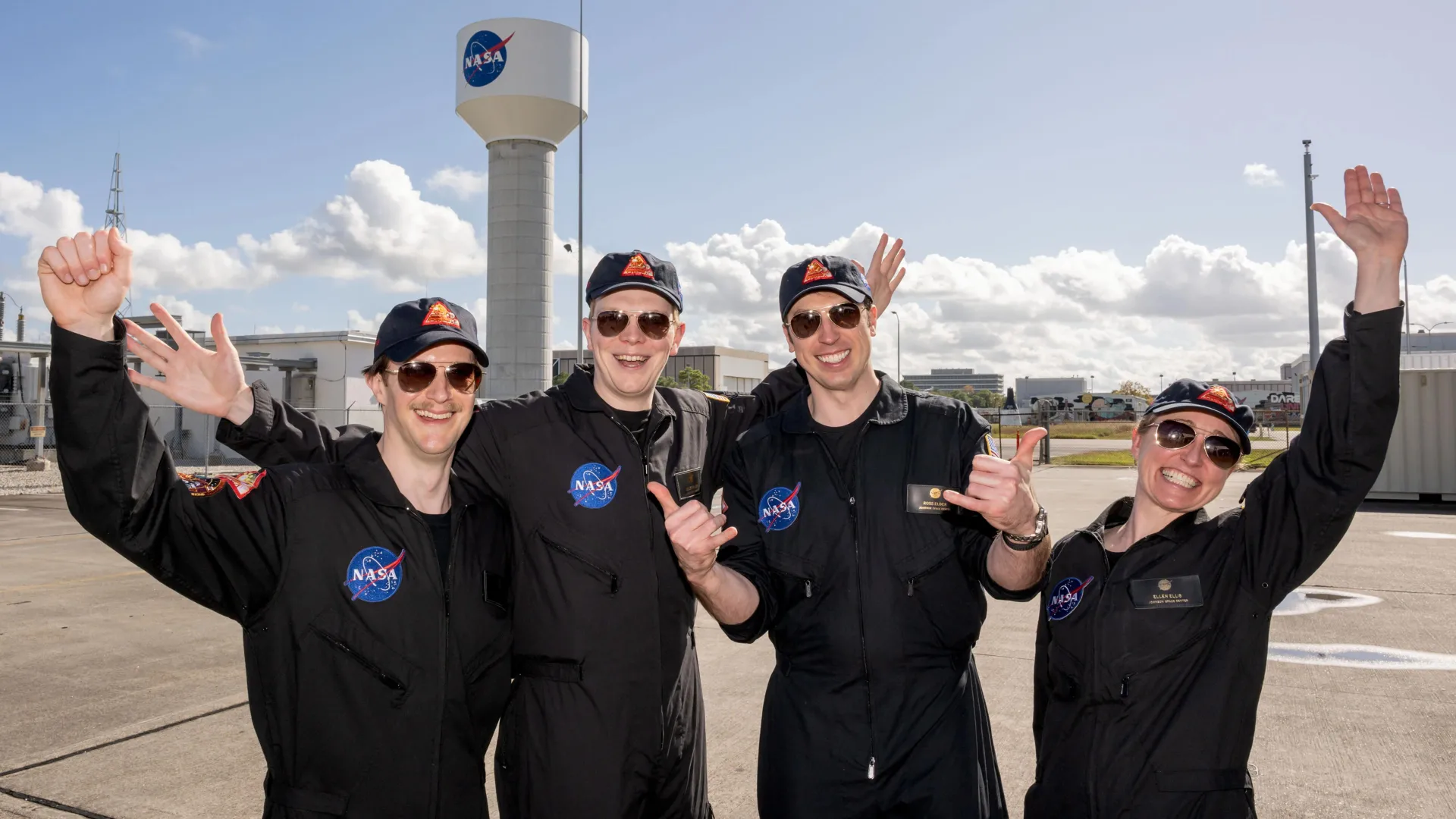
Ross Elder brought a U.S. Air Force experimental test pilot’s approach to leading the crew, while Matthew Montgomery contributed a background as a science officer. At egress, Elder was described as the Swiss Army knife of crewmates
for his technical knowledge and problem-solving skills.
After opening the airlock on October 31, 2026, the four volunteers greeted families and colleagues outside. Johnson Center Director Vanessa Wyche and NASA astronaut Jack Hathaway addressed attendees during the event alongside the four-member team. Medical officer Ellen Ellis characterized the endeavor in remarks at the Johnson Space Center.
It’s been a hell of a year — analog astronauts living in captivity of our own free will.
Ellen Ellis, medical officer on CHAPEA Mission 2, via Philstar
Mission commander Ross Elder also shared his perspective on the challenges awaiting human explorers.

For Mars, the risks are great, but through seeking understanding, strong vision and leadership, creativity, fortitude, hard work, and an incredible foundation, the goal of putting humans on Mars is not only achievable, but rather inevitable.
Ross Elder, mission commander, via NASA
The conclusion of Mission 2 follows the first CHAPEA isolation test, which ran from June 25, 2023, to July 6, 2024. Project scientist Sara Whiting explained that the gathered metrics arrive as NASA prepares for humanity’s first lunar outpost near the South Pole. While NASA targets human expeditions to Mars in the 2030s, the agency plans to first return astronauts to the moon for the first time since 1972.
Related reading
Rising Temperatures Halted the Start of a New Ice Age in the Arctic
It was just getting started, everything was normal, the next glaciation was about to happen—and yet it stopped,...
NASA Artemis II Launch Caused GPS Disruptions Across North America
A positioning error of a couple of meters is enough to cause an autonomous car to change lanes,...
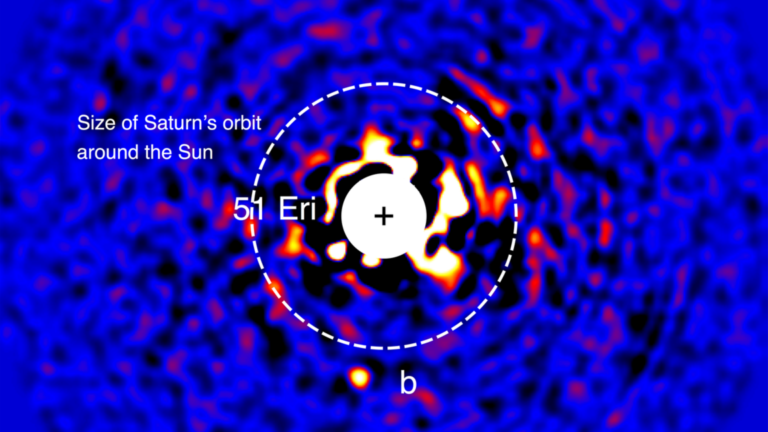
New Software Makes James Webb Telescope Up to 15 Times More Sensitive
Astronomers have developed a new software technique that makes the James Webb Space Telescope two to 15 times...
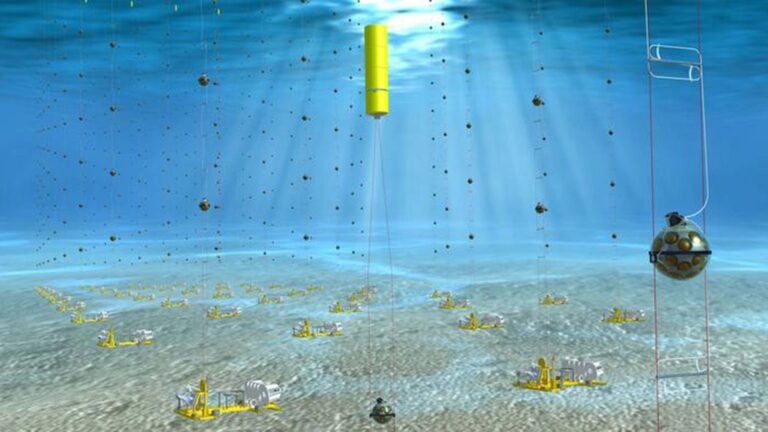
KM3NeT Telescope Finds No Violation of Einstein’s Relativity
Only the neutrinos can get through, says Lukas Hennig, a doctoral student at Erlangen-Nürnberg.