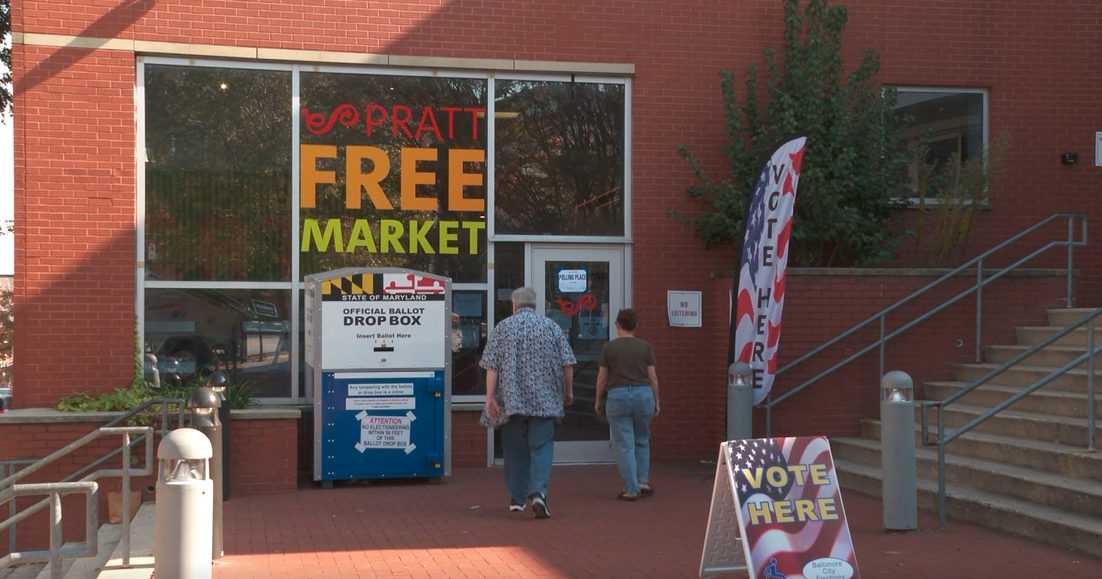
Maryland voters are heading to the polls in substantial numbers for the 2026 midterm elections, pushing early voting past the marks set during the state’s previous midterms and outpacing recent gubernatorial cycles, according to data from the Maryland State Board of Elections. As early voting concluded on Thursday, state election officials reported strong participation across every county, mirroring a broader national surge that has seen millions of Americans cast ballots ahead of Election Day on November 3.
Surging Turnout Outpaces 2022 Midterms
The momentum at in-person early voting centers has been unmistakable since the window opened. Through the first five days of early voting, 309,190 Marylanders cast ballots, representing a 67% increase over the 185,121 voters who turned out during the equivalent period in 2022, Maryland Matters reported. WBAL-TV 11 figures cited by 92q.com similarly showed that more than 230,000 residents voted in the first four days alone, compared to roughly 141,000 during that same timeframe four years prior. By the time polls closed on Thursday, state administrator of elections Jared Demarinis told CBS News Baltimore that total early in-person participation had cleared the 400,000 mark.
Mail-in voting is also drawing heavy interest. State election officials noted that voters had returned 305,690 mail-in ballots as of Sunday out of the 645,962 that were mailed out this year, reflecting an engagement level that surpasses the absentee volume seen during the 2022 midterms. Despite the heavy traffic at drop boxes and polling sites, Demarinis told CBS News Baltimore that operations have proceeded without major disruption. “Right now, things are going smooth and boring for all the participants,” Demarinis said. “I’m always happy to report that.”
An analysis of the state board’s data by Jim Burton, founder of Burton Research and Strategies and former executive director of the Maryland GOP, highlights a sharp surge among Democratic voters. According to Burton’s figures, Democratic early voting numbers jumped 81% over four years ago, while Republican participation increased by 33%. “They are jacked up to vote,” Burton said, describing the motivation among Democrats. “On the Democrat side, they’re willing to run through a brick building to cast their vote.” Burton added that while the data shows significant momentum for Democrats, it remains too early to draw definitive conclusions, noting that parties often exhibit different scheduling habits, with Republicans historically favoring traditional Election Day voting.
Key Races and High-Stakes Ballot Questions
Voters across the state are weighing a full slate of prominent contests. Democratic Governor Wes Moore is seeking reelection against Republican challenger Dan Cox in a rematch of the 2022 gubernatorial cycle, while all eight of Maryland’s U.S. House seats are on the ballot alongside races for attorney general, comptroller, and local municipal offices.
Beyond candidate matchups, several constitutional amendments and ballot questions are driving intense interest. Nikki Tyree, executive director of Maryland’s League of Women Voters, pointed to local and regional concerns—including data centers, the cost of living, and contentious policy questions—as primary motivators for the electorate. “We’re looking at a midterm that is hanging on so many critical issues that people have been focused on,” Tyree said. “Marylanders have really shown that they’re paying attention to what’s going on.”
Chief among those ballot measures is Question 3, a proposed constitutional amendment that would alter Maryland’s congressional redistricting rules. Supporters, including Governor Moore and legislative Democrats, argue the change is necessary to counter partisan redistricting strategies deployed by Republicans in other states. Opponents caution that the measure could further institutionalize partisan gerrymandering. Voters are also considering Question 1, which addresses collective bargaining and state employee compensation, and Question 2, which concerns appointments to Maryland’s Commission on Judicial Disabilities.
Convenience and Civic Duty Drive the Electorate
For residents utilizing the state’s early voting infrastructure, the extended access has transformed how they plan their participation. “I think early voting is such a privilege, and the fact we have an entire week to do it, just gives people a lot of time and it’s just easier to get out ahead of it,” Baltimore voter Megan Salerno told CBS News Baltimore. Salerno noted that the window allows ample time to research candidates thoroughly. “I make sure I look at every candidate, what they’re saying, what they say is important to them, what they’re committing to from a voter perspective, just making sure I’m thinking about my community with every vote I cast.”

Other residents emphasized the personal responsibility of participating in the process. “I’ve been calling people all day, even my grandchildren, get out and go vote,” Baltimore voter Nellie McDaniel told CBS News Baltimore. Steven Gearhart, another local voter, observed that public engagement appears to be rooted in a broader desire to shape local outcomes. “I think now that people are starting to get more interested in deciding their future and understanding what’s important to them whatever it is they need,” Gearhart said.
With early voting concluded, campaigns are shifting their focus to the remaining days before the general election. Polling places across Maryland will open on Tuesday, November 3, from 7 a.m. to 8 p.m. for Election Day.
Related reading

What Albany International (AIN) Said on Its Q3 Earnings Call – Yahoo Finance
Albany International reported record third-quarter revenue, lifted by a renegotiated helicopter contract and strong performance in its Engineered...

Through the boroughs: How the New York City Marathon became a citywide tradition … – amNY
The TCS New York City Marathon is celebrating its 50th year, marking a massive historical milestone for one...

How to Choose a Cosmetic Dentistry Provider in Albuquerque
Choosing a cosmetic dentistry provider in Albuquerque requires looking beyond promotional photographs to evaluate clinical experience, oral health...

The Advance Group has leased 93,728 square feet of industrial space at Port South in Carteret
The Advance Group has leased 93,728 square feet of industrial space at Port South in Carteret, consolidating its...