
If you live in Maryland, your congressional representative could change before the next election — and the person drawing those lines just got a lot more power. Voters on Tuesday overwhelmingly approved Question 3, a ballot measure that amends the state constitution to explicitly allow partisan gerrymandering, handing Democrats the green light to redraw Maryland’s eight congressional districts and potentially flip the state’s delegation from its current 7-1 Democratic advantage to a clean 8-0 sweep. The Baltimore Banner reported that the measure passed after a year of political wrangling that saw Governor Wes Moore pressuring lawmakers, a special legislative session, and a pivotal state Supreme Court decision.
The stakes here are concrete: Maryland’s lone Republican, Representative Andy Harris of the Eastern Shore, could find himself without a seat at the table, while Democratic incumbents like Sarah Elfreth and Kweisi Mfume might see their districts carved up in ways that reshape who represents Baltimore and its suburbs.
Nothing Changes Yet — But the Legislature Now Has the Keys
Question 3 does not automatically create new districts. It simply removes the constitutional barrier that had blocked more aggressive map-drawing, meaning the General Assembly can now pass a new congressional map whenever it chooses. That process could begin as soon as January, when lawmakers return to Annapolis, though any new boundaries would not take effect until the 2028 elections.
The House of Delegates already approved a map earlier this year that would have delivered the 8-0 outcome, but the proposal died in the Senate. Under that plan, Elfreth — currently representing the 3rd District entirely on the western side of the Chesapeake Bay — would have been moved into the 1st District, forcing a primary against Harris. Baltimore, now mostly contained in Mfume’s 7th District, would have been sliced across three districts, dropping the 7th District’s Baltimore voter share from 72% to 54% and pairing urban neighborhoods with rural counties.
Why the Senate Blocked It — Until It Didn’t
Senate President Bill Ferguson initially refused to bring the House map to a vote, worried that without a constitutional amendment, the courts would strike down the new districts — just as they rejected Maryland’s last redistricting map. Ferguson announced his opposition three months before the legislative session began, and he held firm even when Hakeem Jeffries traveled to Annapolis to urge otherwise, and even as Moore went on television and personally called senators to push for a vote.
What changed Ferguson’s calculus was a state Supreme Court ruling that struck down a key provision of the Voting Rights Act. In Ferguson’s words, that decision “changed everything,” opening the door to amending the state constitution itself. By August, a special session had placed Question 3 on the ballot.
Districts Shift by County and Incumbent
Whether your representative changes depends entirely on where you live. If you are in Montgomery County and represented by Jamie Raskin, your district likely stays put. If Johnny Olszewski Jr. represents you, a shake-up is more probable. The legislature will have to solicit public input on any new map, though it is not required to follow that input, and some current members of the congressional delegation could decide not to run again depending on how the lines are drawn.
Maryland has until 2028 to approve a new map, but the political pressure to act will be immediate. With Democrats holding a supermajority in both chambers and now armed with constitutional cover, the question is no longer whether they will redraw the lines — only how aggressively, and whether the courts will let them keep the result.
Worth a look

Gabe Vasquez wins reelection in New Mexico’s 2nd district race
Vasquez Holds New Mexico's 2nd District as National Money Floods the Race Incumbent Democratic U.S. Rep. Gabe Vasquez...
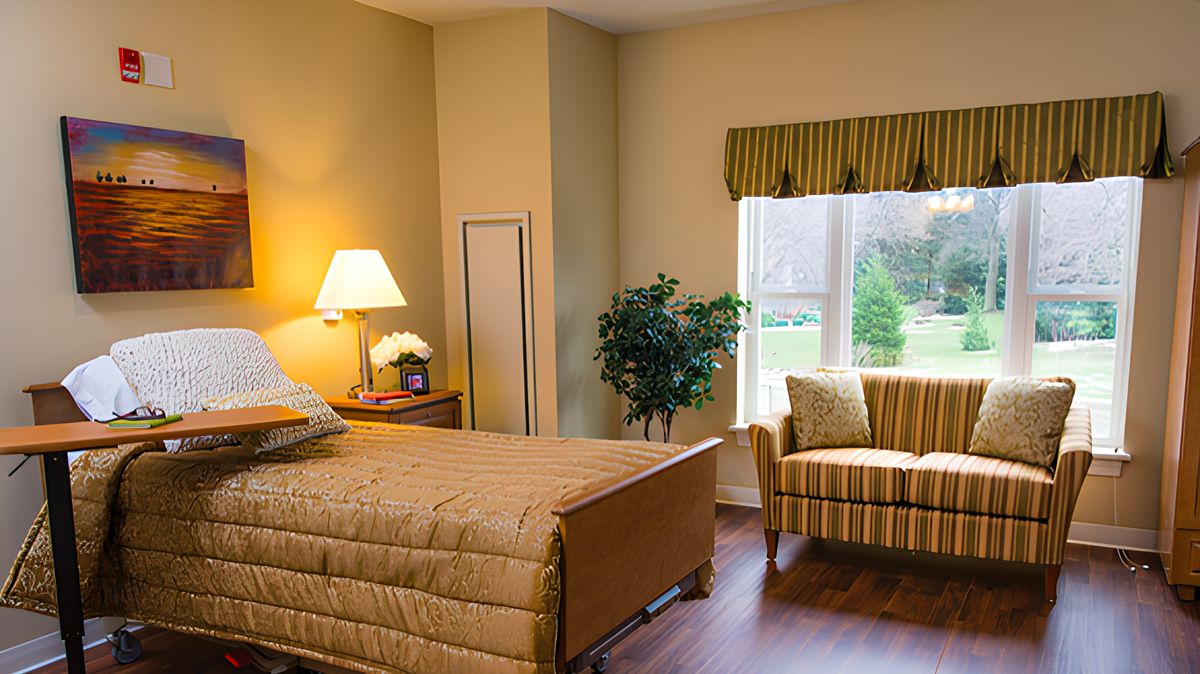
Manchester Commons Offers Comprehensive Senior Care in Erie
Manchester Commons of Presbyterian Senior Care stands as one of Erie, Pennsylvania's large-scale senior living communities, offering residents...

Mikie Sherrill urges port operators to turn away Russian diesel
Diesel at the pump is averaging $6.29 per gallon nationwide as of Tuesday morning, down from $6.50 just...

2 Nevada Ballot Questions Pass on Abortion Rights and Voter ID
Nevada voters have rewritten their state’s foundational legal document, approving two ballot measures on Election Day that simultaneously...