
Mehr Media Group’s chief executive said lasting security in West Asia depends on respect for national sovereignty and territorial integrity and an end to foreign military presence in the region.
The CEO of Mehr Media Group made the remarks in an exclusive interview with Sri Lankan Media group Lake house.
He described media as “one of the main pillars of national power and one of the most effective tools of public diplomacy in today’s world.”
Mehr News Agency and the Tehran Times aim to explain the historical, political, legal and security background of events rather than simply publish official statements. “Our approach is not simply to publish official statements when covering regional developments. We also seek to explain the historical, political, legal, and security-related background of events,” he said.
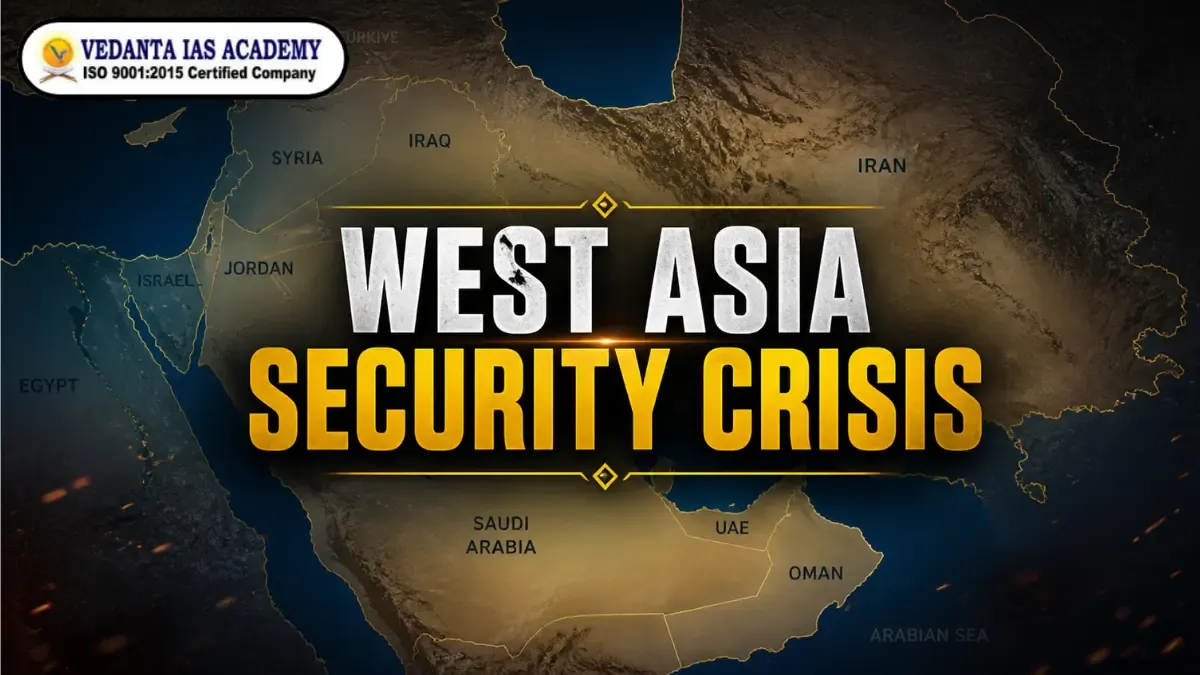
He argued that regional crises affect developing nations far from the conflict zone. “Countries such as Sri Lanka, whose economies depend on international trade, energy imports, and stable shipping routes, can be affected by regional conflicts even when they are not directly involved,” he said.
The CEO outlined conditions for de-escalation: an end to military actions, respect for sovereignty and territorial integrity, and reliable guarantees against future conflicts. “Any diplomatic process must also be based on mutual respect, clear commitments, and recognition of the legitimate rights of all parties involved,” he said.
He identified the presence of outside powers as a root cause of instability. “A region that has become an arena for the military and geopolitical rivalries of foreign powers cannot be expected to achieve lasting peace and security,” he said. He added that some powers view resource-rich countries “through a lens of dominance and exploitation.”
He called for regional security to be ensured by regional countries themselves. “The presence and intervention of foreign powers, especially when driven by one-sided policies and exclusive interests, do not help resolve disputes. Instead, they can increase arms competition and deepen mistrust,” he said.
On media strategy, he described a “media war” in which Western outlets frame Iran through “the lens of security threats and sanctions.” Mehr Media Group is expanding multilingual content, strengthening analytical journalism, making greater use of experts and specialists, and developing relations with foreign media outlets.
“Our approach is not limited to responding to other people’s narratives. We believe that we must take the initiative by producing independent narratives of our own,” he said.
Mehr Media Group, headed by Managing Director Mohammad Mehdi Rahmati since April 2023, encompasses Mehr News Agency — a semi-official agency owned by the Islamic Development Organization — and Iran’s leading international daily newspaper, the Tehran Times, making it one of the primary media outlets in Iran.
The group maintains offices in all 31 provinces of the country as well as in several neighboring states, and in September 2024 signed a memorandum of understanding with Russia’s TASS to exchange text news and facilitate staff visits for journalism and technology cooperation.
The group has expanded its cooperation with media organisations such as China’s Xinhua News Agency, Russia’s TASS and Sputnik, Malaysia’s Bernama, TV BRICS, Indonesia’s ANTARA News Agency, Qatar News Agency, and several other Asian media outlets.
Signing cooperation agreements, exchanging content, and pursuing joint media projects are among the steps they have taken in this direction. He said BRICS and the Shanghai Cooperation Organisation provide platforms for expanding media cooperation with organisations in Asia, Africa, and Latin America.
Worth a look
Global Times Seminar: Experts Urge South China Sea Consensus Against External Interference
“ASEAN must remain the architect of its regional security order not merely the geographical platform on which great...
China, ASEAN: Upgraded FTA to Take Effect Dec. 1, Aims to Deepen Digital, Green Ties
China and ASEAN announced on November 16 in Manila that their upgraded free-trade agreement will take effect on...

Maureen Dowd: Brother Kevin’s ‘Holiday Miracle’ and Relief Over Trump Disappointment Mark Thanksgiving
In a Thanksgiving column for The Irish Times, New York Times columnist Maureen Dowd writes that her family...
NYT Investigation: Brazilian Recruiters Lured Men to Russia, Seized Pay
Two Brazilian intermediaries promised recruits annual pay of up to $100,000 and rear-echelon jobs, then seized their military...