
Mercer Island School District officials are facing a $4 million annual shortfall in special education services that must be covered by general operating budgets, according to the Mercer Island Reporter.
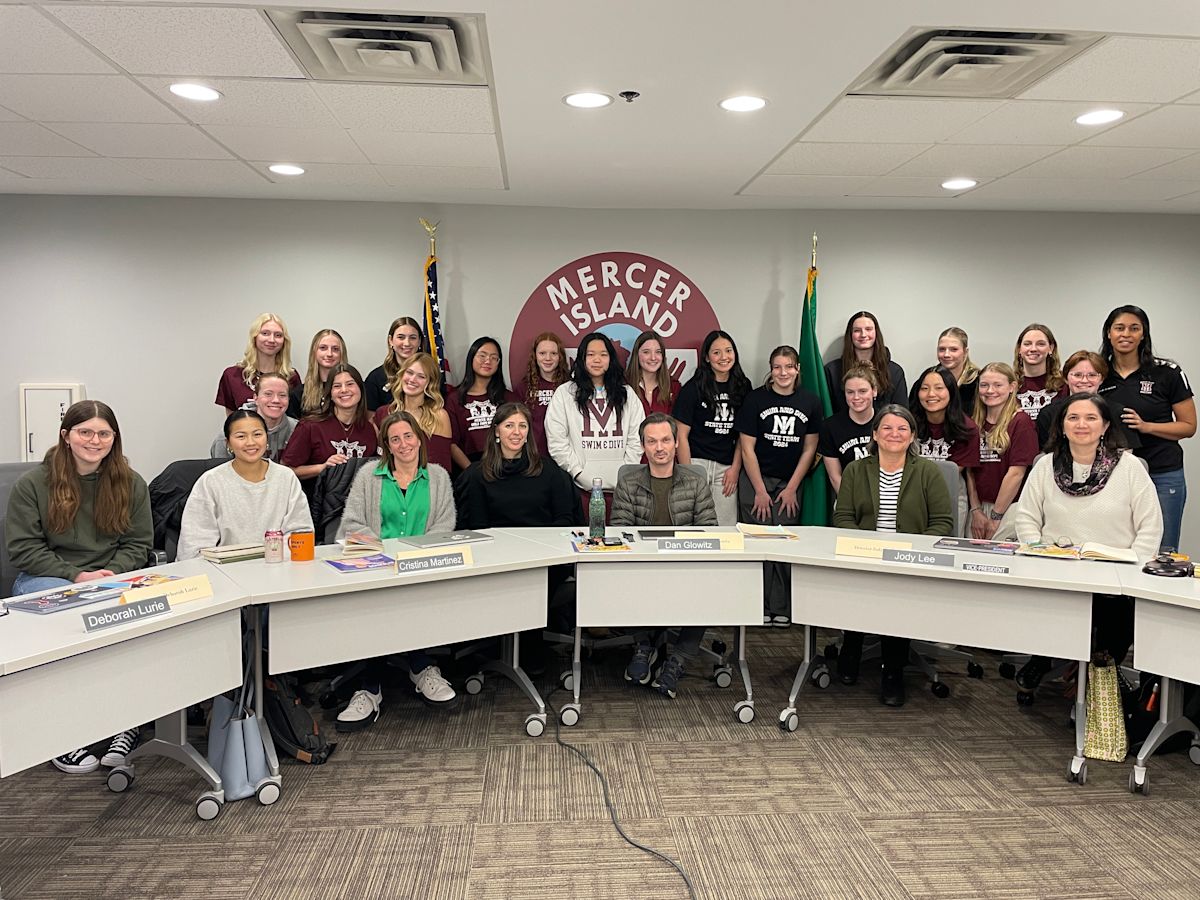
School board President Stephanie Burnett expressed the district’s frustration during a linkage session on Nov. 12, where board members and student representatives met with state legislators to discuss the financial pressures facing public education. The meeting brought together 41st Legislative District Rep. Janice Zahn, Sen. Lisa Wellman, and Rep. My-Linh Thai to address critical issues ranging from rising operational costs to unfunded state mandates.
“We need a Legislature that funds public education and that really believes in it and it’s really hard to feel that way right now,” Burnett said.
The tension between local district needs and state-level funding remains a central conflict. While Rep. Thai said that she does not believe any elected officials in the state Legislature lack care for education, she acknowledged that the fundamental debate is how to fund it. Board director Cristina Martinez added that school districts across Washington face similar struggles and that the Legislature is tasked with making difficult decisions regarding these resources.
The high cost of compliance
Beyond daily operations, the district is grappling with the financial implications of state-mandated environmental standards. Julian Bradley, a board director and legislative representative, highlighted a $35 million Student Safety, Security, and Accessibility bond measure slated for the Feb. 9, 2027, special election ballot.
A primary driver for this bond is the need to replace and repair the Mercer Island High School HVAC system to meet clean building performance standards established by Olympia. If the bond fails to achieve the required 60% supermajority, the district faces large fiscal penalties.
“One of the reasons for that project is so we can meet the clean building performance standards that Olympia has passed,” Bradley said.
Bradley warned that without the bond, the district would be “subject to fines and penalties from Olympia of 30 cents per square foot.” However, Sen. Wellman suggested that the Legislature may offer some relief, noting that the state is looking at putting off those clean building orders indefinitely until it can ensure education is fully funded.
State funding gaps strain special education budgets
The mismatch between state requirements and state funding is perhaps most visible in the special education sector. The district currently absorbs millions in costs that the state does not fully cover, forcing a reallocation of funds from other essential areas. Board director Maggie Tai Tucker used a metaphor to describe the precision required for these resources.
“I think it’s sort of more like a delicate irrigation system where you kind of want the right amount of water for the right plants at the right time,” Tai Tucker said. She said providing these services requires much investment in training for both staff and administrators.

The district is also struggling with rising materials, supplies, and operations costs (MSOC) that have not been met with corresponding increases in state funding. To address these gaps, Sen. Wellman mentioned several potential avenues for revenue, including:
- Implementing ways for schools to charge for AI-generated public record requests.
- Utilizing revenue from a millionaire’s tax.
- Exploring tort reform to reduce insurance expenses.
- Allocating specific funds for school bus fuel and heating costs.
The legislative calendar is moving quickly toward these discussions. According to the Washington State Legislature website, pre-filing for the 2027 session is scheduled to begin on Dec. 7, with the formal session convening on Jan. 11.
As the district looks toward the upcoming session, the focus remains on returning as much money as possible to the classroom. Superintendent Dr. Fred Rundle said that residents have asked whether advocacy should prioritize MSOC or special education, stating that the district’s goal is to direct funds wherever they are most needed.
“The state constitution says it’s the paramount duty to provide ample education,” student representative Brody Newcomer said, closing the meeting with a direct appeal to the legislators.
Worth a look

Arizona Man Sentenced to 10 Years for $7 Million Car Dealership Fraud
A 59-year-old Arizona man will serve a 10-year federal prison sentence for orchestrating two separate fraud schemes that...

Alabama Football Avoids FAA Ground Stop by Busing to Vanderbilt Game
The Federal Aviation Administration issued a nationwide ground stop on Friday, November 13, paralyzing air travel across the...

Woody Nestor, 80, Former DC Police K-9 Officer and Marine Dies
Woodrow L. "Woody" Nestor, a former Metropolitan Police Department K-9 officer and Marine veteran, died Monday, October 26,...

Wisconsin Gov. Tony Evers Grants 14 Commutations, First in Decades
Governor Tony Evers granted commutations to 14 individuals on Friday, marking the first time a Wisconsin governor has...