
Regional security depends on moving beyond mere agreements to achieve tangible results, according to Philippine officials concluding their leadership of the Southeast Asian bloc.
At the final ASEAN Foreign Ministers Meeting in Pasay City, the Philippine government emphasized that the true value of the bloc lies in its ability to deliver concrete benefits to its citizens rather than simply hosting summits.
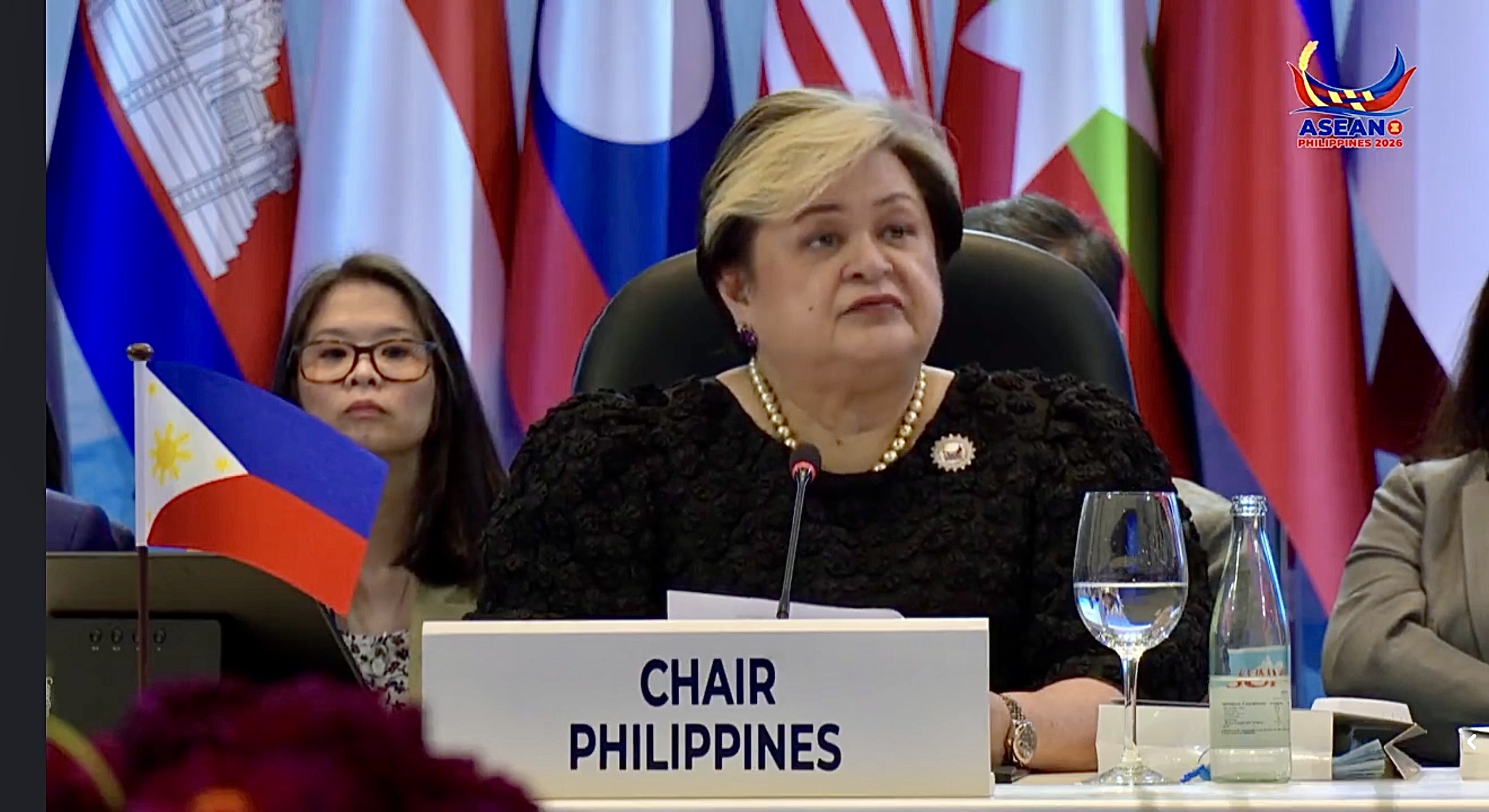
Foreign Affairs Secretary Ma. Theresa Lazaro argued that the success of the regional organization cannot be measured by the volume of documentation produced. She said that the current geopolitical climate requires a shift from theoretical discussions to practical, synchronized implementation of policy.
Theresa Lazaro, Foreign Affairs Secretary.
Global crises test multilateralism
External pressures threatened regional stability during the Philippine leadership period. The Inquirer reported that crises in the Middle East, alongside natural disasters and broader uncertainties regarding the future of multilateralism, served as intense tests for the chairmanship.
Despite these headwinds, the Philippines focused its efforts on the ASEAN Political-Security Community pillar. According to the Philippine News Agency, these priorities included advancing maritime security, improving regional disaster preparedness, enhancing climate security, and strengthening engagement with external partners.
Tensions persist in these waters due to competing maritime claims, a situation that continues to challenge the bloc’s ability to maintain a unified front. Philippine President Ferdinand Marcos Jr. has expressed a desire to see this code of conduct finalized during upcoming sessions, per the Inquirer.
A shifting regional membership
The composition of the bloc has recently expanded, reflecting changing political realities in Southeast Asia. Following the admission of Timor-Leste in October 2025, ASEAN now comprises 11 member states. However, internal cohesion remains a challenge; while Myanmar remains a member, its military leaders have been barred from high-level meetings since the 2021 coup, with only nonpolitical representatives permitted to attend, the Inquirer noted.
The bloc’s influence is further defined by its dialogue partnerships with major global powers. These include the United States, China, Japan, South Korea, India, Australia, New Zealand, Canada, Russia, and the European Union.
For the United States, the stability of ASEAN is a matter of national security and economic interest. A fragmented Southeast Asia could lead to increased maritime volatility, directly impacting the freedom of navigation in vital shipping lanes and the stability of global supply chains that rely on the region’s manufacturing hubs.
The transition to the next summit
As the Philippine chairship winds down, the focus shifts to the upcoming 49th ASEAN Summit and Related Summits, which the Philippines is scheduled to host from Nov. 15 to 17, according to the Inquirer.
Lazaro stressed that while the formal leadership of the bloc rotates, the underlying responsibilities of the member states must remain constant. She expressed gratitude to the member states for their cooperation, framing the progress made as a shared achievement and the remaining tasks as a collective responsibility.
Whether the bloc can move from the "dialogue" phase into the "coordinated action" phase requested by the Philippines depends on the next chair's leadership.
Related reading

FAA Lifts Nationwide Ground Stop After Major US Air Travel Chaos
The Federal Aviation Administration lifted a nationwide ground stop late Friday after a massive communications failure paralyzed US...

Sweden and Ivory Coast Sign Article 6 Bilateral Agreement at Cop 31
Sweden and Ivory Coast signed a bilateral agreement under Article 6.2 of the Paris climate agreement on Friday,...

FAA Imposes Nationwide Ground Stop Due to Air Traffic Control Communication Failure
Thousands of US flights remain grounded after a massive communications failure paralyzed air traffic control centers across the...
Zimbabwe Proposes US$50 Annual Levy on Underutilised Large-Scale Farms
“Exemptions should apply in cases of drought, genuine financial hardship, and other legitimate circumstances,” said Felix Maburutse, chairperson...