In Mississippi’s U.S. Senate race, the contest between incumbent Republican Senator Cindy Hyde-Smith and Democratic challenger Scott Colom has tightened into a razor-thin margin, yet a fundamental question remains unanswered: exactly how many ballots are still waiting to be counted. As of mid-afternoon Friday, November 6, 2026, the two candidates were separated by more than 2,000 votes, but the lack of centralized data has left both campaigns and the public in the dark regarding the total number of outstanding ballots, NPR reported.
A Decentralized Election Process
Mississippi’s election administration is uniquely decentralized, with 82 individual counties managing their own processes without a requirement to transmit final results to the state until next week. This structure has drawn sharp criticism from experts who point to a lack of transparency in such a high-profile race. Michael Morse, a law professor at the University of Pennsylvania who studies voting, noted that the current situation is difficult to parse, even for those who track election data professionally. “Right now I would love to know a lot of things about the process and I am struggling to figure out what is unfolding here,” Morse said. “I cannot tell you basic things.”
❗️Midday Update❗️ ▪️9,242 affidavits processed ▪️74 counties submitted unofficial results in SEMS ▪️3,139 outstanding mail-in absentee ballots 🗳️Track your ballot: https://t.co/U4Oy1p4dEY pic.twitter.com/kidpEcrM9j
The uncertainty is compounded by differing estimates from stakeholders. While the Colom campaign indicated on Tuesday that they were aware of more than 15,000 provisional ballots—known locally as affidavit ballots—the chair of the state Republican Party suggested on Thursday that the total outstanding count could be as high as 20,000. This figure includes potential absentee votes, which can legally be accepted by election officials until November 10, provided they were postmarked by Election Day.
The Role of Affidavit Ballots
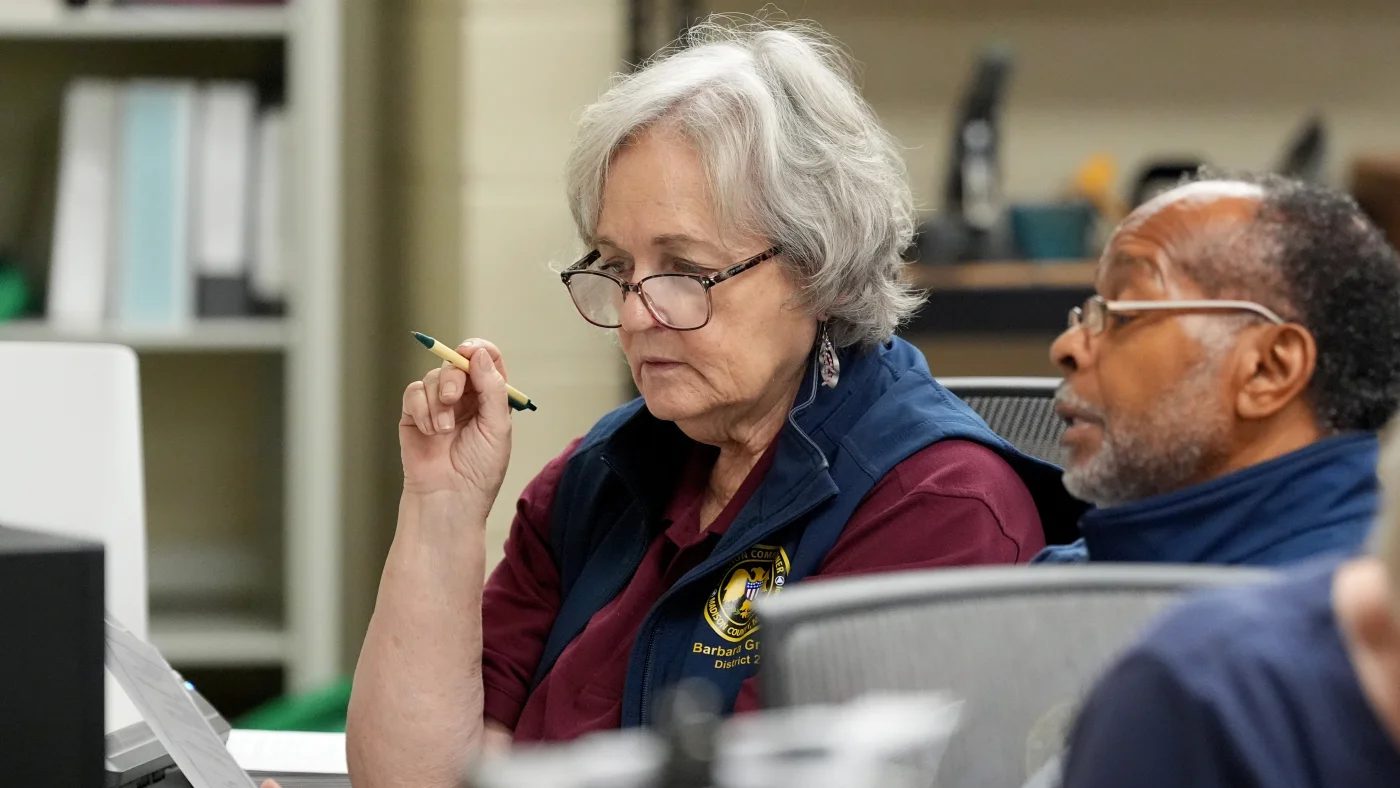
Mississippi’s reliance on affidavit ballots appears to be higher than in many other states. These ballots are used when a voter’s eligibility is in question, requiring local officials to review each case individually before deciding whether to count the vote. If the estimate of 15,000 affidavit ballots is accurate, it would represent roughly 1.5% of the total votes cast in the Senate race. Federal data from the 2022 midterm cycle indicates that only four states maintained a provisional ballot rate higher than this, according to data from the U.S. Election Assistance Commission.
We’re getting multiple calls about people not showing up as active voters, so we wanted to share a few details. Voter roll maintenance is the cornerstone of election integrity. Our office obtains data for the entire state and sends it down to the counties. The election… https://t.co/OpzzH5vomO

A specific procedural detail regarding voter registration may be contributing to these numbers. While many states move voters who have not participated in recent cycles or who have potentially moved to an “inactive” status—allowing them to still cast a regular ballot for a set period—Mississippi requires these voters to cast an affidavit ballot. This necessitates an additional form and a manual review process. Critics, including former Pennsylvania Secretary of State Kathy Boockvar, argue that this process can undermine voter trust. “It feels like you have to go talk to the teacher or something in the back room,” Boockvar told NPR. “It’s a little bit of a suspicious-seeming thing.”
Official Response and Regulatory Context
Mississippi Secretary of State Michael Watson has defended the state’s registration process, arguing that the extra steps involved in affidavit voting contribute to cleaner voter rolls and increased election integrity. In a statement provided to the public, Watson emphasized that individual counties are the primary source for the most up-to-date information, noting that as of midday Friday, over 9,000 provisional ballots had already been processed. His office has maintained that the decentralized nature of the county-led system makes a real-time statewide count difficult to provide until the final certification process is complete.
The scrutiny on Mississippi’s methods has also touched upon the state’s experimental use of credit data to maintain voter lists, a practice reported extensively by Mississippi Today. While it remains unclear how much this specific technique influenced the current volume of affidavit ballots, observers like Morse suggest that the combination of this experiment and the strict “inactive” voter policy creates a unique administrative environment. As the state moves toward the November 10 deadline for receiving postmarked absentee ballots, the focus remains on whether the current, highly decentralized system can provide the transparency required to resolve a race of this magnitude.
Keep reading

Boston fans discuss dating in the city as Love Is Blind season 11 ends
Boston’s Reality TV Moment and the Search for Connection As the final wedding ceremonies of Love is Blind...

Kitsap Transit Suspends Annapolis Ferry Due to Battery Failure
The Annapolis/Bremerton foot ferry remains docked indefinitely, a casualty of a mechanical failure that has exposed the fragility...

Best Veterans Day Deals: Free Meals and Discounts for Veterans and Military Families
The 2026 Veterans Day Landscape: Dining Deals and Community Support As November 11 approaches, the national conversation shifts...
Kentucky State Police Promote 37 Officers to Leadership Roles
The Kentucky State Police (KSP) officially expanded its leadership ranks on November 6, 2026, announcing the promotion of...