
Houthi advances along Yemen’s western coast have created a direct threat to energy transit through the Bab el-Mandeb Strait, forcing China to confront the fragility of its maritime supply lines, Modern Diplomacy reported.
The strait links the Suez Canal to the Indian Ocean, and the group's ability to disrupt shipping there illustrates how a localized force with limited industrial capacity can use geography to affect global commerce far beyond its economic weight.
China relies on vulnerable chokepoints including the Strait of Hormuz, the Bab el-Mandeb, the Suez Canal and the Strait of Malacca for trade and energy imports, the report said. A sustainable strategy must reduce exposure to conflict-prone waterways rather than deepen it.
Yemen's Houthi group said Sunday it had launched fresh ballistic missile attacks against targets in Saudi Arabia, as its fighters consolidated gains following the withdrawal of rival forces from the strategic Bab al-Mandab Strait https://t.co/WjEKfnddS7 pic.twitter.com/kF9BvpXror
Saudi Arabia remains a vital energy supplier, while continued Houthi expansion makes the group an unavoidable actor in Red Sea security.
In September 2026, Saudi Arabia sought Chinese diplomatic assistance to curb Houthi attacks. China’s ties with both Saudi Arabia and Iran provide a practical basis for engagement, though good relations alone cannot resolve the Yemeni conflict.
China must also rebalance its global energy portfolio by expanding oil and gas ties with the Americas, the report said. Expanding production in Brazil, Guyana and the United States offers alternatives, though shipments require longer voyages, face Panama Canal constraints and higher freight costs.
“China must separate irreducible strategic competition from mutually beneficial economic cooperation,” the analysis noted regarding energy trade with the United States. A similar pragmatism should apply to Japan, where deep interests in trade and supply chains make it counterproductive for localized disputes to inflict lasting economic damage.
The Bab el-Mandeb Strait’s role as a critical chokepoint is defined by its geography: it is 26 kilometres (14 nautical miles) wide at its narrowest point, limiting tanker traffic to two 2-mile-wide channels for inbound and outbound shipments, according to the strait’s own profile.
This physical constraint forces most Persian Gulf petroleum and natural gas exports transiting the Suez Canal or SUMED Pipeline to pass through both the Strait of Hormuz and Bab el-Mandeb, making the waterway indispensable for China’s energy imports.
In 2018, an estimated 6.2 million barrels per day of crude oil, condensate and refined petroleum products flowed through the strait toward Europe, the United States and Asia, a volume that underscores its weight in global energy security.
Long-term resilience depends on transforming energy consumption itself. ANBOUND has long advocated building a hydrogen-based society to reduce dependence on fossil fuels, using China's industrial base in renewables and power equipment to scale low-emission hydrogen production for steel, chemicals, refining and heavy transport.
Related reading
- Go Kyung-pyo Faces Drunk Driving Charges As Past Designated Driver Tip Revealed
- Southern China Teeth Show Homo Erectus Survival Past 184,000 Years
- Korean Cultural Center New York exhibits works by 25 modern masters (newsarchyuk.com)
- China’s UN Envoy Says Black Sea Attacks Raise Food Prices (world-today-news.com)

Go Kyung-pyo Faces Drunk Driving Charges As Past Designated Driver Tip Revealed
Actor Go Kyung-pyo appeared at Seoul's Mapo Police Station on November 23, nine days after crashing into a...
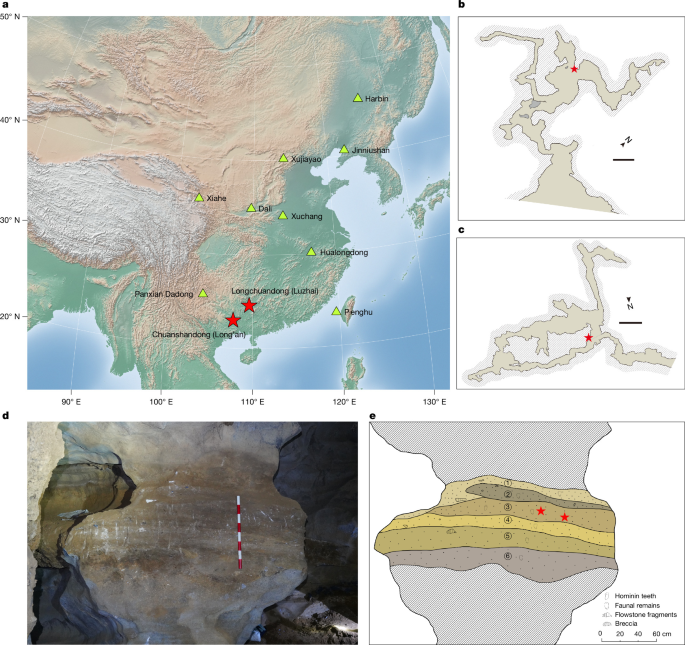
Southern China Teeth Show Homo Erectus Survival Past 184,000 Years
Fossil teeth from two southern Chinese caves push Homo erectus survival in the region past 184,000 years ago,...

South Korean Biotech AMINOLAB Expands Exports to Egypt, Japan
South Korean biotechnology company AMINOLAB announced on November 25 that it is expanding international sales of amino acid...

Sunrise on the Reaping Opens to $120M Domestic Debut
The “Hunger Games: Sunrise on the Reaping debuted to $120 million domestically and $225 million globally over the...