
Indonesian authorities are battling a wildfire in Mount Bromo National Park on Java island that has destroyed over 120 hectares. The blaze, burning through steep terrain amid extreme dry season conditions, has prompted the deployment of water-bombing helicopters as officials warn of heightened wildfire risks.
Mount Bromo National Park Wildfire Destroys Over 120 Hectares
Indonesian authorities battled to contain a wildfire that swept through Mount Bromo National Park on Java island, destroying significant swaths of protected land. The blaze began on a Monday near Mount Bromo in East Java, driving the closure of one of the country’s most visited tourist destinations until further notice.
Local authorities deployed two water-bombing helicopters against the flames. Fire officials confirmed that the fire had razed at least 127 hectares of national park land, an area roughly equivalent to 180 soccer fields.
Steep Terrain and Wind Conditions Hinder Firefighting Efforts
Firefighting operations face severe environmental hurdles. National park official Rudijanta Tjahja Nugraha noted that the burning zone is located in a steep, cliffside region, making it difficult for ground crews to reach the flames safely.
Fire official Bambang Setyo Antoko outlined the operational challenges facing personnel on the ground, emphasizing the impact of atmospheric variables on the spread of the fire.
El Nino Weather Patterns Fuel Extreme Dry Season
While the exact cause of the fire remains unknown, authorities point to severe environmental dryness as a primary factor. The park is extremely dry as El Nino conditions take root across Indonesia, altering regional rainfall patterns and air pressure.
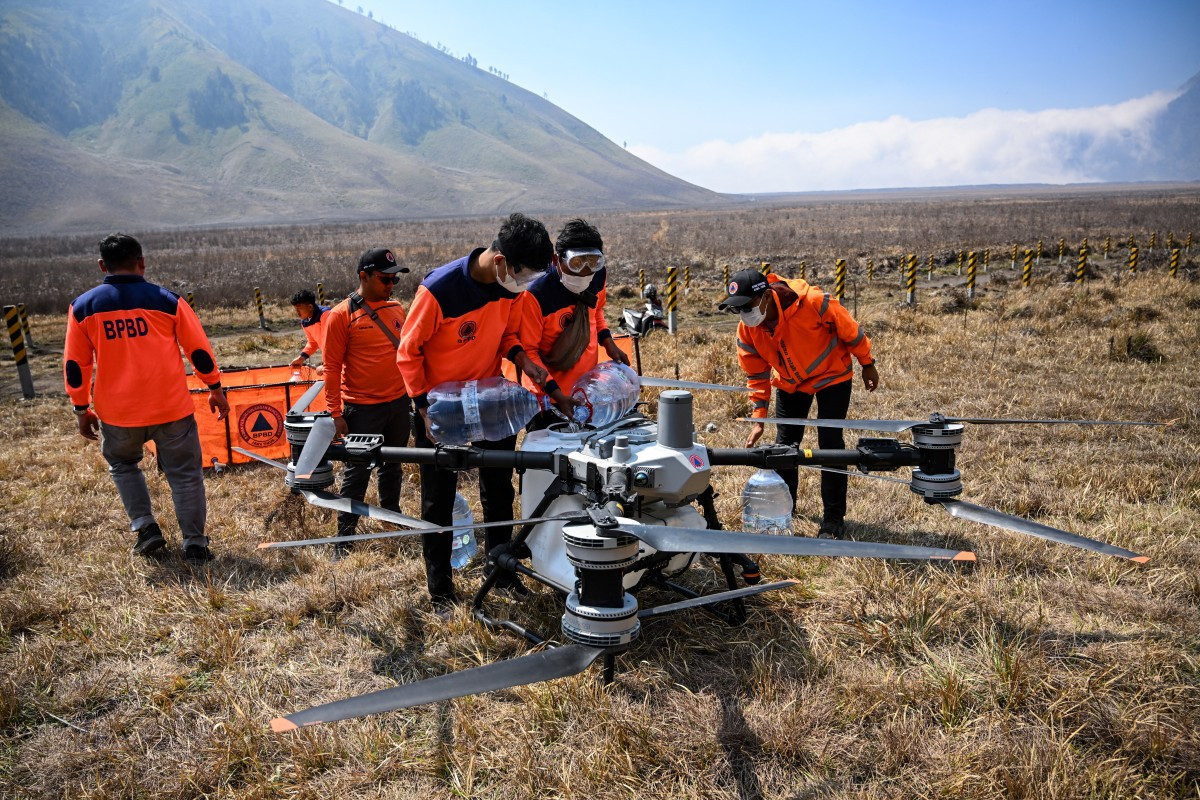
Indonesia’s BMKG weather agency warned that the dry season will be more intense and prolonged than usual, carrying an elevated risk for wildfires and drought. According to the Forestry Ministry, more than 107,000 hectares of land burned across the country between January and June, more than double the area destroyed during the same period in 2023. These conditions follow previous extreme climate cycles that helped make 2023 and 2024 the two hottest years globally on record.
History Repeats at a Famed Volcanic Destination
The current disaster recalls previous fire incidents at Mount Bromo, which is internationally famed for its dramatic volcanic scenery. The national park previously caught fire in 2023, when a couple lit a flare during a pre-wedding photo shoot. That previous blaze destroyed more than 500 hectares of land, vastly exceeding the footprint of the current active fire.
Xi Jinping Arrives in Washington for Historic State Visit with Trump
The visit marks Xi's first trip to the United States in over a decade amid an expiring bilateral...

Police Seize Phones of Senzo Mchunu in Fraud and Defeating Justice Probe
Police seized cellphones from suspended Police Minister Senzo Mchunu after executing a Johannesburg High Court search and seizure...

UN Says US Boat Strikes May Be Crimes Against Humanity
A United Nations human rights expert concluded that United States military attacks on suspected drug boats in the...

Ghana Shifts to Enforcement of Gender Equity and Disability Inclusion
Ghana has officially transitioned from advocacy to enforcement regarding gender equity and disability inclusion, anchoring social protection as...