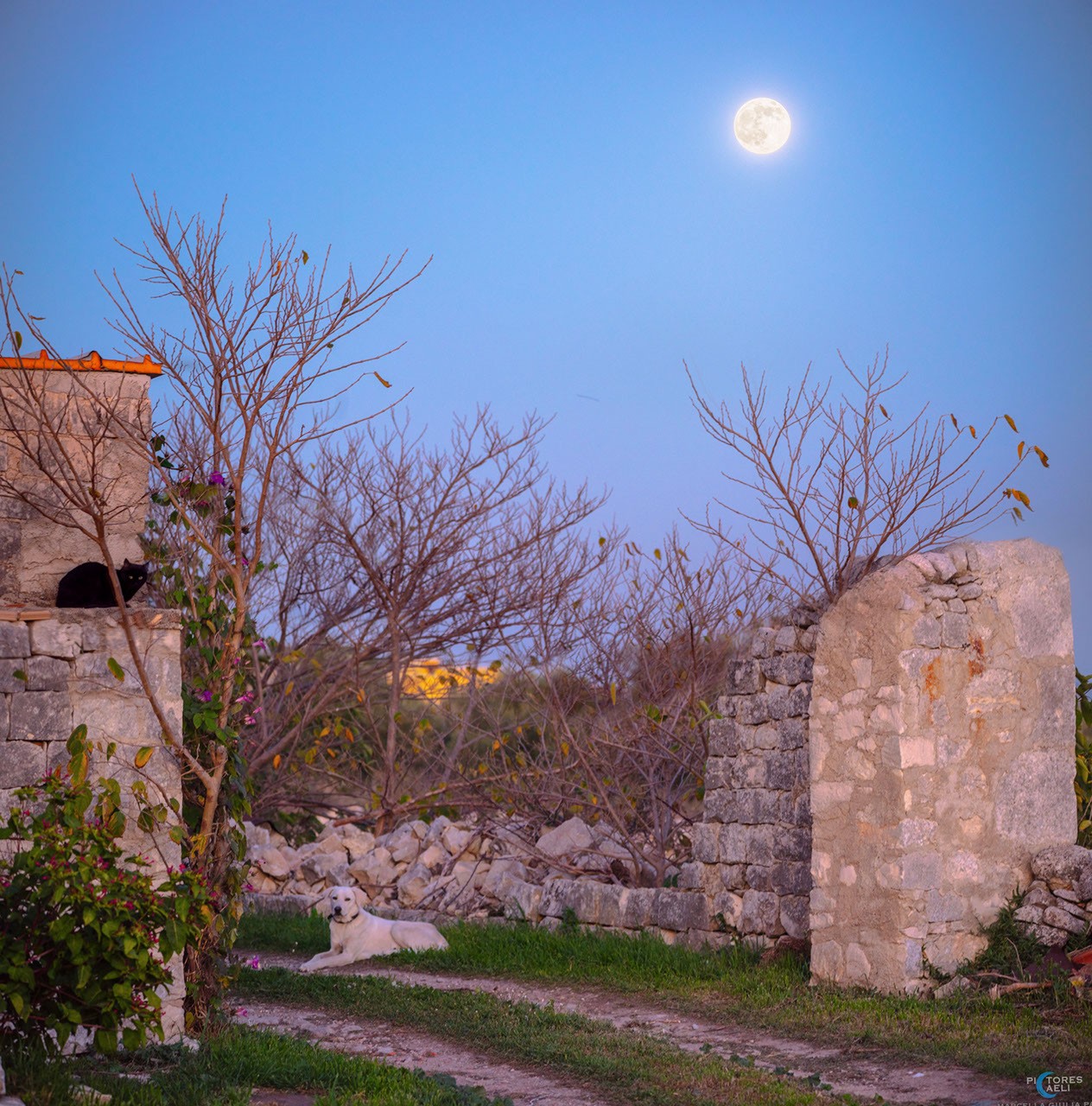
The November full moon reached peak illumination at 9:53 a.m. Eastern time on Tuesday, launching a run of four consecutive supermoons that will stretch into February 2027.
- Beaver Moon hit full phase at 9:53 a.m. ET on Nov. 24, about 224,170 miles from Earth
- First of four back-to-back supermoons, per NASA and multiple astronomy outlets
- December’s Cold Moon on Dec. 23 will be the closest and brightest of the series
- Supermoon definitions still split: NASA counts four; Farmers’ Almanac counts three
What makes a moon a supermoon
The moon follows an elliptical orbit, not a perfect circle. “The moon's orbit is a little bit elliptical; it's not a perfect circle. So sometimes the moon is slightly closer to the Earth, and when that happens, it'll appear larger in the sky as a result,” said Kevin Lewis, vice chair and professor of Earth and planetary sciences at Johns Hopkins University.
At 224,170 miles (360,768 kilometers) from Earth, Tuesday’s Beaver Moon sat well inside the perigee zone that triggers the supermoon label.
Why the count differs
Fred Espenak, the retired NASA astrophysicist whose perigee tables still underpin many published lists, measured each full moon against the perigee and apogee nearest it in time. Richard Nolle, who coined the term supermoon, measured against the year’s extreme perigee and apogee. Espenak died June 1, 2025, but his tables remain the reference for the four-count camp.
What the numbers show
| Full moon | Peak (ET) | Distance from Earth |
|---|---|---|
| Beaver Moon | Nov. 24, 9:53 a.m. | 224,170 miles (360,768 km) |
| Cold Moon | Dec. 23, 8:28 p.m. | 221,667 miles (356,740 km) |
| Wolf Moon | Jan. 22, 2027 | 222,230 miles (357,640 km) |
| Snow Moon | Feb. 20, 2027 | 225,748 miles (363,306 km) |
December’s Cold Moon will be the closest full moon since January 2018, passing 221,667 miles from Earth at maximum illumination. Forbes noted the Cold Moon reaches full phase at 8:28 p.m. EST on Dec. 23 but is best seen rising into twilight on Christmas Eve.
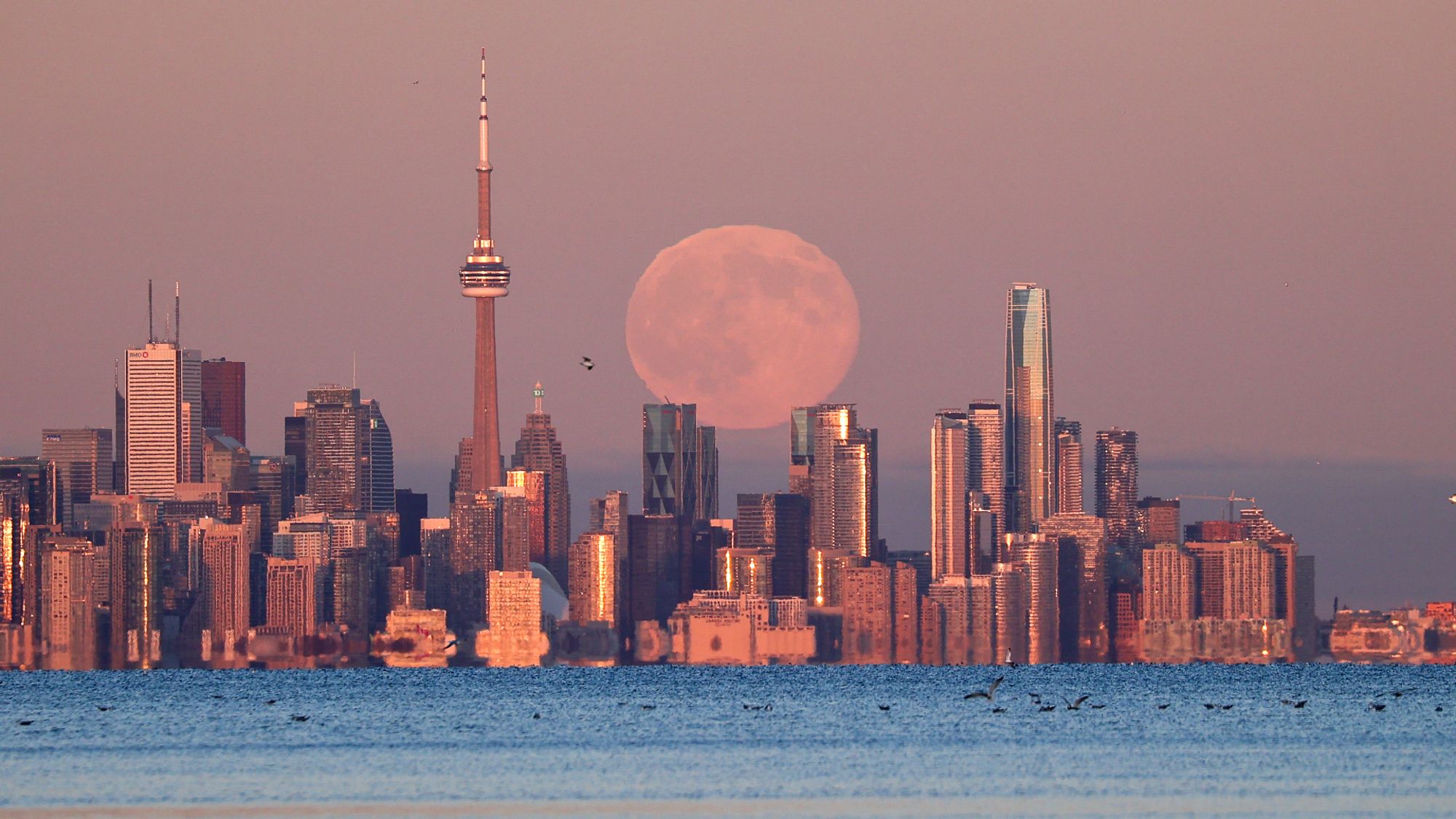
The moon illusion and what you actually see
Photographer Allen Berman captured the Beaver Moon low over the Los Angeles skyline from a neighbor’s front lawn in Baldwin Hills.
“We wound up on a neighbor’s front lawn in the Baldwin Hills section of town. The owner was a bit surprised to see photographers there. But he was cool. The conditions were perfect with thin clouds over the distant mountains that made for a magical image,” Berman told Space.com.
Photographers capture Beaver Moon worldwide
NASA astronaut Anil Menon posted a composite of four full-moon images taken from the International Space Station with a 400-millimeter lens, writing on X that the photos carried no edits, Space.com reported. Salih Zeki Fazlioglu photographed the Beaver Moon illuminating a thin veil of clouds above Istanbul, Turkey, as reflected sunlight competed with the city’s artificial glow, Space.com added.
Pongmanat Tasiri captured the moon rising over the Wat Phra That Doi Suthep Buddhist temple in Chiang Mai Province, Thailand, Space.com said. Giovanni Passalacqua sent an image from Ragusa, Sicily, Italy, taken on Nov. 24, 2026, at 06:39 local time with a Canon EOS R and Sigma 600-millimeter lens, according to BBC Sky at Night Magazine.
Moonset today from space station – no edits to these photos from 400mm lens pic.twitter.com/OrlShgArwP
James M photographed the supermoon from Rainham, Kent, UK, on Nov. 23, 2026, at 22:19 local time using a Panasonic Lumix DMC-TZ60, BBC Sky at Night Magazine reported.
Christmas Eve Cold Moon marks rare close approach
Smithsonian Magazine noted the Christmas Eve full moon coincides with perigee under a stricter supermoon definition, a coincidence that has not occurred since 1787. Herbert told BBC Newsround that under the stricter definition the most recent Christmas Eve full moon perigee was 1787, while a more generous definition also includes 2007 and 1912, Smithsonian Magazine added.

Live Science’s Jamie Carter said the Cold Moon represents the closest full moon to Earth since 2018.
NASA Artemis timeline follows supermoon series
After Artemis II carried four astronauts around the moon in April 2026, NASA’s next major goal is to put astronauts back on the lunar surface for the first time since Apollo 17 in December 1972, Forbes reported.
Something super is on the rise… 🌕 November’s Beaver Moon—a full supermoon—will light up the night sky tomorrow, Nov. 24. Look up after sunset for your best viewing opportunity! pic.twitter.com/dTA3sw0LWI
The mission would send four astronauts toward the moon with two descending to spend about a week near the south pole. The goal this time is not simply to land, plant a flag and leave, Forbes added.
Tides, folklore, and the next dates
The Beaver Moon name traces to the season when beavers finish winter preparations and trappers historically set traps before waterways froze. Other traditions call it the Frost Moon, Freezing Moon or Snow Moon. The Anishinaabeg know it as Baashkaakodin Giizis — the Freezing Moon.

Full moons amplify tidal ranges, and the closer perigee adds a small extra pull. Espenak estimated the closest supermoon pulls only 4% harder than the moon at average distance. Coastal areas near the Dec. 23 Cold Moon should check local tide predictions and any storm forecasts for those days.
Fred Espenak was a retired NASA astrophysicist who published extensively on eclipse predictions and provided NASA’s eclipse bulletins starting in 1978.
@EarthDotCom 👉 https://t.co/u5Sf8FOqzv
His perigee tables remain the authoritative reference for counting supermoons because they measure each full moon against the perigee and apogee nearest to it in time, a standard that still underpins many published lists today. Espenak retired in 2009 but his work continues to define the four-consecutive-supermoon series, including the current run stretching into February 2027.
Mark the calendar: Cold Moon on Dec. 23, Wolf Moon on Jan. 22, 2027, and Snow Moon on Feb. 20, 2027. Whether you count three or four, the December moon is the one to watch.
Worth a look

Vitamin D Deficiency Linked to 23 Minutes Less Sleep in Older Adults: Study
Middle-aged and older adults with vitamin D deficiency slept about 23 minutes less per night than people with...

GTA 6 Players Get $15,000 Early With Hidden Cash and Robberies
Grand Theft Auto VI players can pocket over $15,000 with minimal effort in the game's early chapters using...

Victoria Election 2026: Coalition’s $13.6bn Asset Recycling Plan Sparks Privatisation Row as Roads Dominate Voter Concerns
One Nation pledges to block Coalition sewage privatisation plan Auditor-General found 48% of state roads in poor or...

Coffee Linked to Higher Gut Acidity, More Colon Contractions in Sensor Study
Coffee drinkers may be reshaping their digestive tracts in ways that go beyond the microbiome, new data from...