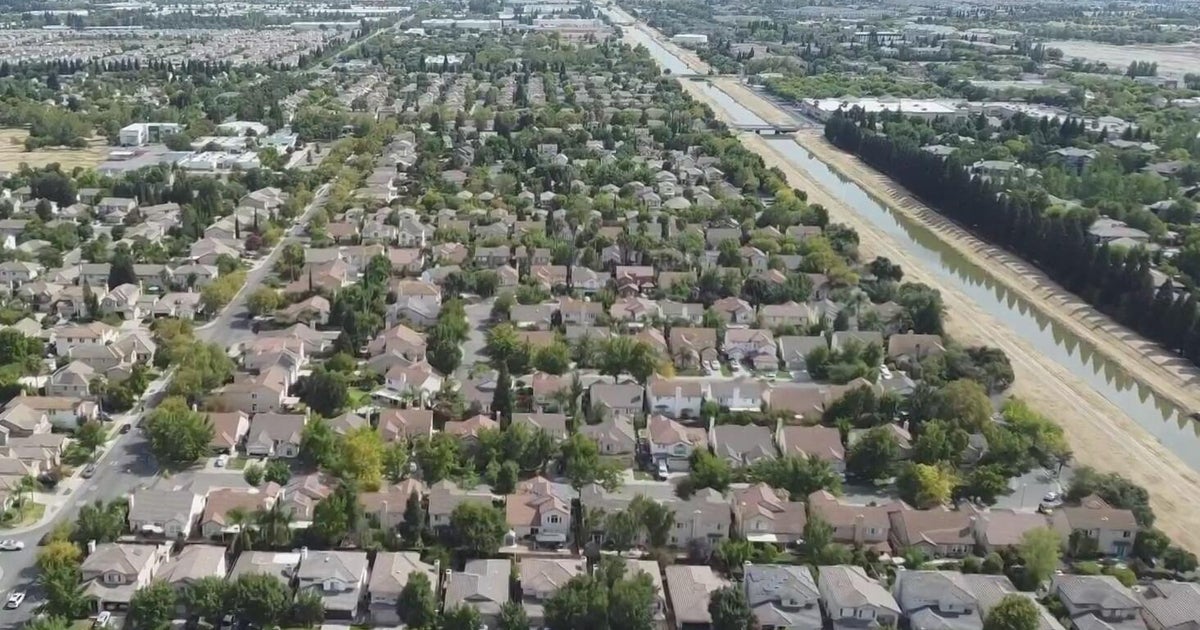
Natomas is pushing toward 200-year flood protection after finishing work to deliver 100-year protection.
Natomas residents are seeing flood insurance rates diverge from uniform pricing as the basin works toward a higher federal protection standard, CBS News reported.
The shift matters because Sacramento’s Natomas Basin — a low-lying bowl ringed by 42 miles of levees that also cradles Sacramento International Airport — has flooded three times in living memory, in 1986, 1997 and again in 2023. Reclamation District 1000 director Scott Brown said the 1986 event came closest to breaching the levee near the airport, a stretch that has since been reinforced along with the rest of the ring.
“What’s probably more unique to us is the high level development within the levee ring system so the risk is higher,” Brown told CBS News. “I am confident our levees will hold.”

That confidence rests on a two-part system: levees designed to keep the Sacramento and American rivers out, and eight pump stations that drain rainwater collecting inside the “bathtub.” Work delivering 100-year flood protection is finished, and the district is now pushing toward 200-year protection — a benchmark that, once certified by the U.S. Army Corps of Engineers, could reshape insurance requirements for thousands of policyholders.
Certification, however, is a bureaucratic marathon. Even after construction wraps, federal inspection and sign-off can take another one to two years before the new maps take effect and lenders adjust their mandates.
State Farm insurance agent Monique Ambers said Natomas residents are already seeing changes in how federal flood insurance premiums are calculated. Policies are now priced more closely around the individual flood risk of each home, she said.
Ambers also warned against waiting for a storm forecast to buy coverage. “With flood insurance, it is a 30-day waiting period and will not go active for 30 days and you also need to pay the annual amount up front, not in installments,” she told CBS News.
Meanwhile, the district continues maintenance while coordinating with the Corps on the next round of improvements. Brown noted a 50 percent chance of a higher-precipitation year ahead, adding that the sequence of storms — not just the total — drives the operational crunch.
“The storms can pass and we can still be pumping water for a week or two to get it all out,” he said. Pump stations can pre-lower interior water levels ahead of incoming systems, creating storage capacity inside the basin for the next deluge.

Steve Young Reveals Fear Was His ‘Deepest Transaction’ in BYU-Idaho Devotional
The deepest transaction in Young's life was fear, and Young had been living in it the whole time...

UIC Hosts Chicago State for Chicago Crosstown Challenge Wednesday at Credit Union 1 Arena
UIC opens the doors of Credit Union 1 Arena on Wednesday night for the second installment of the...

Privately Funded Waikīkī Fireworks Startle Oʻahu South Shore Residents
"I was really surprised," said Gwen McCleland, a hostess at Tiki's Bar. "I had no idea they were...

A January Review on Trip.com Turned a Routine Hotel Stay Into a Literary Event
A January review on Trip.com turned a routine hotel stay into a literary event, describing the Country Inn...