
New Orleans attorney Richard Trahant says paying a $400,000 fine was “worth it” now that the Catholic Church has officially classified an abusive priest as a clergy molester.
The vindication came on November 6, when the Archdiocese of New Orleans added the late Paul Hart to a list of more than 100 priests and deacons facing credible claims of clergy abuse. For Trahant, the inclusion of Hart on that list marks the end of a long, costly battle to expose the truth about a man who had previously dismissed allegations of sexual misconduct as “bogus” and “made-up.”
The struggle over Hart’s history became a focal point of the archdiocese’s bankruptcy proceedings, which the institution initiated in 2020. Trahant, who represented clergy abuse claimants caught in the bankruptcy, gained access to documents that revealed Hart had secretly admitted to supervisors that he had sexual contact with a 17-year-old girl in the early 1990s.
“This is the very definition of a Pyrrhic victory,” Trahant said. “Sure, it’s exoneration – yet only after I paid a fortune.”
The cost of transparency
The legal fallout for Trahant was severe. Federal judge Meredith Grabill ruled that Trahant’s actions triggered a violation of a confidentiality order, resulting in a $400,000 fine that eventually rose to $460,000 with interest. The ruling also led to the expulsion of four of Trahant’s clients from a committee of survivors negotiating the bankruptcy settlement.

While the court investigation suggested that Brother Martin, the high school where Hart served as chaplain, received details about the misconduct from the archdiocese rather than Trahant, the sanctions remained. Trahant unsuccessfully appealed the fine to the U.S. Supreme Court, which declined to hear the case in June.
According to documents obtained and reviewed by the Guardian, the timeline of the misconduct and the church’s response reveals a pattern of internal handling that bypassed public accountability for years. In 2012, a victim reported Hart to the church and provided a confession during a confidential internal investigation.
Although an advisory board recommended removing Hart from public ministry at that time, then-Archbishop Gregory Aymond allowed him to continue. The decision rested on the fact that while the victim was considered a minor under canon law, the age of consent under Louisiana law was 17 at the time of the incident, and 16 under church law in the early 1990s.
Hart was later appointed as chaplain at Brother Martin in 2017. He remained in that position until January 2022, when he retired following a request from the school to have him removed from the campus. He died nine months later.
A settlement built on accountability
The inclusion of Hart on the list of the credibly accused is part of a broader move toward transparency under Archbishop James Checchio. On November 6, Checchio added 27 more names to the list, bringing the total to 106 individuals. This update is a key component of a December 2025 agreement requiring the archdiocese and its insurers to pay $305 million to hundreds of survivors.
The archdiocese has said that records related to Hart and others on the list will be housed in a public archive at Louisiana State University. For Trahant, this move effectively nullifies the argument that the information regarding Hart was ever truly confidential.
The human cost of these legal maneuvers extends to the survivors who were removed from the negotiating committee. James Adams, one of the clients ousted from the committee, argued that the court sanctioned both an innocent lawyer and his clients.
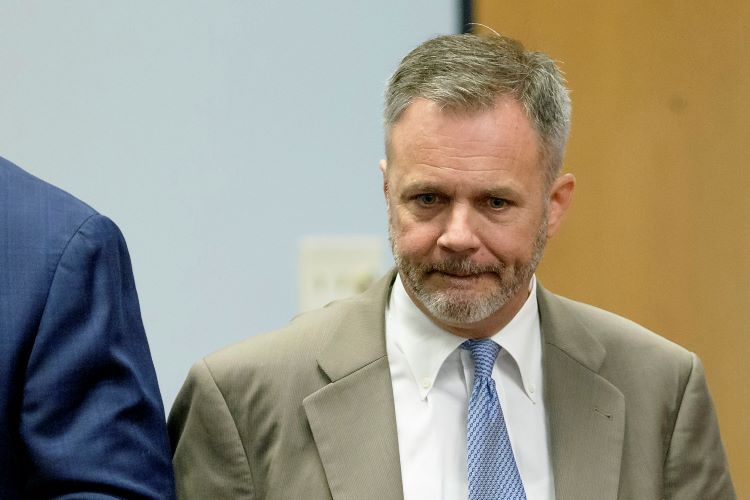
“At least 1794420541, everyone knows that we were wrongly removed,” Adams said. “The court sanctioned an innocent lawyer and his clients.”
Trahant, who is considering further legal action to recoup his fine and costs, maintains that the archdiocese’s decision to list Hart is a direct admission that the previous handling of the case was flawed. He pointed to Hart’s own claims that media reporting on his departure from Brother Martin was “bogus” as a falsehood that has now been officially refuted.
“He was lying,” Trahant said. “And … now they’ve admitted [it].”
It is unclear whether the archdiocese's decision to release these names will lead to further litigation or provide the "healing" promised by Archbishop Checchio.
Keep reading
No. 9 Tennessee Faces Texas A&M in Crucial SEC Road Matchup
No. 9 Tennessee faces a critical road test against Texas A&M this Saturday at 3 p.m. Eastern Time....

Oregon Progressives Gain Power to Push Wealth Tax and Policy Shifts
Oregon progressives roughly doubled their presence in the House and Senate during last week's election as the Democratic...

Why Beating Michigan Is the Only Nonnegotiable Left for Ohio State
In a column for Land-Grant Holy Land, a contributor argues that while Ohio State has three games remaining...

Proposed SNAP Rule Changes Could Impact Nevada Families and Retailers
Federal regulators are moving to tighten how families qualify for food assistance, a decision that could strip nutrition...