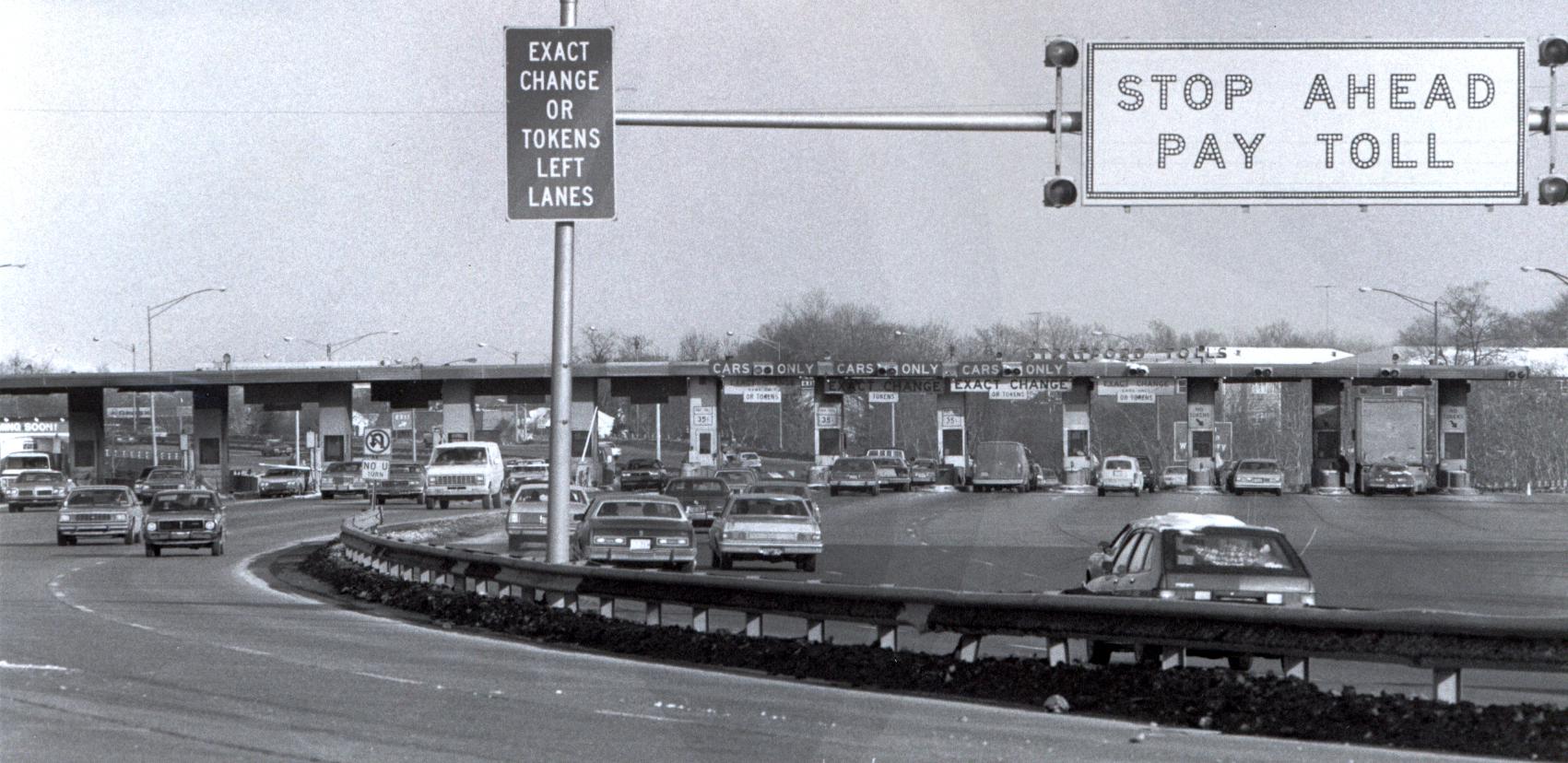
A group of residents recently proposed bringing highway tolls back to Connecticut to fund transportation projects and provide property tax relief, CT Insider reported.
The Connecticut Citizens’ Assembly made the recommendation, arguing that toll revenue could offset specific transportation costs. This shift would theoretically allow the state to redirect other revenue streams toward lowering the property tax burden on residents. While the proposal offers a potential solution to funding gaps, the group acknowledged that state and federal hurdles persist.
For many Connecticut drivers, the concept of paying to use state highways feels like a ghost from a previous era. Tolls were once a standard feature of the state’s infrastructure, but a series of economic, political, and tragic events led to their systematic removal.
The era of the toll plaza
The history of Connecticut’s roadways began with private enterprise. In the late 1700s and early 1800s, dozens of private corporations constructed hundreds of miles of toll roads across the state. Eventually, the state’s highway department took control of these routes in the early 1900s.
Throughout the 20th century, motorists encountered toll booths on several major arteries, including the Merritt Parkway, the Wilbur Cross Parkway, and the Connecticut Turnpike. Bridges in the Hartford area and throughout southeastern Connecticut also required payment. According to a 2009 report by the Office of Legislative Research, these tolls were a central part of the state’s transit landscape for decades.

The infrastructure was extensive:
- The Merritt and Wilbur Cross Parkways: Part of Route 15, stretching from Greenwich to Meriden, these were constructed during the 1930s and 1940s.
- The Connecticut Turnpike: Built in the 1950s, this highway extended from Greenwich to East Lyme and Killingly, with sections later becoming part of Interstate 95 and Interstate 395.
Tragedy and the push for removal
By the 1980s, the political climate shifted against user fees. A grassroots group known as Banish All Tolls, composed largely of Fairfield County residents, pressured lawmakers to eliminate the charges. These residents argued that tolls created several systemic issues, including increased congestion and a disproportionate financial burden on commuters.
Beyond the economic arguments, there were environmental and safety concerns. Commuters said that the requirement to stop at toll plazas led to wasted fuel, increased noise, and higher levels of pollution. However, the most decisive turning point was a moment of profound tragedy.
On Jan. 19, 1983, a tractor-trailer crashed into several vehicles at a toll plaza in Stratford, killing seven people. The Office of Legislative Research said that this fatal accident is considered by many to have been the event that tipped the balance toward toll removal.
The removal of tolls also offered a strategic financial advantage regarding federal oversight. Because Connecticut reached an agreement with the federal government to remove tolls on the turnpike, federal funds became available for reconstruction projects. This arrangement also provided emergency funding to replace the Mianus River Bridge following its collapse on June 28, 1983.
The end of the toll era
The dismantling of the toll system happened in stages. By the early 1980s, tolls on various highway bridges had already been closed. In 1983, state lawmakers mandated the closure of tolls on the Connecticut Turnpike and the Hartford area bridges. By 1986, the legislature ordered the closure of tolls on the Merritt and Wilbur Cross parkways.
The final toll in the state was paid on April 28, 1989, at the Charter Oak Bridge.
Since that time, the idea of reintroducing tolls has surfaced repeatedly, often meeting stiff resistance. When Gov. Ned Lamont ran for office in 2018, he initially suggested supporting tolls exclusively for trucks. Once in office, he proposed a plan to toll all vehicles on major highways to generate revenue for transportation improvements, but he eventually pivoted to a truck-only plan involving certain bridges.
Ultimately, the Governor was unable to secure the necessary votes from fellow Democrats in the state legislature to pass the proposal. Much like the activists in the 1980s, a modern grassroots group called No Tolls CT helped lead the opposition. No toll proposal has gained traction since that period.
Worth a look

No. 9 Tennessee Faces Texas A&M in Crucial SEC Road Matchup
No. 9 Tennessee faces a critical road test against Texas A&M this Saturday at 3 p.m. Eastern Time....

Oregon Progressives Gain Power to Push Wealth Tax and Policy Shifts
Oregon progressives roughly doubled their presence in the House and Senate during last week's election as the Democratic...

Why Beating Michigan Is the Only Nonnegotiable Left for Ohio State
In a column for Land-Grant Holy Land, a contributor argues that while Ohio State has three games remaining...

Proposed SNAP Rule Changes Could Impact Nevada Families and Retailers
Federal regulators are moving to tighten how families qualify for food assistance, a decision that could strip nutrition...