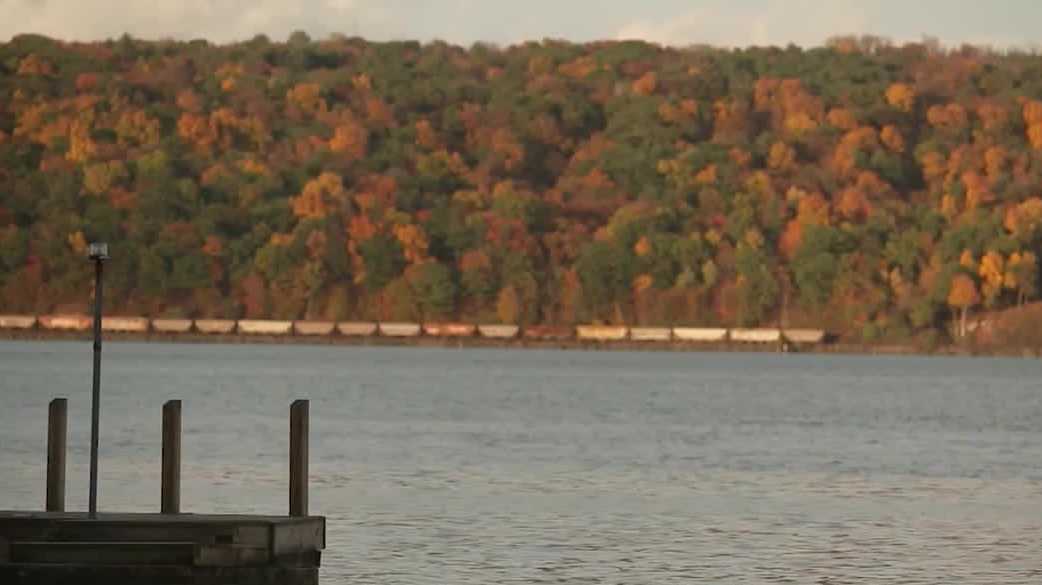
“We see how low the rivers are,” said Ted Diers, assistant director of the Water Division at the New Hampshire Department of Environmental Services.
“In fact, some of the levels are almost historically low for this time of year.”
Drought conditions are getting worse in parts of New Hampshire, and environmental officials said they don’t see much hope for improvement until spring. By the end of October, Concord had recorded a precipitation deficit of more than three inches, making it the 19th driest October on record.
The latest drought report shows parts of the Great North Woods and the Mount Washington Valley falling into severe drought, while the area of moderate drought expanded to include the western Lakes Region and the Upper Valley. Groundwater levels, stream flows and precipitation chances remain a huge focus even though the growing season has ended.
“We really do need to be careful this time of year,” Diers said. “We need to remember that as the ground freezes, any precipitation we get between now and when snowmelt happens doesn’t soak into the ground.”
Diers said now is the time for homeowners, especially those on private wells, to check for plumbing leaks.
“You just need to make sure that you’re fixing those leaks, replacing appliances, low-flow toilets, things like that, making sure you’re being very careful with your well water,” Diers said.
State officials are also asking residents to document local impacts through the federal reporting portal at drought.gov. “It’s like a citizen science kind of thing, where you can type in the impacts you’re feeling,” Diers said.
The combination of a precipitation deficit heading into winter and the physical barrier of frozen soil means the recharge window for groundwater is effectively closed until the spring thaw.
Related reading

Phoenix Mayor: Data Centers Could Consume Two-Thirds of Area’s Power
Phoenix Mayor Kate Gallego told Axios this week the city is "open for business, but we're not for...
Advance Colorado Sues Over Amendment 87 Tax Impact and TABOR Claims
Advance Colorado filed a lawsuit in Denver District Court on Thursday seeking to overturn Amendment 87, the graduated...

CBJ Issues Request for Qualifications for Telephone Hill Redevelopment
Juneau is asking developers to take a crack at one of the most difficult building sites in Alaska,...

New Ordinance Seeks Independent Commission for Chicago Ward Mapping
Chicago aldermen will no longer draw their own ward boundaries under an ordinance introduced this year that would...