
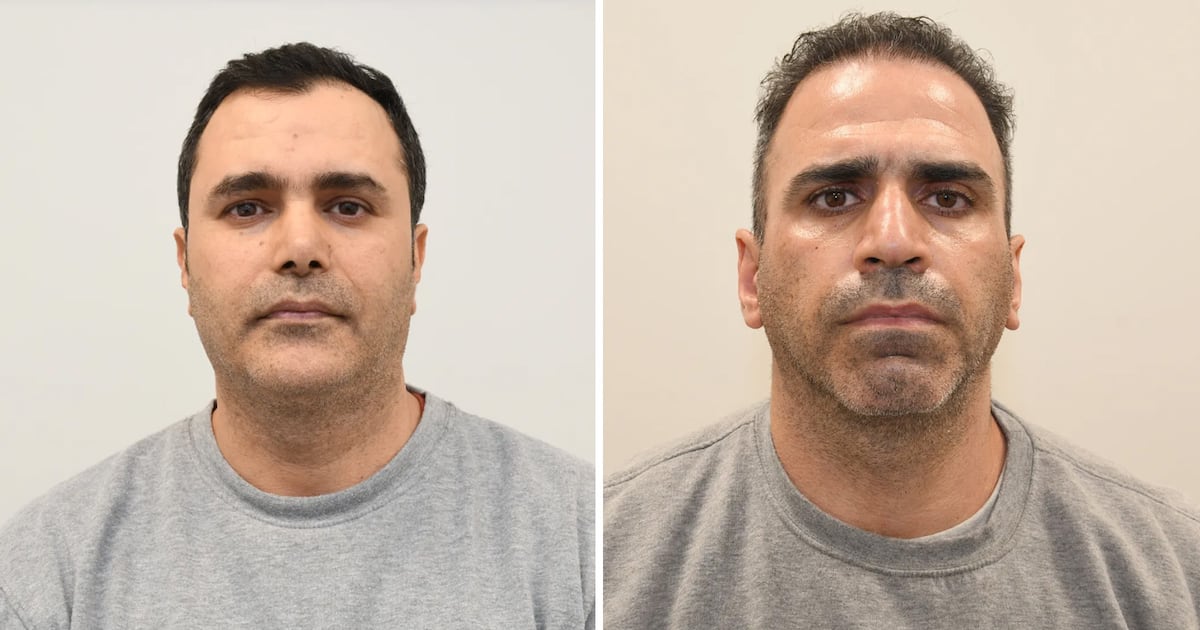
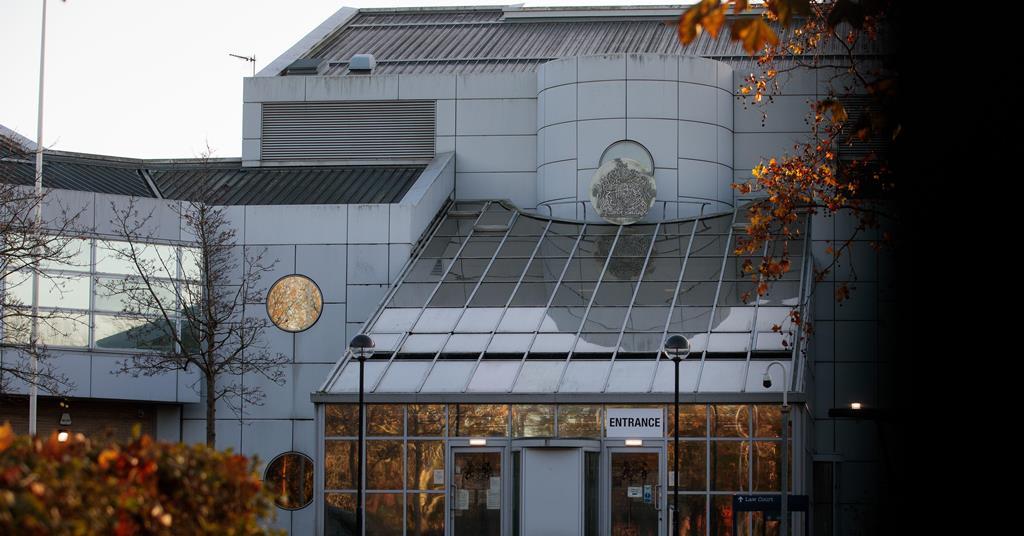
Two Iranian men were convicted at Woolwich Crown Court on Thursday of spying on dissident journalists and a London lawyer for Iran’s Islamic Revolutionary Guard Corps, the first successful prosecution of Iranian nationals under Britain’s National Security Act 2023.
Mostafa Sepahvand, 41, was found guilty of two offenses — assisting a foreign intelligence service and preparatory conduct for serious violence — while Farhad Javadi Manesh, 46, was convicted of one count of assisting a foreign intelligence service, The Times of Israel reported.
A third defendant, Shapoor Qalehali Khani Noori, 57, was acquitted on all charges. The six-week trial revealed a surveillance operation targeting Iran International journalists Mojtaba Pourmohsen and Kambiz Hosseini, barrister Jonathan Turner — chief executive of UK Lawyers for Israel — and a media production professional between August 2024 and March 2025.
The mechanics of a proxy operation
Prosecutors described a calculated operation directed by the IRGC or “middlemen” for Iranian intelligence, Senior National Coordinator for Counter Terrorism Policing Vicki Evans said. Sepahvand led contact with handlers in Iran while Manesh fed photographs, videos and Google searches to him, the Crown Prosecution Service said.
Cell-site data placed Sepahvand in specific London neighborhoods during surveillance runs. His phone contained addresses and searches for a target who had already fled to a west London hotel over security concerns, the Law Society Gazette reported.
In voice notes recovered by investigators, Sepahvand asked his Iranian contact for £150,000 to “finish [the target] off” once located, stressing “I’ll do it.” Frank Ferguson, head of the CPS’s special crime and counter-terrorism division, said Sepahvand was willing to go beyond surveillance to commit serious violence. “Thankfully, the defendants were stopped before any attack could take place,” Ferguson said.
Transcripts showed Sepahvand complaining he had spent £8,000 of his own money on the operation without reimbursement, telling his handlers he was being “made a fool of” and “driven to the brink,” The National reported. He had been promised £150,000 ($200,000) but received only £3,900, according to messages cited by the Daily Mail.
Sepahvand also claimed he participated out of fear of consequences for refusing, but prosecutors called that “entirely bogus,” noting he had been promised a theft conviction in Iran would be “sorted out” in exchange for cooperation, the BBC reported.
Evans said the case reflects a trend: “People get involved in work on behalf of foreign states and they’re often promised money and lots of other things but they rarely receive what they’ve been offered.” The National connected this pattern to other IRGC plots, including the 2024 recruitment of Asif Merchant for a Trump assassination attempt, where payment disputes also featured prominently.
AI enters the evidence room
Evans disclosed that ChatGPT search history was presented in a state-threat case for the first time. “It’s something we’re beginning to see more of as AI tools become more widely available,” she said. The digital trail supplemented traditional surveillance evidence — photographs, addresses, and movement data — that prosecutors used to prove intentional assistance to a foreign intelligence service.
A sustained campaign, not isolated incidents
This marks the fourth case involving direct threats to Iranian journalists in the UK, suggesting a sustained pattern rather than isolated incidents, ARTICLE 19 stated. The Metropolitan Police noted hostile states increasingly rely on proxies — in this case, Iranian nationals with settled immigration status living in the UK. Such operations are difficult to detect and easy to deny.
Iran has repeatedly denied involvement in spying or assassination plots in Britain. Foreign Minister Abbas Araghchi said he was “disturbed” by the arrests in May 2025. British authorities have long accused Iran of using criminal networks and proxies for plots and attempted assassinations, accusations Tehran consistently rejects.
The protection gap
“A verdict after the fact is not the same as protection in advance,” ARTICLE 19 argued. The organization called for effective, ongoing protection for journalists at risk, clear reporting channels without immigration consequences, prompt transparent investigations of transnational repression, and coordinated international action.
Iran International echoed the concern: the verdicts would not “make the lives of our journalists any safer so long as the Islamic Republic of Iran continues its campaign of death threats and violence against them.” Kambiz Hosseini and Mojtaba Pourmohsen “remain under threat,” the broadcaster said.
Jonathan Turner, the targeted barrister, welcomed the convictions but warned: “Iran is a really serious threat to many people in the Middle East — not just Israelis but Arabs as well — and also to people in Britain, including on the streets of our capital.”
The Islamic Revolutionary Guard Corps was officially established in May 1979 by order of Ruhollah Khomeini in the aftermath of the Iranian Revolution. Its constitutional mandate is to ensure the integrity of the Islamic Republic, a role distinct from the regular army’s duty to protect national sovereignty.
The force comprises approximately 125,000 personnel across five branches, including the Quds Force, which specializes in unconventional warfare and clandestine operations abroad, and the Basij paramilitary volunteer militia with roughly 90,000 active members.
Sentencing set for December at Old Bailey
Sepahvand and Manesh will be sentenced at the Old Bailey on 17 December. The case represents the first conviction of Iranian nationals under the National Security Act 2023, legislation introduced specifically to counter rising threats from hostile states.
As The Jerusalem Post observed, the conviction renews concerns over Tehran’s intelligence operations abroad at a moment when European governments confront cyber threats and suspicious activity near American military facilities — a wider security challenge that extends well beyond the courtroom.
Keep reading

Percy Jackson Returns to Disney+ With ‘the Titan’s Curse’ Adaptation
Percy Jackson and the Olympians returns Friday for its third season, adapting The Titan's Curse for the first...

Xi Hosts Trump and Putin for Nuclear Trilateral in Shenzhen
China staged the first formal trilateral summit of the world's three largest nuclear powers in Shenzhen on Thursday,...

Mary Robinson Urges EU to Reject Antalya Climate Draft After Fossil Fuel References Stripped Out
Former President of Ireland Mary Robinson called on the European Union to reject the draft agreement emerging from...
Indonesia Dismantles Two Networks Recruiting Citizens for Russia-Ukraine War
Indonesian authorities have dismantled two distinct recruitment pipelines sending citizens to fight in Russia’s war against Ukraine, exposing...