North Charleston man faces felony charges in sexual exploitation investigation
Connor Burslem, a 32-year-old resident of North Charleston, South Carolina, was arrested on November 3, 2026, following an investigation into the possession of child sexual abuse material (CSAM). According to the South Carolina Attorney General’s Office, the arrest was the result of a collaborative effort involving the Internet Crimes Against Children (ICAC) Task Force and several local and federal law enforcement agencies.
The investigation began after authorities received a CyberTipline report from the National Center for Missing and Exploited Children (NCMEC). This report provided the foundation for investigators from the Charleston County Sheriff’s Office, the Summerville Police Department, the Charleston Police Department, and Homeland Security Investigations to identify and locate Burslem. He currently faces one count of third-degree sexual exploitation of a minor, a felony charge that carries a potential sentence of up to 10 years in prison.
While the Attorney General’s Office is handling the prosecution, officials emphasized the presumption of innocence for all defendants until proven guilty in a court of law. The state’s legal team has also noted the importance of using the term “CSAM” rather than “child pornography,” noting that the latter can inaccurately imply consent in a crime that is inherently abusive and heinous.
Discrepancies emerge in reporting on related local cases
As law enforcement continues its work in the Charleston area, different reports have surfaced regarding other individuals facing similar charges. While the investigation into Burslem is ongoing, hoodline.com reported on a separate case involving 46-year-old Daniel Paul Van Nostrand, who was arrested on a Thursday facing two counts of first-degree sexual exploitation of a minor. Unlike the charges against Burslem, investigators alleged that Van Nostrand produced the material, a charge that carries up to 20 years in prison per count.
The reporting on Van Nostrand also highlights complexities in tracking criminal histories. While some reports, including those from WCBD News 2 cited by hoodline.com, state that Van Nostrand had prior convictions for assault to commit rape in 2001 and voyeurism in 2013, a 2012 report from Bluffton Today offered a different account. That earlier report stated Van Nostrand was convicted in California on January 11, 2001, for assault and intent to commit criminal sexual conduct in the first degree. The discrepancy between these two accounts of the 2001 conviction remains unresolved in available public records.
The scale of multi-agency task force operations
The involvement of federal agencies like Homeland Security Investigations and the FBI in these local arrests is not an isolated occurrence. These specialized task forces are designed to combat the digital nature of modern exploitation. The scale of this effort is reflected in national data regarding the efficacy of these coordinated units.

According to the Office of Juvenile Justice and Delinquency Prevention, ICAC task forces nationwide conducted nearly 347,000 investigations in 2025, which resulted in more than 17,000 arrests. This massive undertaking demonstrates the resource-heavy nature of policing internet-based crimes against minors.
In the Charleston region, these efforts have included large-scale operations like “Operation Online Guardian.” This sting, led by the Charleston County Sheriff’s Office, utilized undercover agents posing as minors under the age of 14 on social media platforms to identify individuals attempting to meet children for sexual purposes.
Legal and social implications of digital exploitation
The shift in terminology from “pornography” to “CSAM” marks a significant change in how the legal and social sectors approach these crimes. By removing the implication of a “consenting participant,” the legal framework focuses on the reality of the abuse. This shift is part of a broader global movement to align language with the criminal nature of the acts.
The human and economic stakes for these cases are high, impacting not just the immediate victims but the community’s demand for robust digital policing. While some might argue that the intense focus on digital surveillance raises privacy concerns, the rapid increase in investigations—as seen in the 2025 statistics—suggests that law enforcement is prioritizing the protection of minors in an increasingly connected world.
As the prosecution of Burslem moves forward through the South Carolina Attorney General’s Office, the central question remains how effectively these multi-agency task forces can keep pace with the evolving methods used to distribute and produce illegal material online.

Oklahoma City Thunder Hold Fifth Place in Western Conference
Oklahoma City Thunder hold 5-2 record through early 2026-27 season The Oklahoma City Thunder have opened the 2026-27...
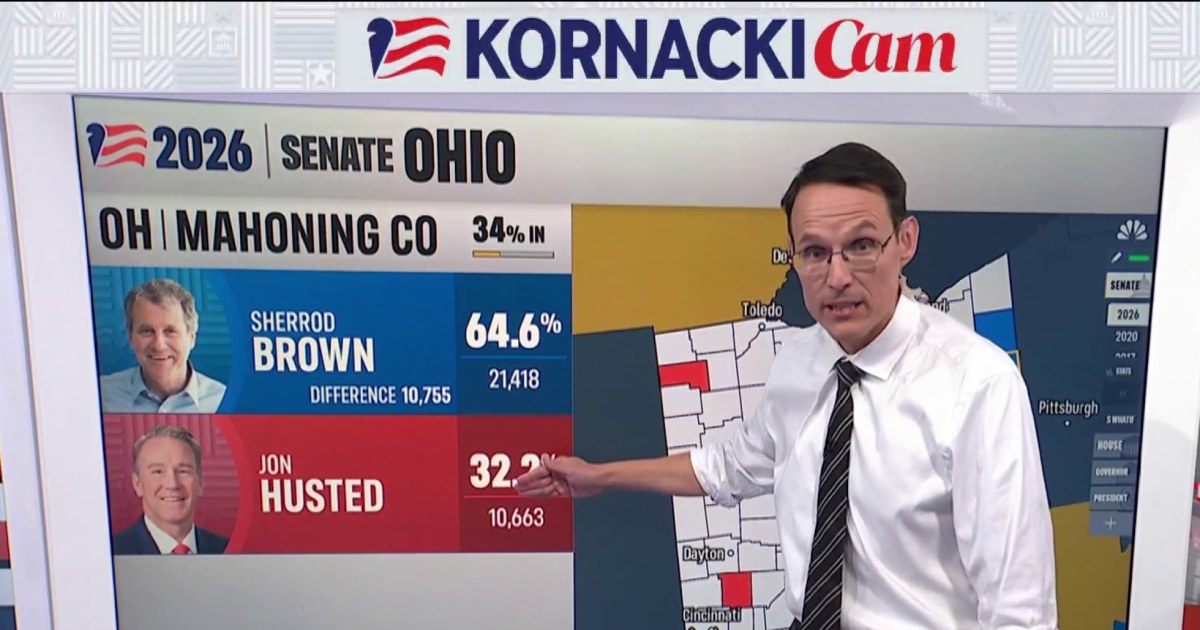
Democrats Project House Control and Key Senate Victories
Sherrod Brown holds early lead in Ohio Senate race Sherrod Brown is currently leading his Republican opponent, Jon...

Election Day Results: Moorhead Mayor Race, North Dakota U.S. House, and Regional Turnout Updates
Lisa Borgen leads Moorhead mayoral race as North Dakota results begin to arrive Lisa Borgen holds a commanding...
Kathy Hochul secures second term in New York gubernatorial election
Democratic Governor Kathy Hochul secured a second full term on Tuesday night, defeating Republican nominee Bruce Blakeman in...