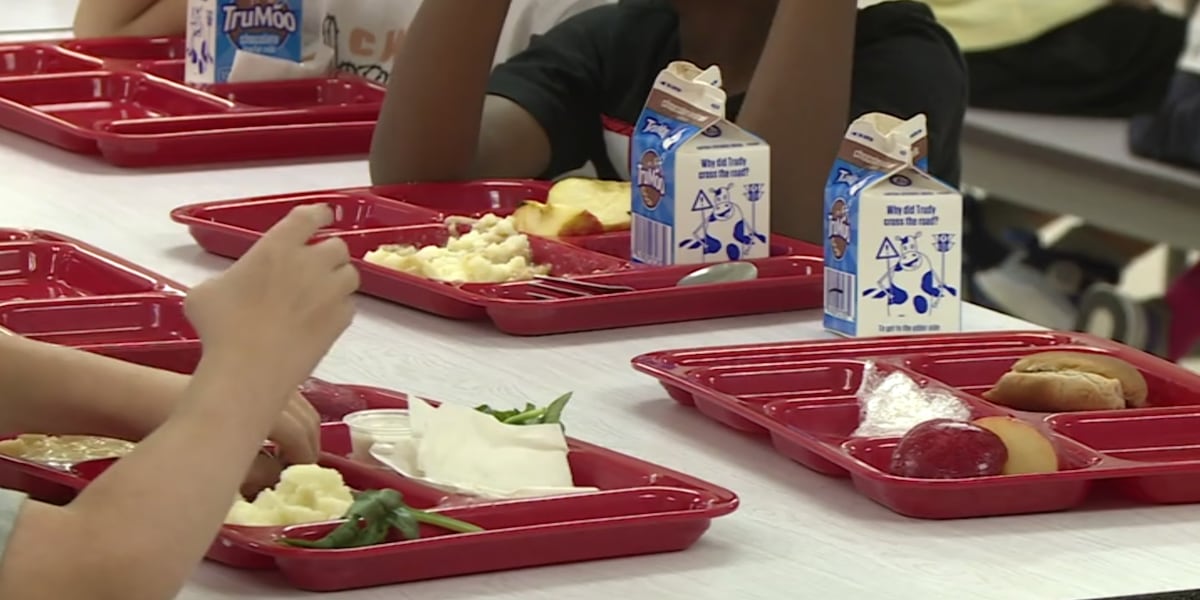
Every K-12 student in North Dakota has the legal right to receive a lunch at school without any stigma or shaming, but students and families who can’t afford to pay can still face long-term consequences, valleynewslive.com reported. More than two dozen school districts across the state have reported referring parents to debt collection agencies for unpaid meal accounts, while at least one district withholds student transcripts over lingering balances.
State law mandates that school districts provide a meal to any student who requests one, even if the child lacks the funds to pay.
“I think the legislators had good intentions when they developed that anti-lunch shaming bill. But then there’s like no funding to help support it. So it’s really put us as districts and families in a tough situation,” said Michelle Wagner, legislative chair for the North Dakota School Nutrition Association and child nutrition program director for Bismarck Public Schools.
The Financial Impact of Collection Referrals
Bismarck Public Schools is among the districts utilizing debt collection agencies as a last resort to recoup unpaid meal account balances. When accounts go unpaid, the financial fallout can follow families for years.

The existence of the debt can be placed on a person’s credit report, lowering their credit score and remaining visible for up to seven years from the date of the debt, according to major credit reporting agencies. That notation can ultimately make it more difficult for a parent or guardian to secure a bank loan.
“That will stay on because it shows your history on your ability to pay your debt,” explained Lise Kruse, commissioner of the North Dakota Department of Financial Institutions, which regulates collection agencies in the state. “The credit score isn’t everything when they make a decision, but it definitely helps to have clean credit.”

School districts statewide reported a cumulative student meal debt of about $2 million at the end of the 2025-26 school year, according to a presentation given to lawmakers (Department of Public Instruction legislative report) by Lynelle Johnson, director of the Office of Child Nutrition and Food Distribution. That total arrived after nearly $46,000 in private donations and nearly $500,000 in transfers from districts’ general fund budgets.
Sen. Scott Meyer, R-Grand Forks, defended the collection referrals by pointing out the alternative financial burden on local taxpayers. “If you’re not paying it, it’s going to get paid some way, and now you’re possibly putting it on the backs of your neighbors,” Meyer said.
Districts Withhold Transcripts over Unpaid Meal Balances
Beyond collection agencies, some districts employ other collection methods. The Elgin New Leipzig School District in southwest North Dakota withholds transcripts from college applications or military volunteer requests if a student carries an unpaid meal balance.
“When they request a transcript, we won’t release one if they have an outstanding bill from lunch, and that usually gets people’s attention enough that they take care of it,” said Sherlock Hirning, superintendent of Elgin New Leipzig.
While the district operates within North Dakota’s current legal framework, child advocates argue the practice penalizes students for familial debt. It remains unclear how many districts utilize similar strategies, as a state survey captured only a small sample of public schools.
“That’s still very shaming tactics. That’s terrible,” said Amy Jacobson, a member of the Together for School Meals coalition.
State officials note that even though schools cannot legally deny food to hungry children, the psychological toll of a negative balance causes some students to skip meals entirely. Educators report instances of students visiting restrooms during lunch or older students leaving campus to avoid revealing their financial situation.
Legislative Debates and Future Policy
Voters are considering a constitutional amendment on the general election ballot that would guarantee free breakfast and lunch for all K-12 students while requiring the state to reimburse schools.
Sen. Chuck Walen, R-New Town, opposes the ballot measure but condemns the practice of debt collection referrals and transcript withholding. He plans to introduce legislation requiring the state to pay off all outstanding meal debt annually if the ballot measure fails.
Similarly, Sen. Paul Thomas, R-Velva, intends to introduce legislation in 2027 to address school nutrition, shifting focus toward meal enhancements, larger portions, and addressing food insecurity children face outside of school hours.
Related reading

Bill Essayli fights to block thousands of California ballots
Bill Essayli, the interim U.S. Attorney for the Central District of California, is fighting to block thousands of...

Arkansas vs. Missouri: Why the Razorbacks Must Stop Losing the Battle Line Rivalry
Arkansas has lost 10 of its last 12 annual SEC matchups against Missouri, a stretch of dominance that...

Arizona Auto Theft Trends: The Rise of High-Value Vehicle Fraud
Arizona is seeing a paradoxical shift in auto theft: while official reports show the lowest number of stolen...

Why Alaska Is a Cheap Bargain for National Political Power
A U.S. Senate seat in Alaska carries the exact same weight as one from California or Texas when...