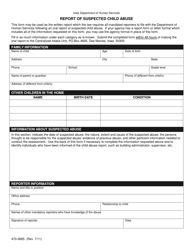
Thirty-five of 100 sampled reports of child abuse or neglect in Iowa failed to meet federal assessment requirements, according to a new audit by the U.S. Department of Health and Human Services Office of Inspector General, which oig.hhs.gov reported selected the state for review based on a risk analysis.
The findings land as part of a broader federal series examining how states comply with the Child Abuse Prevention and Treatment Act’s requirements for taking in and assessing reports of abuse and neglect. While Iowa passed the audit’s intake review with a clean record, the assessment phase—where child protection workers investigate and evaluate accepted reports—showed significant gaps.
The Gap Between Intake and Assessment
The audit drew a sharp line between how Iowa handles reports when they first arrive and how they are handled once accepted. For all 30 rejected family reports in the random sample, the state complied with every intake requirement. Once a report is accepted, however, the process shifts to assessment, and that is where the federal auditors found the breakdown: 35 of the 100 accepted family reports examined were not in compliance with one or more requirements related to the assessment of child abuse or neglect.
That distinction matters because intake and assessment serve different functions in the child welfare system. Intake determines whether a report meets the threshold to move forward; assessment determines what actually happened to the child and what needs to happen next. A failure at the assessment stage can leave a child in a dangerous situation even when the front door of the system worked perfectly.
What Counts as Abuse and Neglect
The audit spells out the stakes in plain terms. A child subjected to abuse or neglect by a parent, caregiver, or another person may suffer a long-term impact on their health, opportunity, and well-being. Abuse can be physical, sexual, or emotional in nature. Neglect occurs when a child’s basic needs—such as housing, food, clothing, education, and access to medical care—are not met.
When 35 percent of accepted reports miss assessment requirements, the risk is not abstract paperwork. Each missed requirement represents a potential gap in the evaluation of whether a child is safe, whether services are needed, and whether the state is meeting its obligation to protect vulnerable minors.
Training Recommended, State Concurs
The Office of Inspector General made one recommendation to Iowa: provide refresher training or periodic guidance to child protection workers to address the findings. The full recommendation appears in the report. Iowa concurred with both the findings and the recommendation, outlining actions it has already taken or plans to take to bring its assessment practices into compliance.
The state’s agreement suggests the gaps are viewed as fixable through better guidance rather than systemic refusal to follow the law. Still, the audit shows that even when a state passes the initial screening, the process for accepted cases must be just as careful.
Why This Audit Matters Now
This review is not an isolated check. It is part of an ongoing series of audits examining states’ compliance with federal child welfare law, meaning Iowa’s results will be compared against other states’ performance in the months ahead. For families in Iowa and for the child protection workers carrying these cases, the message is that the federal government is watching not just whether reports are received, but whether they are properly investigated.
As the series continues, the 35 non-compliant assessments in Iowa stand as a benchmark for what needs to change before the next round of federal scrutiny arrives.
Keep reading

BMW cuts profit margin forecast to -0.5%–0.5% amid 8,000 job cuts in Germany
BMW has cut its full-year profit margin forecast to between -0.5% and 0.5%, a collapse from the 4-6%...

David Crowley Defeats Tom Tiffany to Become Wisconsin Governor
"This win belongs to Milwaukee, the city that raised me," David Crowley told a cheering crowd Tuesday night,...

Mebane’s Family Care Home 2 Offers Affordable Assisted Living in Burlington
Estimated costs at Mebane's Family Care Home 2 start at $4,000 a month — less than half the...
SLC outlines restoration of open space and trails after pumphouse work
The North Bench Pumphouse Construction Project has finished updating critical water utility infrastructure for Salt Lake City residents,...