
When a lean team of five to seven investigators spends months combing through the books of a six-billion-dollar state agency, the friction usually sparks over paperwork. But the fallout from the latest biennial audit of the North Dakota Department of Health and Human Services points to something far more tangible than missing binder tabs: millions in public money spent without the safeguards to prove it did what the legislature intended.
Released on October 29 by the North Dakota State Auditor’s Office, the review examined operations through the biennium ending June 30, 2025, uncovering seven distinct areas of operational vulnerability. From behavioral health funding dished out without mandatory face-to-face contact to thousands of hungry children locked out of a summer food lifeline, the findings lay bare systemic cracks in how the state manages its most critical social safety nets.
Where the Behavioral Health Dollars Went Without Engagement
The single largest dollar figure flagged by investigators sits inside two major initiatives designed to catch vulnerable residents before they spiral: Free Through Recovery and Community Connect. Auditors identified $1,406,186 in payments sent directly to behavioral health providers who simply failed to clear the basic threshold of engaging the participants.
Under program rules, providers are required to log face-to-face interactions or genuine, documented attempts to reach individuals. These checks were skipped or missed entirely while the checks still cleared. DHHS officials pushed back on the finding, arguing that those specific disbursements required individual review before anyone could officially stamp them as improper overpayments. The State Auditor’s Office stood its ground, maintaining that the money violated baseline participation rules and demanding the department implement stricter monitoring to recover the cash.

That friction extends directly into the granular, one-time emergency grants known as GAP payments. Intended to cover immediate hurdles like cell phones, bus fare, or basic hygiene supplies so a person in recovery can keep a job or attend treatment, these funds operated with virtually no guardrails. Investigators pulled a sample of Free Through Recovery receipts and found that 95% lacked any written proof of financial need, while 92% failed to show that other standard assistance options had been exhausted first. Receipts went missing, tracking logs sat blank, and committees doled out cash without required sign-offs.
“We want to make sure that the decisions made, the resources provided to these service providers – that we have clear documentation, we have the proper support, and that when we go back and evaluate that decision, it’s properly documented to verify those payments are authorized and appropriate,” State Auditor Josh Gallion told, explaining that internal controls must catch these discrepancies before funds leave the state treasury.
DHHS accepted those recommendations around GAP assistance, noting that budget reductions are already targeting the program for complete elimination.
Missing Background Checks and Unmonitored Home Visits
While paper receipts and behavioral health milestones spark budgetary arguments, the human stakes hit closer to home for families inviting care workers through their front doors. Auditors uncovered a projected 41% error rate regarding mandatory background screenings for in-home service providers.
Out of 108 sampled workers, 45 lacked any documentation showing that checks for past criminal history—including drug paraphernalia offenses, simple assault, or disorderly conduct—had even been initiated before they started working with clients. More concerning still, 13 of those unverified workers were employed by five separate agencies that DHHS had already previously flagged for sloppy background check compliance. Different divisions inside the department followed different internal rules, leaving a patchwork approach where oversight depended entirely on which office happened to look at the paperwork.
That same administrative blind spot plagued the state’s investment in home-care technology. DHHS shelled out roughly $4.7 million on electronic visit verification vendors during the two-year cycle to track precisely when and where in-home care occurred. Yet nearly a third of all home care claims—about 34%—bypassed the system entirely, relying instead on manual entries. To make matters worse, vendor data incorrectly mapped service-location distances for 67% of sampled claims, and department officials simply weren’t using the software feed to flag inaccurate billing.
When Assistance Fails the Children Who Need It Most
The administrative breakdown also fractured the rollout of the Summer Electronic Benefit Transfer program, which sends $120 to low-income families to buy groceries when school cafeterias shut down for summer break. Automated enrollment inconsistencies left 5,872 eligible children without their benefits entirely, while about 1,610 ineligible children received the grocery money by mistake.
Added to that list is an estimated $217,397 in improper payouts through the Child Care Workforce Benefit program. Designed to help low-wage child care employees afford care for their own children, the program requires recipients to log a minimum of 25 working hours every week. Auditors found that a portion of the distributed benefits went to workers who never met that hourly threshold.
Despite the sprawling list of deficiencies, DHHS leadership offered a measured response to the final report. Connor Swanson emphasized that out of a massive six-billion-dollar biennial budget, the audit isolated only seven core areas of concern, signaling what he described as strong overall performance. Agency officials have already begun rolling out corrective actions targeting internal payment tracking, screening protocols, and vendor software integration.
Whether those policy tweaks will satisfy lawmakers when the legislative budget committees convene to review agency accountability remains the open question. For now, the audit serves as an expensive reminder of what happens when state oversight lags behind the millions of dollars moving through its digital portals.
Worth a look
Pennsylvania and IDMe – IDMe Help Center
Pennsylvania DLI Integrates ID.me for Claimant Verification The Pennsylvania Department of Labor & Industry (Pennsylvania DLI) has integrated...

Portland man unveils giant 9-by-13-foot flannel shirt – KPTV
What are pants without a shirt in ‘Shirtzenpantz’ right? Ethan, a representative for Shirtzenpantz, told KPTV regarding the...
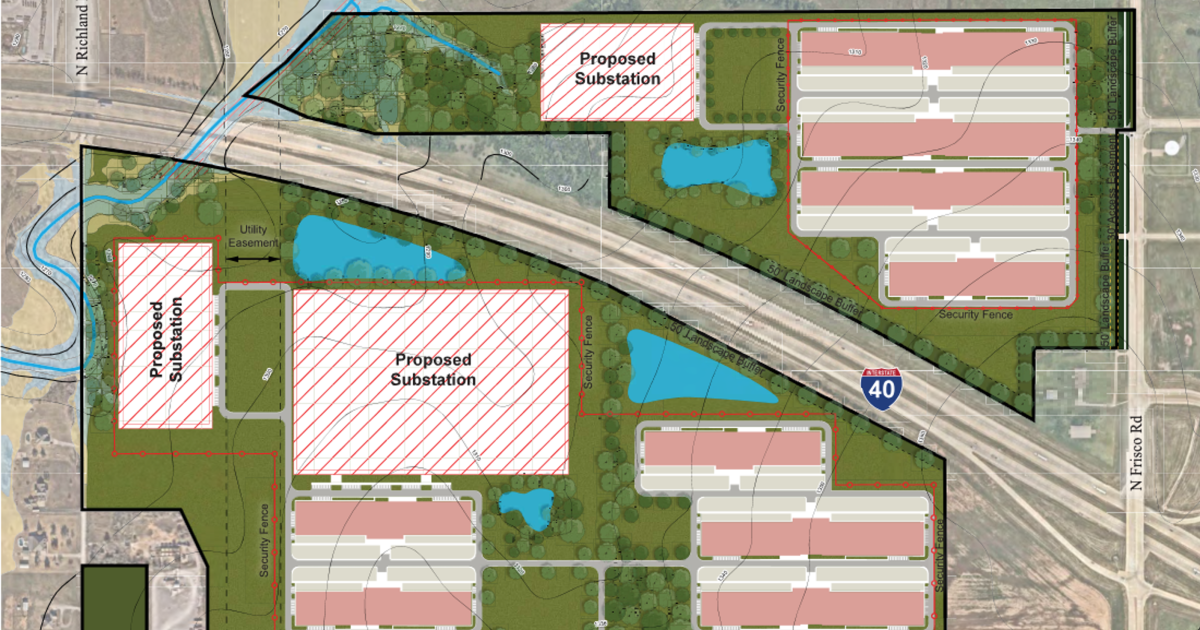
Oklahoma City council approves first hyperscale data center. That doesn’t mean there will be more
The Oklahoma City Council voted to approve a data center development, with city leaders warning that the green...

Collins rallies voters in Columbus in Georgia U.S. Senate race – WTVM.com
Collins targets Ossoff over inflation and hurricane relief in Columbus Republican U.S. Rep. Mike Collins rallied voters at...