
A major exhibition at the Irish Museum of Modern Art in Dublin frames Palestinian history through the lens of exile, environmental destruction, and the politics of memory, drawing on the Sharjah Art Foundation’s collection to stage a survey that runs until July 4, 2027.
The show takes its title from Mahmoud Darwish’s poem Praise for the High Shadow, written in exile in Beirut after the 1982 Sabra massacre.
That massacre, perpetrated by a Lebanese Christian phalangist militia during the Israeli occupation of Beirut, closes a list of names — Deir Yassin, Jenin, Qana, Sabra — inscribed by Simone Fattal onto basalt slabs in 2006. Through the Arabic script runs a line by Etel Adnan: “In our lands of drought the rain forever is made of bullets.”
Fattal’s monument, carved from stone that once flowed as lava, sets the tone for a presentation that mixes historical documentation with what the review describes as anger both hot and cold. The critic notes that the artists, mostly Palestinian, weave a traumatic national history into the cosmopolitan culture of the Levant and the wider interconnected world.
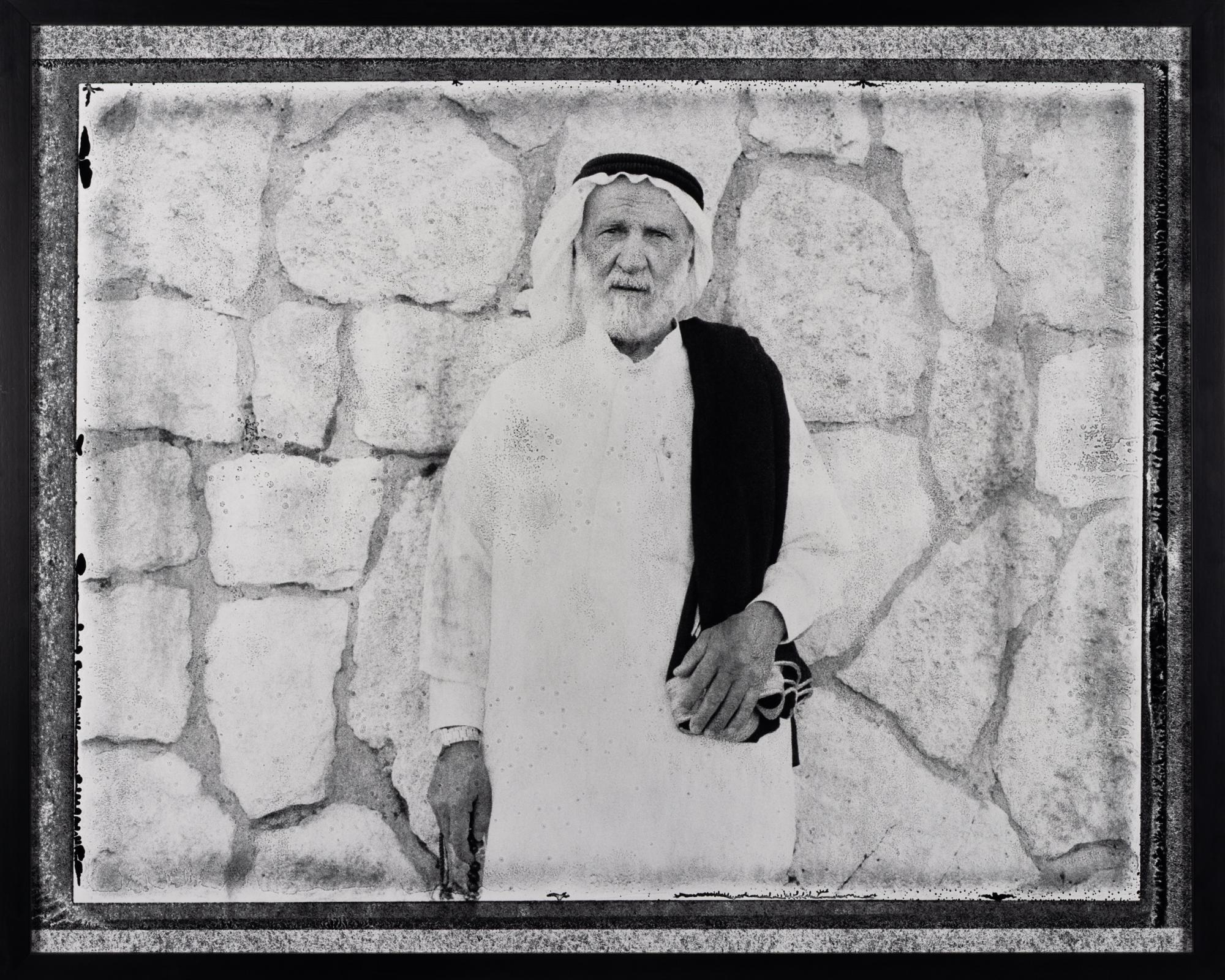
The condition of waiting
Exile, the exhibition argues, is a state of perpetual waiting. On the floor beside Fattal’s slabs sits the suitcase Hazem Harb carried out of Gaza in 2006, displayed above photocollages referencing the international airport bulldozed by the IDF four years earlier. The artifacts raise the question of when, and if, the artist can return — and who holds that power.
That powerlessness appears in Rula Halawani’s photographs of faces at Palestinian checkpoints. Tarek Al-Ghoussein, born in Kuwait to Palestinian parents and never able to set foot in his ancestral land, explored his fragmented identity in self-portraits on glowing lightboxes. He died in 2022.
In one image, he gazes toward the sea like Caspar David Friedrich’s wanderer, but the critic writes that the pose inspires not awe at the landscape but indignation at the subject’s separation from it. The keffiyeh covering his face appears alongside settings — an airport runway, a target range, an abattoir — that unsettle any romantic reading.
Basma Al-Sharif, also born in the Gulf to Palestinian émigrés, attempted a conventional love story set in the Levant but found the narrative overtaken by the networks of nationalism and identity governing her characters’ lives.
Her work — video, photographs, botanical drawings of “native” and “invasive” species — bears witness to the impossibility of disentangling individual stories from the political conditions that frame them. The critic calls art for art’s sake a privilege of the few, underwritten by injustices kept out of sight.
Khalil Rabah’s sardonic paintings of road signs pointing to bodies of water in parched landscapes puncture the cliché of Palestine as a “land of milk and honey.”
The critic notes that Rabah’s work reminds viewers that environmental destruction is a strategy of occupation reaching back to the Romans, citing Tacitus: “They make it a desert and call it peace.” Recurring motifs of rain, drought, water, and sea — echoed in a neighboring exhibition by the Gazan collective Eltiqa — are not merely poetic metaphors.
The show devotes three rooms to Abdul Hay Mosallam Zarara’s painted reliefs of Palestinian heroes battling “imperialist dogs.” The critic acknowledges the propagandist character of these works but argues that propaganda does not automatically disqualify them as art, citing John Heartfield’s anti-Nazi photocollages and El Lissitzky’s revolutionary posters.
Still, the review suggests a smaller selection would have served the exhibition better, particularly if it made space for Emily Jacir and Mona Hatoum, both held in the Sharjah Art Foundation collection but absent here.
Zarara’s work does link the Palestinian struggle to anti-imperialist movements from Pinochet’s Chile to apartheid South Africa.
Most striking in the context of IMMA — a former military hospital — is a painting commemorating the 1981 hunger strikers who died in the Maze prison, affirming a connection between Irish republicanism and Palestinian independence that endures today and, the critic writes, “informs (and makes possible) such a forthright exhibition in a state-funded institution.”
The Irish Museum of Modern Art was established by the Government of Ireland in 1990 and opened in 1991 within the 17th-century Royal Hospital Kilmainham, founded in 1684 as a home for retired soldiers and used for that purpose for nearly 250 years. The hospital, modelled on Les Invalides in Paris, is arranged around a courtyard with long corridors of modest interlocking rooms, a layout that shapes how exhibitions are experienced today.
IMMA holds the Irish National Collection of modern and contemporary art, numbering over 3,500 works with an emphasis on post-1940 production. After years of relying heavily on private philanthropy, the Hennessy Art Fund launched in 2016 to restore a viable acquisitions budget for emerging and mid-career Irish artists, enabling purchases by artists including Kevin Atherton, Rhona Byrne, and Eimear Walshe.
The exhibition ultimately invokes John Berger, born 100 years ago this month, who defined art’s function as showing the future “what the past has suffered” and serving as “a meeting place for the invisible, the irreducible, and the enduring.”
Worth a look

ASEAN Chief Visits Pakistan After Two Decades, Seeks Concrete Trade, Security Steps
"As we approach the 35th anniversary of our sectoral dialogue partnership in 2028, we have an opportunity to...
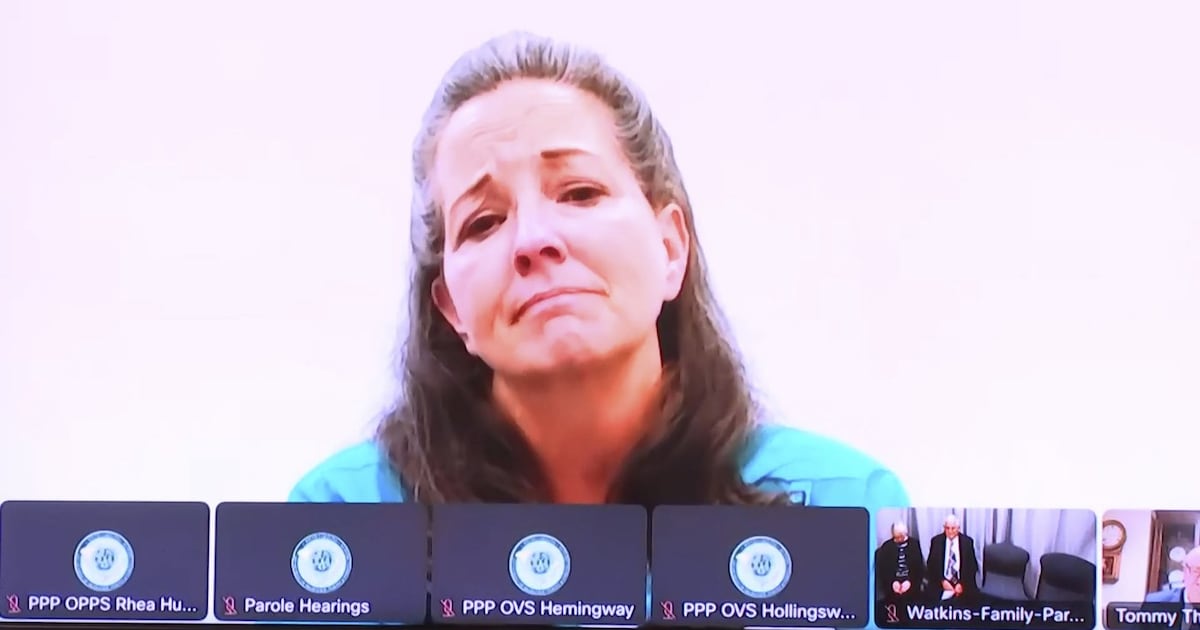
Susan Smith Denied Parole Again 32 Years After Killing Sons
Susan Smith, 55, was rejected by South Carolina's parole board on Thursday in a unanimous vote, marking her...
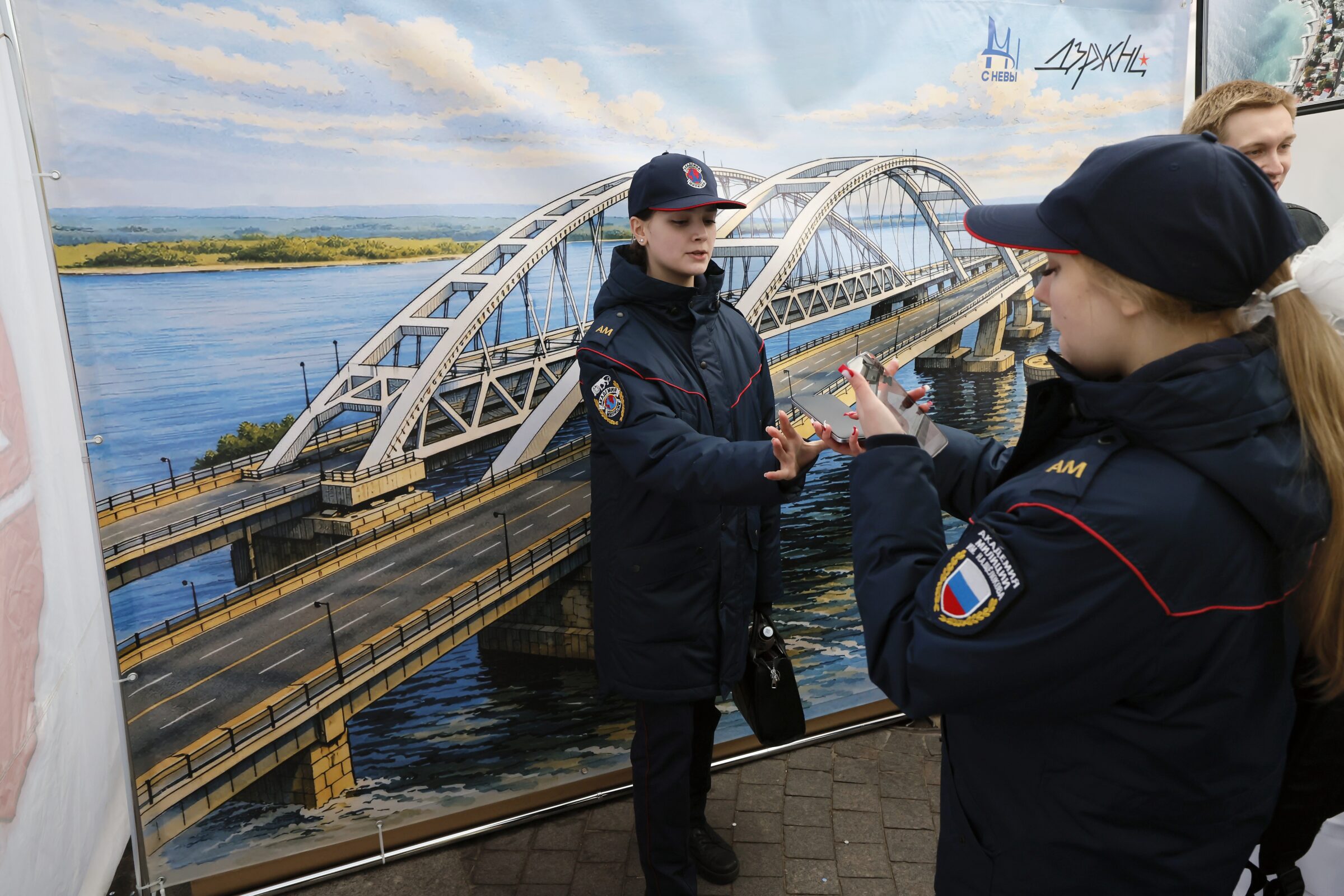
Putin Rejects Moratorium, Vows No Agreements After Third Kerch Bridge Strike
Russian President Vladimir Putin rejected a proposed moratorium on energy and maritime strikes Thursday, declaring "there will be...

Prime Minister Andy Burnham Said the Public Has Heard Enough From Russell Brand
Andy Burnham said the public has heard enough from Russell Brand after the convicted rapist's wife broadcast a...