The New Loophole for Oil and Gas Wastewater on Pennsylvania Roads
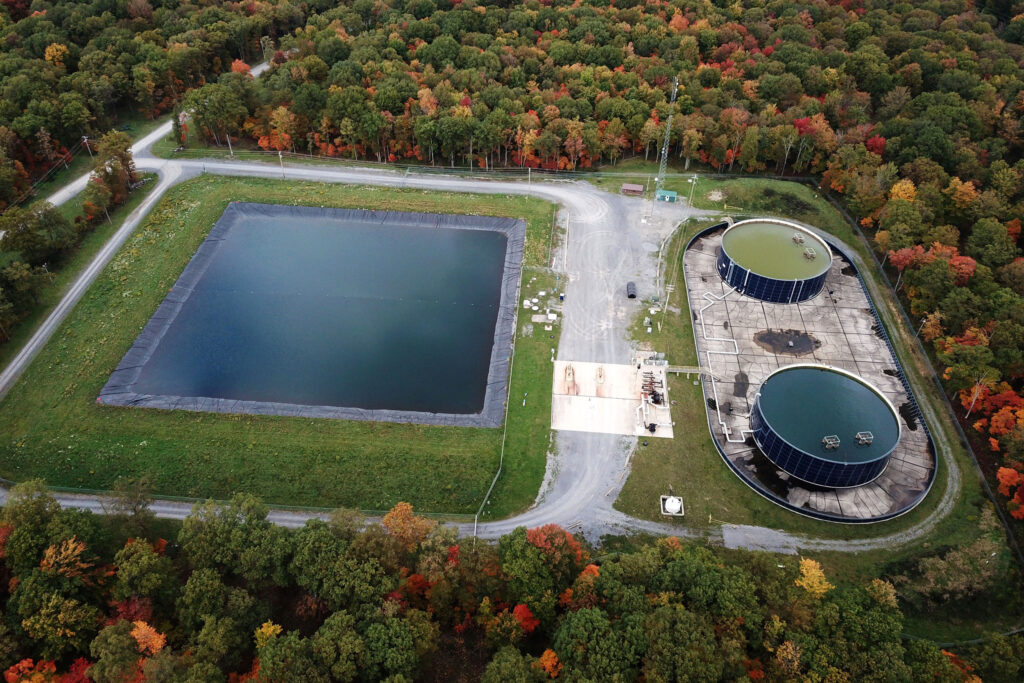
Pennsylvania produces more natural gas than any other state in the nation besides Texas, and alongside that extraction comes millions of gallons of toxic wastewater. While ordinary residents must rely on specialized local dropoff events to discard everyday items like pharmaceuticals, oil and gas operators may soon find their disposal options far more expansive. In May, the Department of Environmental Protection quietly issued a new permit that environmental advocates and former regulators warn will make it easier for the conventional industry to dump radioactive wastewater directly onto public roads.
The regulatory shift hinges on reclassification. By designating conventional, non-fracked oil and gas wells as “mineral brine” wells, companies can sell the radioactive wastewater as a product rather than treating it as hazardous waste. Local governments can then purchase this brine to control dust and melt ice during winter months.
For decades, roadspreading slathered brine across Pennsylvania to suppress dust and manage winter roads, distributing pollutants throughout the commonwealth. The wastewater carries high salt content, heavy metals, and radioactive elements such as radium. Yet, academic research has repeatedly shown that the brine works no better at controlling dust than plain rainwater. Research conducted at Penn State demonstrated that applying brine to roads sends roughly four times more radium into local ecosystems compared to specialized wastewater treatment plants, and 200 times more than accidental spills.
The Battle Over Conventional Wells and Coproducts
The application of brine to roadways remained widespread until 2018, when Siri Lawson—a Farmington Township resident in Warren County who attributes her persistent breathing difficulties to oil and gas waste exposure—submitted an appeal to the state’s Environmental Hearing Board. That legal challenge prompted the DEP to suspend approvals for roadspreading statewide and adopt a stricter permitting framework. While the agency successfully banned the practice for fracked wells, its efforts to clamp down on conventional operators stalled due to the political influence those companies wield in Northwestern Pennsylvania.
Conventional well owners exploited a regulatory loophole by designating their waste as a “coproduct” comparable to commercial dust-suppression products. Lawson has continued documenting trucks dumping wastewater, noting the oily residue leaves an eerie blue tint on roadways. Testifying before a state Senate panel in 2024, Better Path Coalition co-founder Karen Feridun noted that Department of Environmental Protection archives indicate more than 3.5 million gallons of brine had been applied to commonwealth roadways between 2018 and 2024.

“It’s ridiculous on its face, in my view,” said David Hess, a former DEP secretary who maintains the PA Environment Digest blog.
When the DEP informed a company called BCD Properties that its wastewater did not qualify as a legitimate coproduct, the firm appealed. Two weeks before that legal battle reached a private settlement, the DEP issued the new permit for the Danylko 6 well in McKean County. Located roughly 500 feet away from the company’s initial Danylko 4 well and drawing from the identical geologic formation, the new well was established specifically as a mineral brine operation.
Weighing Regulatory Oversight Against Enforcement Realities
Industry advocates argue that well operators cannot afford the high cost of trucking waste to distant disposal sites under current economic pressures. Representatives for trade groups maintain that the DEP has historically evaluated roadspreading and found it safe.
A December 2025 report from the Environmental Integrity Project revealed that the DEP’s budget and staffing levels have failed to keep pace with the natural gas boom over the past two decades. Enforcement actions dropped 57 percent between 2016 and 2024. An August report from FracTracker Alliance added that approximately 70 percent of Pennsylvania’s conventional wells reported oil and gas waste production but recorded zero waste disposal, highlighting a massive oversight gap.
During an October legislative hearing, lawmakers questioned agency officials over how the new mineral brine permits will be monitored. Rep. Greg Vitali voiced concern that the agency lacked control over how the substances would ultimately be deployed. Legal action ensued previously when BCD Properties challenged the agency’s ruling after officials determined the firm’s extraction waste failed to qualify as an acceptable coproduct.
Baton Rouge among 4 U.S. cities chosen for Justice Department crime reduction grant
Out of 47 major cities that applied across the country, just four secured a spot. Baton Rouge stands...

Team News: Regulars return for playoff opener as Bird changes six – Louisville City FC
Louisville City FC interim head coach Simon Bird has restored his first-choice lineup for Friday’s Eastern Conference Quarterfinal...

Buccaneers to Host Atlanta Falcons in Week 8 “She is Football” Game at Raymond James Stadium
The Tampa Bay Buccaneers are set to host the Atlanta Falcons this Sunday at 1:00 p.m. at Raymond...

Florida Tech Swimming Breaks 3 Records and Sets 8 NCAA B-Cuts
The Florida Tech men’s and women’s swimming teams set a high bar on Friday, Oct. 30, securing three...