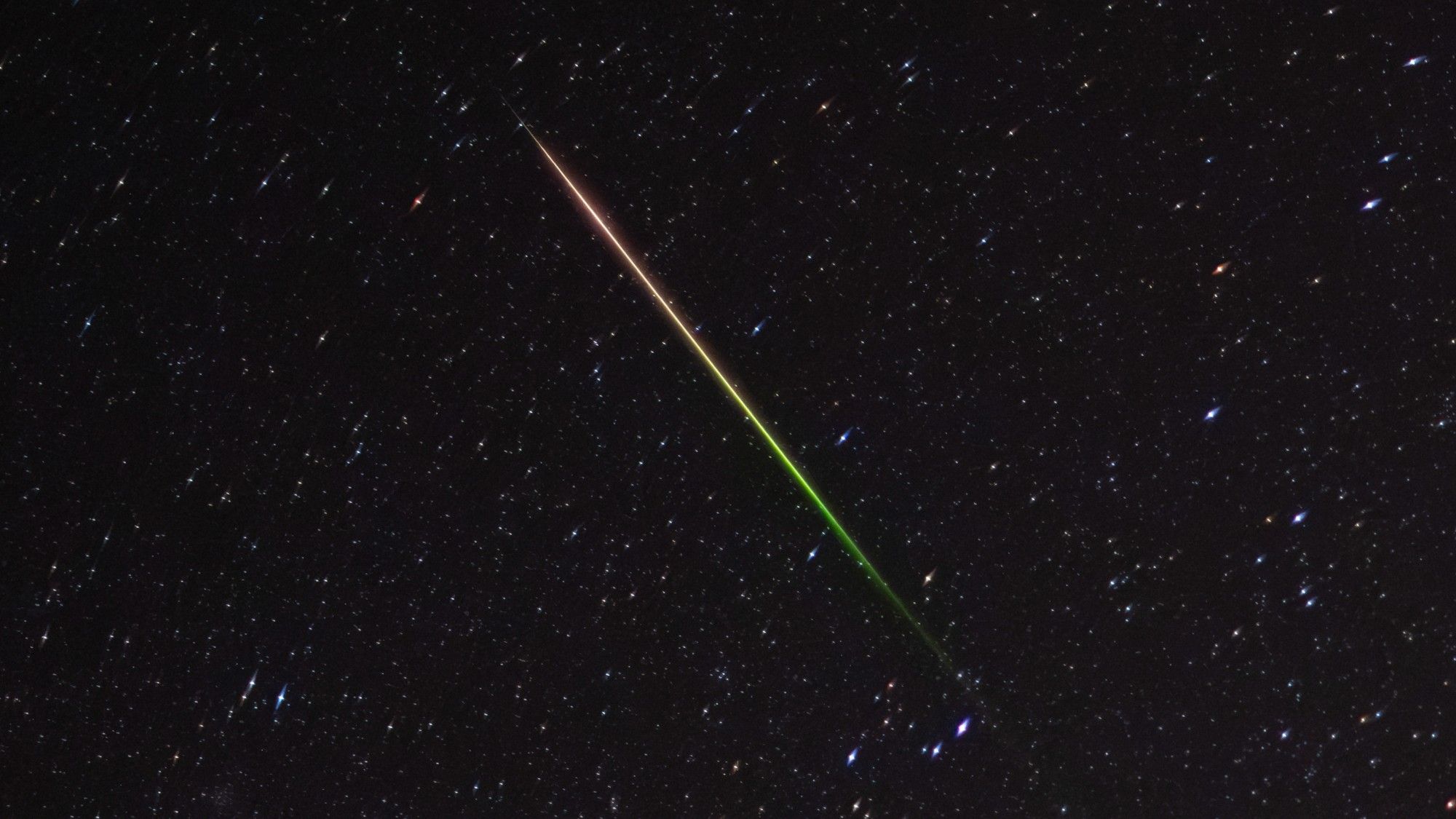
Stargazers worldwide enjoyed a brilliant Perseid meteor shower peaking overnight on August 11 and 12, 2026. The celestial display arrived just hours after a rare total solar eclipse crossed Spain, Iceland, and Greenland, offering a double feature made possible by a new moon that kept skies exceptionally dark.
The annual Perseid meteor shower reached its peak in mid-August 2026, putting on a dazzling show for observers across the globe. As Earth ploughed deep into the debris trail left behind by the icy comet 109P/Swift-Tuttle, countless tiny particles slammed into the atmosphere at breathtaking speeds, creating fiery streaks of light visible to the naked eye.
A Rare Astronomical Double Feature
This year’s meteor peak coincided with a total solar eclipse that crossed parts of Iceland, northern Spain, and northeastern Portugal, while a partial eclipse was visible across the northern United States, Canada, northwest Africa, and much of Europe. According to data analysis by Alfredo Carpineti, space and physics editor at IFL Science and author of Invisible Rainbows, Wednesday marked the first time there’s an eclipse happening on the same day as the peak of a major meteor shower in at least 5,000 years of NASA eclipse data, as reported by Sky News.
Because solar eclipses strictly occur during a new moon phase, the lunar disk completely blocked out moonlight during the night-time hours, giving astronomers and casual observers exceptionally dark skies. Robert Lunsford, fireball report coordinator for the American Meteor Society, noted that this lunar alignment significantly enhanced visibility, according to CNN.
Speeds, Fireballs, and Hourly Rates
The particles responsible for the Perseids are typically no larger than a grain of sand or a speck of dust, originating from the orbit of comet Swift-Tuttle. Yet when these minuscule fragments strike Earth’s atmosphere, they do so at an average speed of about 37 miles (59 kilometers) per second, burning up in brief, brilliant flashes.

NASA estimated that under ideal conditions, observers could expect to spot between 50 and 100 meteors per hour during the peak. Practical rates varied depending on location and light pollution. From rural dark-sky sites across the northern United States, viewers reported seeing roughly 30 to 50 meteors per hour, whereas urban observers caught closer to 15 to 25. Dr. Shannon Schmoll, director of Abrams Planetarium at Michigan State University, emphasized the challenge of catching fast-moving shooting stars, noting, If you look in one direction, you’re going to miss the ones behind you.
The Perseids are particularly famous for producing fireballs—exceptionally bright meteors that linger longer in the night sky and leave behind glowing, colorful trails of vaporized dust particles.
Global Photography and Viewing Conditions
Photographers around the world capitalized on the clear summer skies to capture striking images of the meteors slicing past deep-space objects. In Ohrid, Macedonia, Dimitar Birachoski used a Nikon Z6iii camera at Galicica National Park to photograph meteors intersecting with celestial landmarks, telling Space.com via email, I've got the Pleiades, Andromeda galaxy and Milky Way with the Perseids.
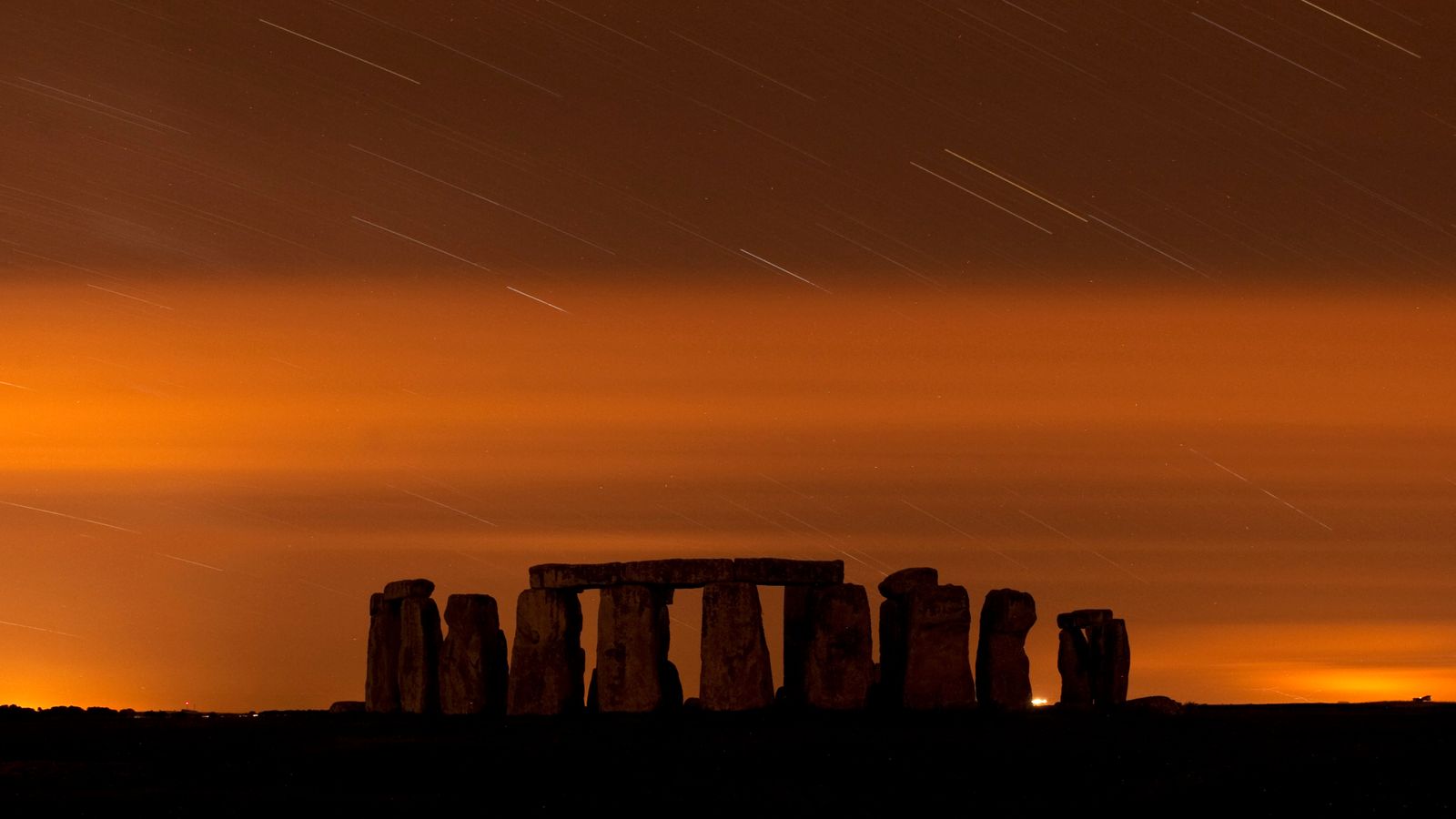
Other stunning visual captures spanned multiple continents. Photographer Morteza Nikoubazl photographed a Perseid meteor streaking beside the famous Pleiades star cluster from Semnan, Iran, via NurPhoto and Getty Images. In southern Israel, Mostafa Alkharouf captured a Perseid meteor as the setting sun illuminated the skies over the Negev Desert on August 11, 2026, alongside views of the Milky Way Galaxy. In the United States, Rick Kern photographed a long streak left by a Perseid meteor above Pedernales Falls State Park in Johnson City, Texas, on August 12, 2026. Across Europe, Ander Gillenea photographed a meteor lighting up the night sky in San Asensio, Spain, just hours after the total solar eclipse, while Ismail Aslandag captured a green meteor above Ucayak Church in Kirsehir, Turkiye.
Weather conditions largely cooperated across parts of the globe, with England and Wales experiencing mostly clear skies for both the eclipse and the Perseid display. However, southeastern parts of Scotland, Northern Ireland, and Ireland saw cloudier conditions with occasional clear spells, and the North West remained generally cloudy.
Keep reading
NASA Roman Telescope Powers Up 300-Megapixel Instrument in Space
NASA’s Nancy Grace Roman Space Telescope launched aboard a SpaceX Falcon Heavy rocket and has now successfully powered...
Perseverance Rover Finds Volcanic Rocks at Mars’ Jezero Crater Rim
NASA’s Perseverance rover found volcanic igneous rocks instead of expected sedimentary layers along the inner rim of Mars’...
SpaceX Targets First Orbital Flight for Starship on September 28, 2026
SpaceX is targeting September 28, 2026, for Starship's 14th test flight from Starbase, Texas, with a 75-minute window...
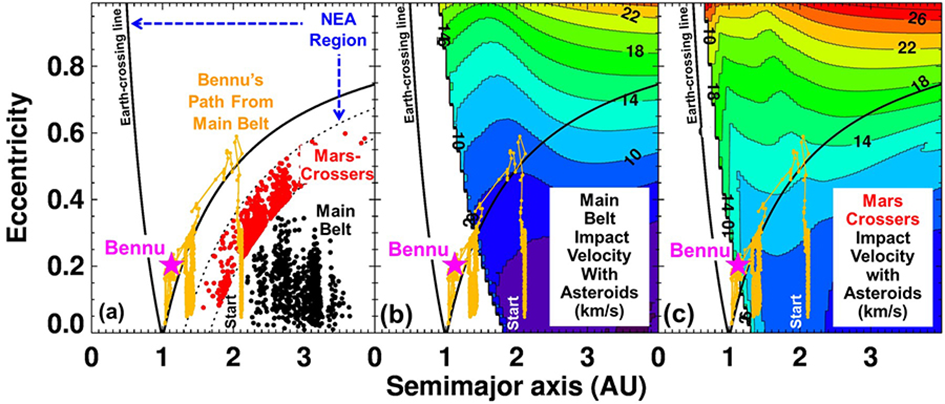
ETH Zurich Researchers Link Asteroid Bennu to Inner Solar System Transition Zone
Researchers analyzing titanium, chromium, and iron isotopes in samples returned by NASA's OSIRIS-REx mission have discovered that asteroid...