
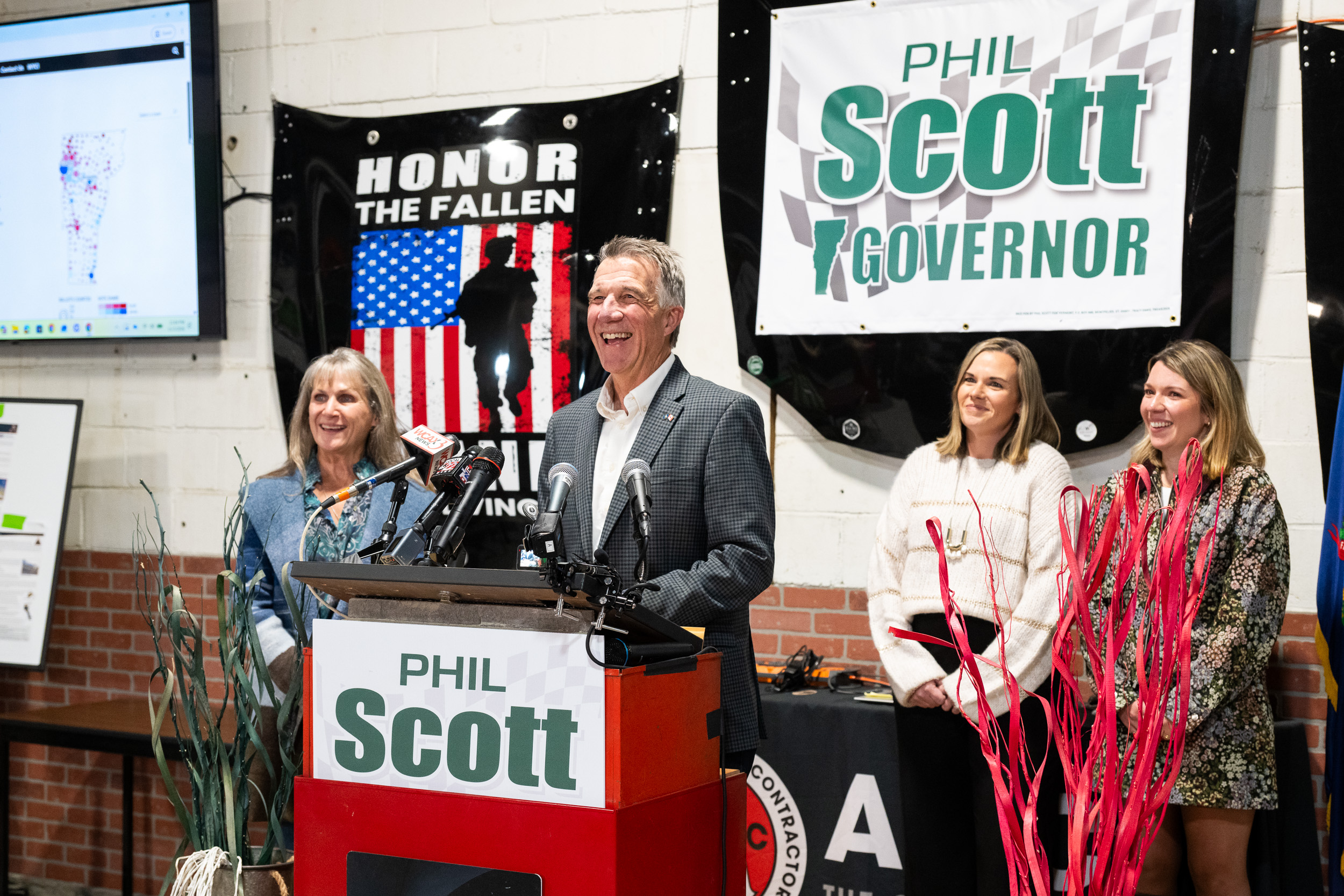
Vermont Governor Phil Scott won an unprecedented sixth two-year term on Tuesday, defeating Democrat Amanda Janoo 52 to 45 percent in a race that saw the Republican hold his seat even as Democrats flipped governorships in Texas, Georgia, Nevada, Iowa, and Ohio, the Boston Globe reported. With Texas Governor Greg Abbott’s defeat, Scott is now poised to become the longest-serving governor in the United States.
The victory cements Scott’s status as a political anomaly in an era of sharp partisan polarization. In a state that sends Democrats to Congress while repeatedly electing a Republican governor, Scott has built a coalition that spans party lines, drawing support from roughly a quarter to a third of self-identifying Democrats while maintaining a steady distance from President Donald Trump.
A Category of One in a Blue State
Scott’s success stems from a personal brand cultivated over more than 25 years in public office. The former owner of a central Vermont excavation company first rode his local celebrity as a stock car driver at Thunder Road Speedbowl into the Vermont Senate in 2000, later serving as lieutenant governor before his 2016 election as governor. Throughout his tenure, he has positioned himself as an affable centrist focused on affordability who avoids culture wars, a stance that resonates in a state where voters have a long history of ticket-splitting.
Exit polling analyzed by Vermont Business Magazine reveals the mechanics of Scott’s coalition. While Democrats and Democratic leaners made up 56 percent of the electorate—an advantage that should have favored Janoo—Scott captured 25 percent of that Democratic bloc. He also won 35 percent of voters who disapproved of Trump, including 31 percent of those who strongly disapproved, and 31 percent of voters who had backed Kamala Harris in 2024. Moderates, who constituted 41 percent of voters, supported Scott by 61 to 37 percent, while independents favored him by 51 to 46 percent.
“Vermont voters demonstrated again that they are very comfortable splitting their tickets,” said Alex MacLean, a communications consultant who has run Democratic campaigns. “And while they can be deeply disgusted with the president and the national party, they still see Phil as fundamentally different, and they see him as someone they can trust fiscally.”
Scott Balances Trump Support Without Endorsing Policies
Scott’s relationship with Trump has been one of quiet opposition rather than confrontation. Both men first won their current jobs in 2016, but Scott has refused to vote for the president and has quietly opposed many of his policies while avoiding rhetoric that could draw federal retribution. This steady stance allowed voters like 75-year-old William Bowman, who mostly supports Democrats as a rebuke to Trump, to cast a ballot for Scott while explaining, “I like balance.”
The governor’s personal appeal stood in stark contrast to the performance of other Republicans on the same ballot. VTDigger reported that while Scott won 52.6 percent, his handpicked choice for lieutenant governor, Republican incumbent John Rodgers, was ousted by Democrat Molly Gray by a margin of 25 points. Democrats also flipped enough seats in the state House and Senate to regain supermajorities capable of overriding Scott’s vetoes. No other Republican running for statewide office secured more than 36 percent of the vote.
Scott’s margin of victory, while decisive, marked his narrowest race since 2016. After three consecutive elections winning by more than 40 points, the six-point gap signals a shift in the electorate’s mood. Some voters expressed fatigue with long incumbency; 62-year-old Chris Bessette, a former Scott voter, told the Boston Globe she wanted to “shake things up a little bit” and voted for Janoo.
Stewardship Over Transformation
Scott has made few transformational changes to state government, instead playing a caretaker role that won praise across the political spectrum for managing the COVID pandemic and the devastating summer floods of 2023 and 2024. He has also broken with his party on social issues, signing abortion rights into state law, calling for increased refugee resettlement, and enacting Vermont’s first firearm restrictions—moves detailed in a press release from the Vermont Governor’s office.
Yet the affordability crisis dominated the campaign. Janoo, a first-time candidate with a progressive platform, argued that Scott’s plans—focused on cutting taxes and regulations—would not address the cost of living. Exit data from Vermont Business Magazine complicates that narrative: while Scott won 68 percent of voters who identified the economy as the nation’s top issue, Janoo actually captured 58 percent of those who called the cost of living crucial and 62 percent of those whose family finances had worsened. The age divide proved more decisive: Janoo won voters under 45 by 63 to 36 percent, but those voters represented only 31 percent of the electorate, while Scott won the 69 percent of voters aged 45 and older by 60 to 38 percent.
A Lame Duck with a Supermajority Against Him
Scott returns to Montpelier facing a weakened hand. With Democratic supermajorities in both legislative chambers, his veto power is effectively neutralized, and he has already indicated this will be his final term. “You become an automatic lame duck,” said veteran Vermont journalist Mark Johnson. “That’s never a good place to be in.”
In his victory speech, Scott promised to seek compromise with opponents to tackle the state’s problems. But critics question whether a governor who has avoided political fights can now work effectively with a legislature that now holds a large majority. The last time Vermont voters ousted a governor was 1962; whether they will wait another six decades to see if Scott’s brand of moderate Republicanism can survive without him remains the open question of this election.
More on Democrat Amanda Janoo
Related reading

SWAT Team Arrests Cheyenne Man Following Felony Strangulation Warrant
When the flash-bang detonated outside the house at 8512 Cowboy Road just after 8 a.m. Wednesday, the sound...
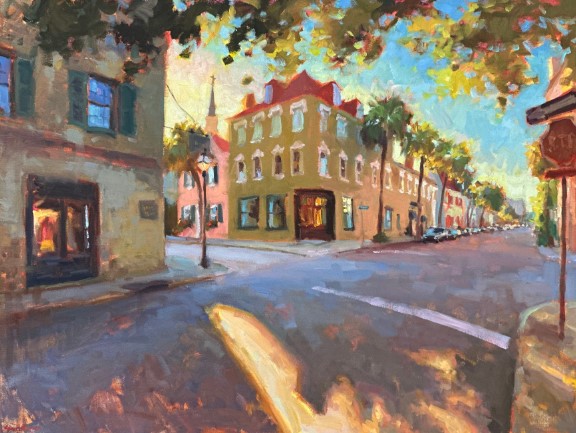
39 Best Art Galleries and Museums in Downtown Charleston: An Interactive Guide
Thirty-nine galleries and museums now anchor downtown Charleston's cultural landscape, stretching from the French Quarter down to Gallery...
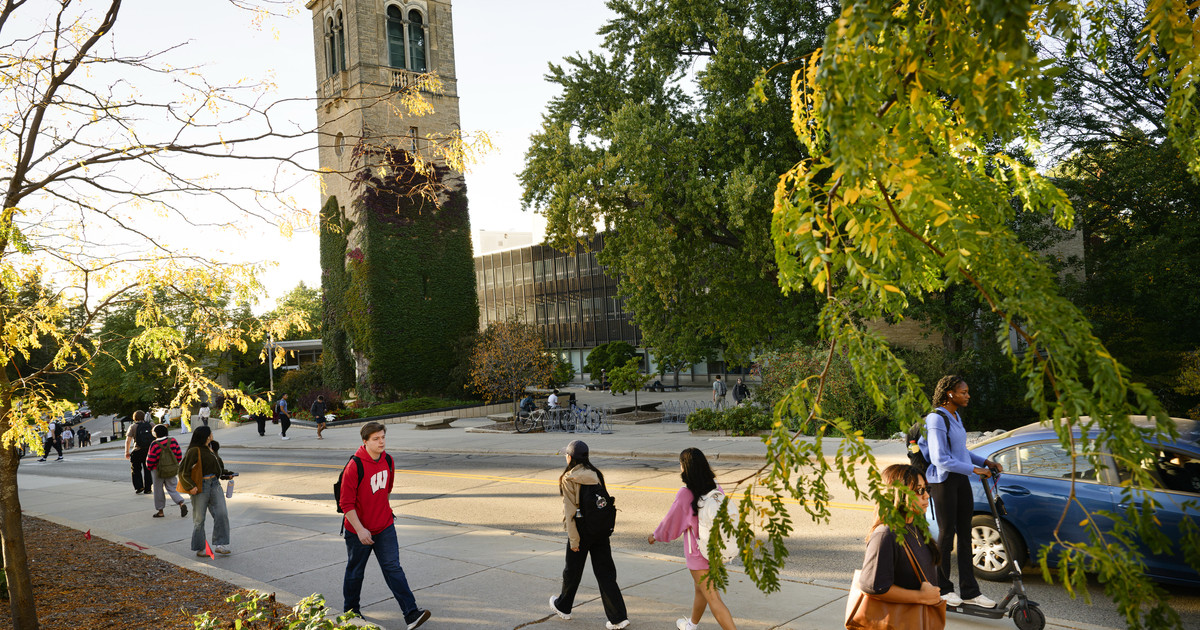
UW-Madison Campus Features Autumn Colors and Wildlife
Four sandhill cranes were photographed frolicking near Rennebohm Hall and the Nielsen Tennis Stadium during an autumn evening,...

Olympia Community Solar and Grace Episcopal Church Launch 73-Panel Solar Project on Bainbridge Island
"Grace Episcopal Church is honored to join the solar energy community in Kitsap County," said Eric Mason. "Caring...