
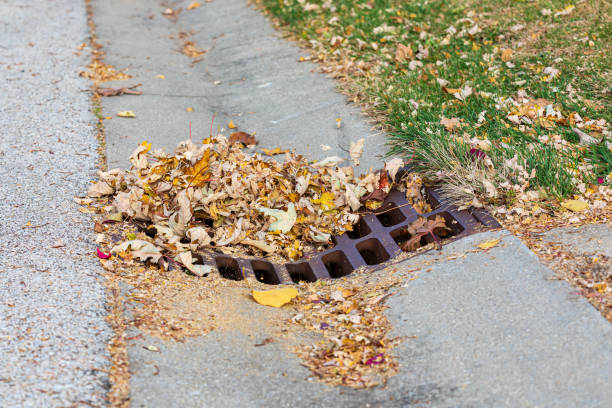
Seattle Public Utilities is warning that a series of soaking storm systems rolling through this weekend and into next week will likely leave water ponding on roadways across the city, KOMO News reported, as fallen autumn leaves combine with heavy rain to choke storm drains. The utility is urging homeowners to rake up leaves now, before the storms hit, to keep debris from washing into the pipes and triggering larger, costlier blockages.
The stakes are immediate for anyone who drives, bikes, or walks Seattle’s streets. When leaves mat over a storm drain grate during a downpour, water has nowhere to go, and the result is localized flooding that can strand vehicles and make intersections hazardous. SPU crews are already working around the clock to clear clogged drains, but the agency says it cannot be everywhere at once.
Why a Rake Now Beats a Flooded Curb Later
“Preventive maintenance always helps,” said Jana Dilly with Seattle Public Utilities’ pollution prevention team. “Clearing them well before they get in the pipes, or while they’re still on street level where they’re easy to rake up and dispose of, is going to help prevent a lot of issues. We don’t want those leaves to go down into our system. They’re gonna cause bigger clogs that are harder and more expensive to clear, and that can lead to greater problems.”
Seattle Public Utilities expects road flooding, ponding as several rainy systems arrive:https://t.co/AfYLbJ7GGr
The volume of calls during a single storm shows why prevention matters. Ernest Chandler, a lead worker with Seattle Public Utilities, said, “We can have anywhere from 10 to 20 calls depending on the rain event.” The utility says the safest way for residents to clear a clogged drain is on the curb, away from rushing water.
Dilly put the choice plainly for residents weighing whether to head out in the rain. “It’s a lot easier to clear that drain and prevent it before the rains come,” she said. “If you’re in the middle of a heavy rainstorm and all that water is flowing, it’s kind of miserable to go outside in the pouring rain and have to deal with that clogged drain that’s causing that flooding in the street.”
A New Winter Trash Schedule Kicks in With the Storms
Beyond drainage, SPU is changing how it handles garbage pickup when winter weather makes roads unsafe. The agency is moving away from a one-day delayed pickup to a one-week delay model during impactful events like snow or ice. “What we’re doing is actually moving to a one-week delay model,” said Christopher Ruiz of Seattle Public Utilities’ solid waste department. “If you are collected on Monday, you will just set out your solid waste services the following week, and you can set out up to double the amount of garbage at no additional cost, and we will collect you as normal, just on a one-week delay.”
The shift gives residents more flexibility to store extra waste during prolonged storms while keeping crews off dangerous roads. One-week delays will apply only when conditions are not safe for collection vehicles.
Where the Leaves Should Actually Go
SPU also drew a sharp line about disposal. Leaves raked from the street or near storm drains are considered contaminated and must go in the trash bin, not the compost. Leaves collected from yards can go into compost. During November, the utility will take up to 10 bags of free compost. Anyone who spots a clogged storm drain or road flooding can report it to SPU through the city’s drainage issues page.
The rain is coming whether the drains are ready or not. The difference between a soggy street and a flooded one may come down to whether the leaves were raked before the first drops fell.
Related reading

SWAT Team Arrests Cheyenne Man Following Felony Strangulation Warrant
When the flash-bang detonated outside the house at 8512 Cowboy Road just after 8 a.m. Wednesday, the sound...

39 Best Art Galleries and Museums in Downtown Charleston: An Interactive Guide
Thirty-nine galleries and museums now anchor downtown Charleston's cultural landscape, stretching from the French Quarter down to Gallery...
UW-Madison Campus Features Autumn Colors and Wildlife
Four sandhill cranes were photographed frolicking near Rennebohm Hall and the Nielsen Tennis Stadium during an autumn evening,...

Olympia Community Solar and Grace Episcopal Church Launch 73-Panel Solar Project on Bainbridge Island
"Grace Episcopal Church is honored to join the solar energy community in Kitsap County," said Eric Mason. "Caring...