
Prime Minister Mark Carney announced the conclusion of negotiations for two free trade deals with Southeast Asia on November 14, but polling shows most Canadians still barely know the region exists.
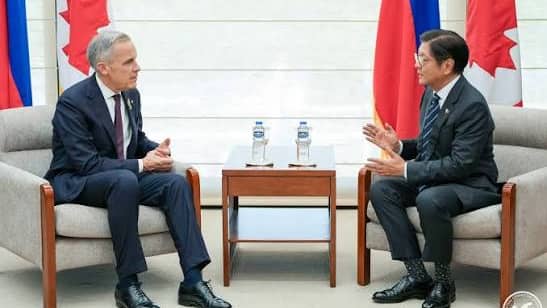
The agreements — an ASEAN–Canada free trade agreement (ACAFTA) and a bilateral deal with the Philippines — were finalized on the margins of the ASEAN Summit in Manila. Together they cover a market of nearly 700 million people and a regional economy worth roughly C$6 trillion, according to the Asia Pacific Foundation of Canada.
“You could say that President Trump has accelerated the conclusion of the ACAFTA … with his effective attacks on the trade architecture of both ASEAN and Canada,” Barrett Bingley, Asia regional director of the Asia Pacific Foundation of Canada, told the South China Morning Post.
Canada concludes negotiations for two new free trade agreements with the Philippines and ASEAN – unlocking greater access to a market of more than 700 million people for Canadian businesses: https://t.co/NvWNSflxb0 pic.twitter.com/lrU8jnYISj
The disconnect is stark. Seven in ten Canadians view the region favourably — warmer than China (38%) or India (36%) — but familiarity is paper-thin. Fewer than one in five describe themselves as knowledgeable about Singapore (17%), the Philippines (16%), or Vietnam (14%).
Barely 20% plan to visit, study, or work there over the next decade, compared with 63% for Australia and 67% for the European Union. The ISEAS–Yusof Ishak Institute’s 2026 survey ranks Canada tenth out of eleven ASEAN dialogue partners in strategic relevance, behind China, the U.S., Japan, and the EU.
Trade has doubled, but exports lag
Two-way merchandise trade between Canada and ASEAN more than doubled in a decade, rising from C$21.6 billion in 2016 to C$52.5 billion in 2025, a trend the Asia Pacific Foundation of Canada says accelerated after the CPTPP took effect.
Imports drove the surge, climbing from C$16 billion to C$41 billion. Canadian exports doubled too, but only to C$11.6 billion — roughly 1.5% of Canada’s total exports and a third of what it sells to China.
Great to see @SecLazaro of the Philippines on the margins of APEC. We had a productive discussion on the Canada-Philippines Plan of Action on Strategic Partnership, which we look forward to concluding soon. Our countries’ close relationship is underpinned by strong… pic.twitter.com/1kv8kSp9oW
Canadian direct investment in the region tops C$51 billion, yet that represents just 2% of Canada’s total outward stock. The APF Canada Investment Monitor shows activity has been lumpy, spiking in 2018 and 2023 on a handful of large deals rather than broad-based engagement. Finance and industrial services now lead, while mining investment has faded.
Agreements don’t use themselves
Export Development Canada has opened offices in Jakarta, Ho Chi Minh City, Manila, and Bangkok. The Trade Commissioner Service runs regular missions. But EDC’s Trade Confidence Index shows only 35% of Canadian exporters use the CPTPP, versus 50% for CETA and 69% for CUSMA. Europe remains a bigger target than the Asia‑Pacific for firms looking beyond the United States.
Leaders from Association of Southeast Asian Nations (ASEAN) and Canada gathered at the sidelines of the 49th ASEAN Summit in Manila, the Philippines on 15 November 2026, to announce the substantial conclusion of negotiations of the ASEAN-Canada Free Trade Agreement (ACAFTA).… pic.twitter.com/hGUxkhI8XE
“Proximity and familiarity influence where exporters invest,” the EDC index says. Companies are unlikely to use the tools at their disposal if the region is not on their radar.
Sun Life and Manulife have expanded aggressively, but the broader shift requires small and medium enterprises to follow. The Philippines deal alone promises preferential access for 97.3% of current Canadian exports to that market, according to McMillan LLP.
Canadian International Trade Minister Maninder Sidhu told the Philippine Daily Inquirer that Canada–ASEAN trade grew nearly 24% over the past year. He highlighted advanced data centres, semiconductor supply chains, and small modular reactors as priority sectors.
Australia’s warning
Australia, a geographic neighbour with deep historical ties, offers a cautionary tale. Its 2023 Southeast Asia Economic Strategy to 2040 lists raising awareness as its first action item, acknowledging that even longstanding relationships cannot guarantee business engagement.
Canada targets export growth with Philippines and MERCOSUR
The Prime Minister’s Office says the Philippines FTA puts Canada on track to triple exports there by 2035. Meanwhile, Canada aims to conclude negotiations with MERCOSUR by year‑end as part of a broader goal to double non‑U.S. exports within a decade.
President Ferdinand Marcos Jr. told the Daily Tribune that the nearly one million Filipinos in Canada — working in health care, technology, and skilled trades — are “a vital foundation of our partnership and a new bridge between our two countries.”
Michael Ricafort, chief economist at Rizal Commercial Banking Corporation, told the Philippine News Agency the deal could serve as a proxy for Philippine access to the U.S. and other North American markets lacking direct FTAs with Manila.
Carney, born in Fort Smith, Northwest Territories, and raised in Edmonton, spent 13 years at Goldman Sachs before steering the Bank of Canada through the 2008 crisis and becoming the first non-British governor of the Bank of England in 2013. After roles as UN climate finance envoy and Brookfield vice-chair, he won the Liberal leadership in 2025, becoming the first prime minister never to have held elected office.
The architecture is built. The question is whether Canadian boardrooms and kitchen tables will ever look at the map.
Worth a look

University of Utah Researchers Identify BLST Protein Protecting Spinal Discs From Aging
University of Utah researchers have identified a previously uncharacterized protein that protects spinal discs from age-related damage, offering...

Apple Seeds iOS 27.3 Beta 2 Adding Front-Camera Unlock for iPhone Duo
Apple seeded iOS 27.3 developer beta 2 on November 16, adding a front-camera face unlock option for the...

Odisha Evacuates Over 47,000 as Cyclone Akvan Nears Expected Thursday Landfall
Odisha is bracing for its third cyclone in 24 days as Severe Cyclonic Storm Akvan churns toward a...
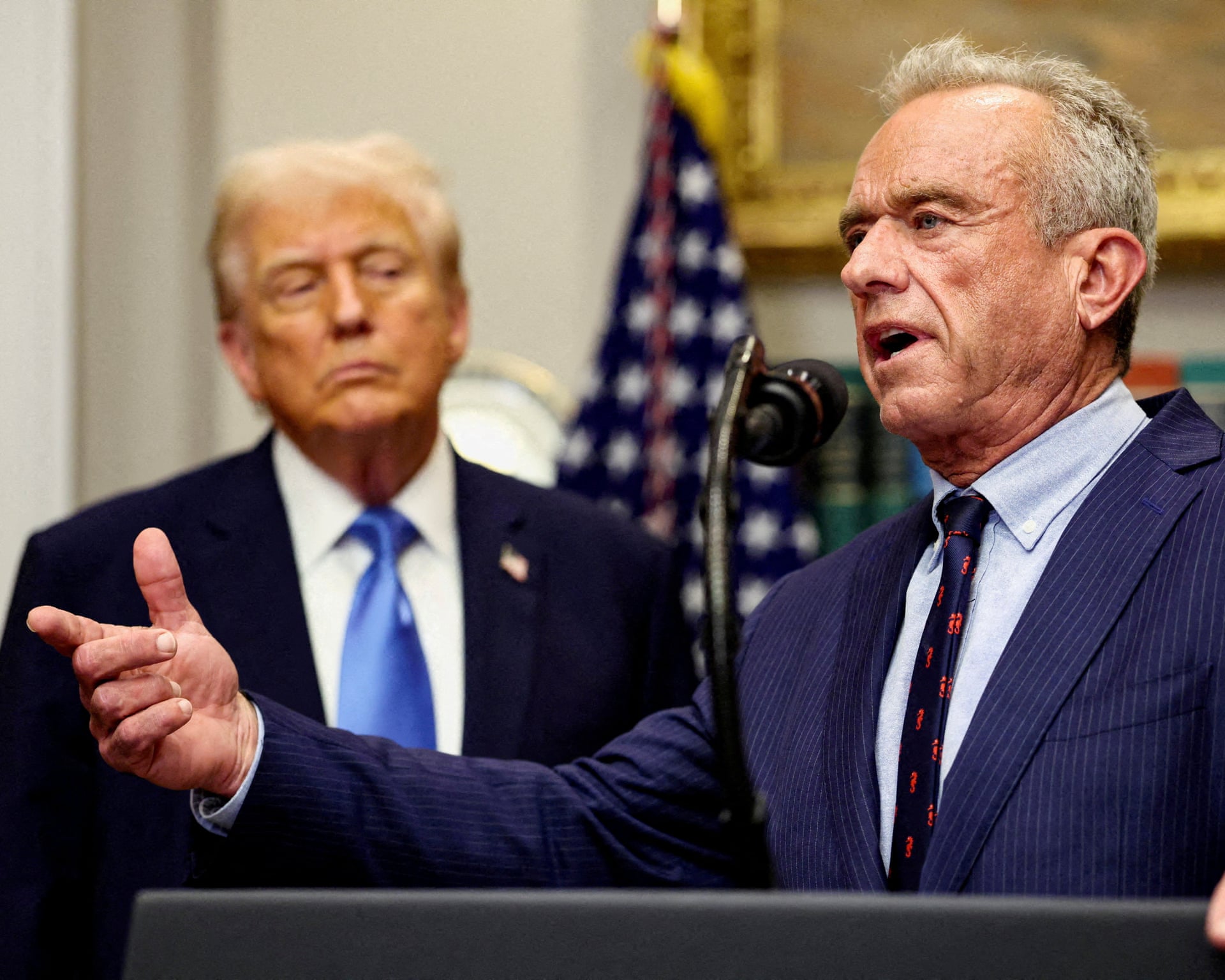
US Measles Elimination Lost: RFK Jr. Should Be Impeached, Says Guardian Columnist
The United States held measles elimination status for a quarter-century. Then, in the span of a single generation,...