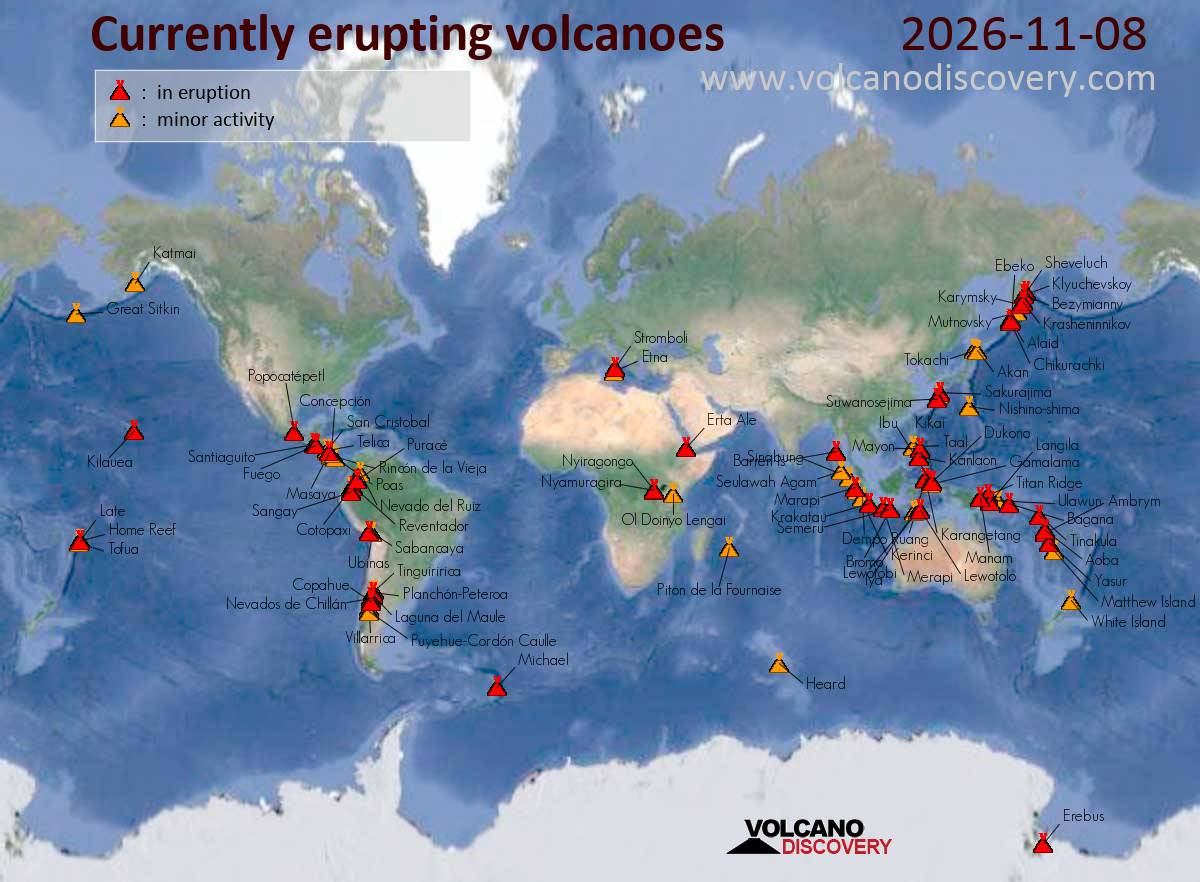
Multiple volcanoes across the Pacific Ring of Fire and the Americas are currently experiencing explosive activity, sending ash plumes into the upper atmosphere, Volcano Discovery reported.
The simultaneous eruptions complicate regional aviation and local monitoring efforts. From the Indonesian archipelago to the mountains of Central Mexico, geological instability is currently affecting several high-profile volcanic sites.
The Volcanic Ash Advisory Center (VAAC) Darwin and VAAC Washington have issued several critical bulletins regarding rising ash clouds. These plumes pose immediate risks to aircraft engines and visibility in flight paths.
In Mexico, Popocatépetl is maintaining explosive activity. According to the latest VAAC Washington bulletin, the volcano has produced an ash plume reaching an estimated 19,000 feet (5,800 meters), or flight level 190.
Similar activity is concentrated in the Indonesian islands. The following data summarizes the current ash plume heights and flight levels reported by official advisory centers:
| Volcano Location | Reported Ash Plume Height | Flight Level (FL) |
|---|---|---|
| Popocatépetl, Mexico | 19,000 ft (5,800 m) | FL 190 |
| Semeru, Indonesia | 15,000 ft (4,600 m) | FL 150 |
| Nevados de Chillán, Chile | 15,000 ft (4,600 m) | FL 150 |
| Reventador, Ecuador | 14,000 ft (4,300 m) | FL 140 |
| Karangetang, Indonesia | 9,000 ft (2,700 m) | FL 090 |
In South America, Reventador in Ecuador is also seeing explosive activity with a plume reaching 14,000 feet. Meanwhile, Nevados de Chillán in Central Chile is reporting a plume of 15,000 feet moving in a southwest direction at 5 knots, per the VAAC Buenos Aires bulletin.
The Indonesian archipelago remains a primary zone of concern. Semeru in East Java continues its explosive activity, while Karangetang on Siau Island has been producing plumes that reach 9,000 feet. The VAAC Darwin reported that the Karangetang plume was moving southwest at 5 knots as of late November 7.
Beyond the immediate ash plumes, a vast number of volcanoes remain in active eruptive states. This includes intra-caldera effusive activity at Ambrym in Vanuatu and the continued eruption of Bagana on Bougainville Island in Papua New Guinea.
In Indonesia, Bromo in East Java has entered a new eruptive phase, marking its first eruption since 2019. Other active sites include Ibu and Dukono in Halmahera, both of which have triggered recent bulletins from VAAC Darwin.
The scale of current activity is reflected in the diverse range of geological events occurring globally. These include lava lakes, such as the one found in the summit crater of Erebus in Antarctica, and new summit depressions at Erta Ale in Ethiopia.
While much of the current news focuses on explosive ash production, many sites are characterized by ongoing effusive activity or minor eruptions. This includes Kilauea in Hawai’i and several sites across the Kamchatka Peninsula in Russia, such as Bezymianny and Klyuchevskoy.
The impact on the American public often manifests through disruptions in international travel and potential shifts in global supply chain logistics, particularly if ash clouds interfere with major trans-Pacific flight corridors. It is unclear if these current eruptive cycles will escalate into larger-scale geological events.
Worth a look

For more than half a decade, the military junta led by General Min Aung Hlaing has maintained its
The Myanmar Junta’s Five-Year Survival Strategy For more than half a decade, the military junta led by General...

Thousands Protest in Ireland Demanding Moratorium on Data Centre Expansion
Thousands March in Dublin Against Data Centre Expansion Thousands of demonstrators converged on Dublin’s Parnell Square on Saturday...
IPPF FGM/C Provider Training Consultancy 2026: Apply Now
The International Planned Parenthood Federation (IPPF) is searching for a specialized consultant to develop comprehensive training materials aimed...

Six Killed in Krakow Mass Shooting Linked to Far-Right Ideology
Poland Declares National Mourning Following Krakow Market Square Attack Poland has entered a period of two days of...