Planned data centers in Nevada could consume nearly 13,000 acre-feet of water annually by 2036 — the equivalent of 4 billion gallons pulled from the driest state in the nation — according to a Desert Research Institute report released this month.
The study, first reported by Facilities Dive, models a midpoint scenario across 39 proposed high-load facilities requesting 16,530 megawatts of capacity. Direct cooling demand alone would reach 12,770 acre-feet a year at a cost of $1.47 million, while indirect water use — the water evaporated at power plants to generate the electricity those centers need — adds another 21,283 acre-feet at $2.45 million.
Combined with existing facilities, the industry’s share of NV Energy’s electricity sales is projected to surge from 5 percent today to 64 percent by 2046.
“Nevada is rapidly transforming into a data center hub, and the scale of the energy and water resources required to sustain this is huge.”
said Erik Henzl, a staff research scientist at DRI and co-author of the report.
Nevada averages just 10.3 inches of rain a year, according to the University of Nevada, and southern Nevada sees barely 7 inches. The National Oceanic and Atmospheric Administration designates the state as the country’s driest, with a long history of extended drought that rising temperatures are projected to intensify.
The report notes new water supplies for the data centers would have to come from unappropriated groundwater, reclamation, or transfers — sources already under pressure from agriculture and municipal growth.
The numbers represent a staggering acceleration. DRI’s January update, which relied on 2024 utility forecasts, has already been overtaken. The new analysis uses NV Energy’s 2026 estimates and reflects a 180 percent increase in capacity requests in just two years. By 2036, the proposed centers alone would drive 43,754 gigawatt-hours of load growth, nearly matching the state’s entire 2024 electricity generation capacity.
Actual consumption hinges on cooling choices the industry has not yet finalized. Traditional evaporative cooling uses far more water than emerging direct-to-chip or immersion systems, but those alternatives can increase electricity demand, which in turn drives more indirect water use at power plants.
The report warns that higher energy consumption may drive greater indirect water use via electricity generation, creating a feedback loop that planners cannot fully quantify without knowing each facility’s final design.
Desert Research Institute, a nonprofit research campus of the Nevada System of Higher Education and sister property of the University of Nevada, Reno, was authorized by a two-page bill signed by Governor Grant Sawyer on March 23, 1959.
Its weather modification research produced the Nevada State Cloud Seeding Program in the 1960s, funded by the U.S. Bureau of Reclamation and the National Oceanic and Atmospheric Administration to augment snowfall and water supply in the state’s mountainous regions. Today approximately 500 research faculty and support staff engage in more than $50 million in environmental research each year across divisions including Hydrologic Sciences and the Center for Watersheds and Environmental Sustainability.
“Data centers currently comprise just 5% of NV Energy’s sales,” the report says. “This number is expected to rise to 64% by 2046.”
Worth a look

Michigan Supreme Court Declines Appeal on Clean Energy Zoning Law, Sets 2027 Arguments
The Michigan Supreme Court on Friday declined to hear an appeal from 79 local governments challenging the state's...

Mamdani Unveils Plan to Close Rikers Island by 2032, Pushing Past 2027 Deadline
NEW YORK — Mayor Zohran Mamdani on Friday unveiled a roadmap to close the Rikers Island jail complex...
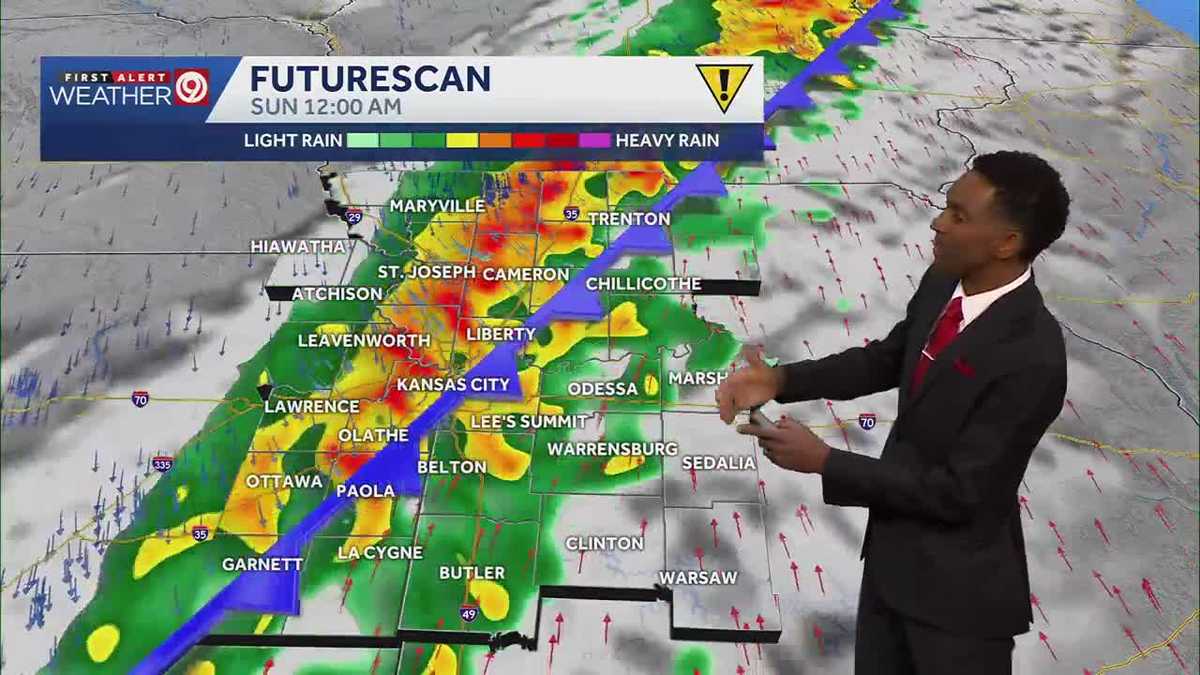
Storms Threaten KC Current Watch Party Saturday; Cold Blast Follows for Chiefs Game
A warm, windy Friday gives way to a stormy Saturday evening across the Kansas City metro, with the...
Mamdani Unveils Plan to Close Rikers Island by 2032, Five Years Past Legal Deadline
Mayor Zohran Mamdani unveiled a roadmap Friday to close the Rikers Island jail complex by December 2032, pushing...