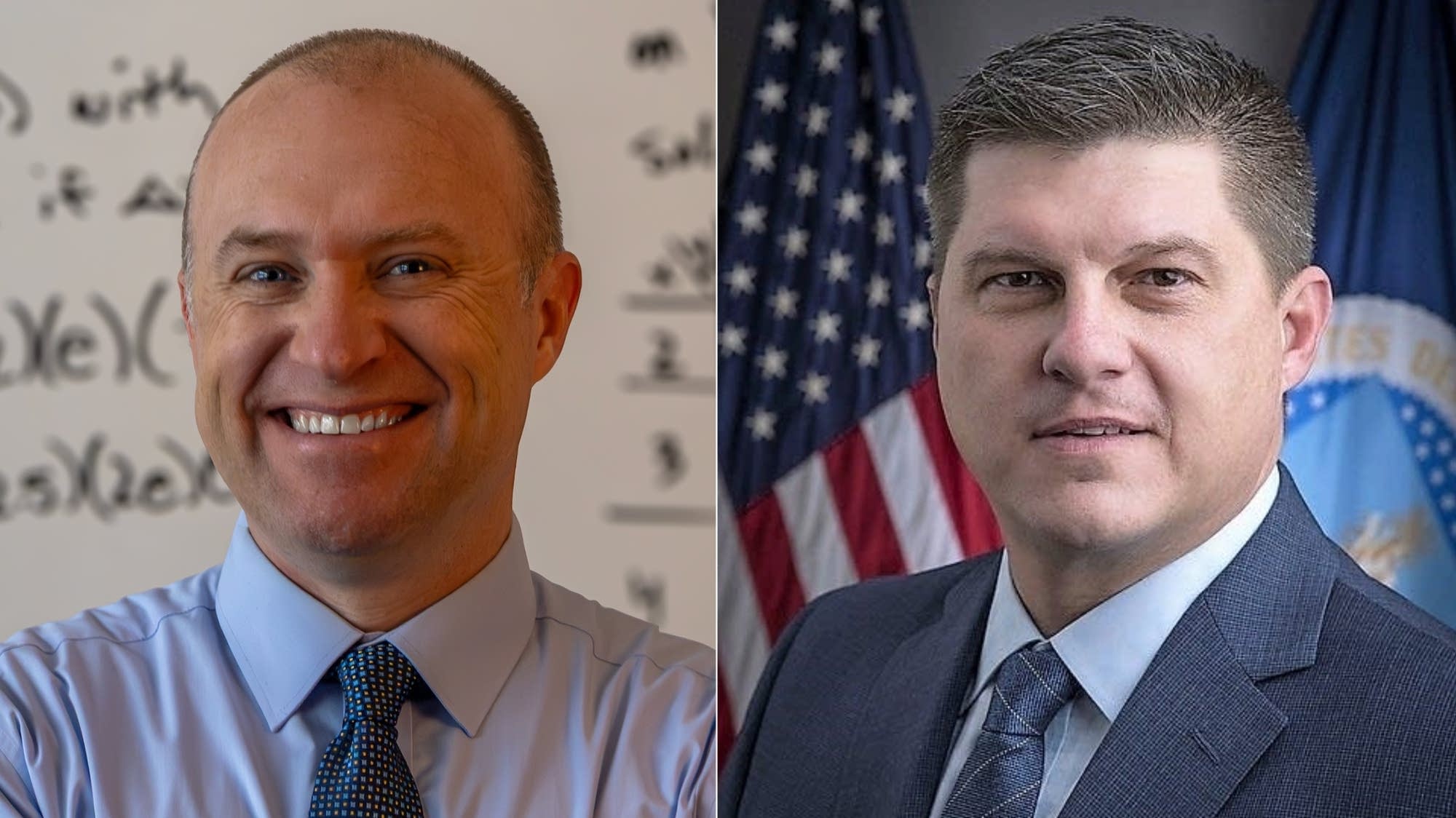
The 323-Vote Margin Triggering a Minnesota Recount
In Minnesota’s 1st Congressional District, the political map is currently caught in a state of suspended animation. Following Tuesday’s election, unofficial results show Democratic challenger Jake Johnson leading incumbent Republican U.S. Rep. Brad Finstad by a razor-thin margin of 323 votes. With more than 326,000 ballots cast, that difference represents less than 0.1 percent of the total vote, a figure that has officially prompted the campaign of Representative Finstad to request a formal recount.
I am grateful for the support of the @MNFarmBureau PAC. I will continue to work with farmers across southern Minnesota as they feed and fuel the world! #MN01 pic.twitter.com/sm4i5kN7ks
For the residents of southern Minnesota, the uncertainty surrounding this seat is more than just a procedural hurdle; it represents a potential shift in the balance of power in the U.S. House. As reported by MPR News, while Johnson declared victory on Wednesday night, the lack of official certification means the race remains technically undecided. Finstad’s team confirmed Thursday that they intend to allow the legal process to reach its conclusion, signaling that the final determination of the district’s representation will be handled through the state’s established canvassing procedures.
How Minnesota Law Governs Close Contests
Minnesota’s election statutes are designed to provide a clear, transparent path when margins are tight. Under state law, a taxpayer-funded recount is triggered automatically when the margin between candidates is 0.25 percent or less of all votes cast. Because the current gap sits well within this threshold, the logistics of a hand recount are already being prepared at the county level.
Secretary of State Steve Simon, speaking on MPR’s Minnesota Now, emphasized the public nature of the upcoming process. Each county is responsible for conducting the count in a central, accessible location where observers from both campaigns and the general public can witness the proceedings. This physical, hand-counted verification is intended to ensure that every ballot—including those that might have been misinterpreted by optical-scan machines—is accounted for accurately.
As noted by twincities.com, these optical-scan machines are generally highly reliable, yet they occasionally struggle with ballots where a voter has circled a name or marked outside a designated bubble. While these manual adjustments rarely result in massive swings, the process remains a vital safeguard for public confidence.
The Path to Certification and Potential Challenges
The road to a final result is not immediate. According to twincities.com, the election results do not become official until the State Canvassing Board meets on November 19, 2026. Prior to that, individual county canvassing boards will meet to review their respective totals and conduct post-election reviews to verify the accuracy of their voting equipment.

Even after the State Canvassing Board certifies the results, the legal window for further action remains open. Any party can still move to challenge the certified results in court, a path that has been utilized in past Minnesota elections. University of Minnesota political scientist Larry Jacobs suggests that while a recount is a time-intensive process that may last several weeks, it serves a critical civic function. By making the process visible and public, the state aims to ensure that the eventual winner carries the legitimacy of a transparent tally, mitigating concerns that a candidate was cheated out of a victory.
The Stakes for Southern Minnesota
The potential flip of this seat is part of a broader trend reported as a “blue wave” or “blue tsunami” impacting the U.S. House majority. For Representative Finstad, who spoke to supporters in Sleepy Eye on election night about the necessity of bipartisan collaboration, the recount is a final effort to retain his position. For Jake Johnson, a former high school math teacher from Rochester, the victory would mark his first term in federal office.
The statistical reality, however, suggests an uphill battle for a reversal. Historically, recounts in Minnesota have resulted in shifts of only a handful of votes, rarely overturning leads in the hundreds. As the state moves toward the mid-November certification date, the focus remains on the integrity of the ballot-by-ballot review. Whether the final numbers confirm the current trajectory or reveal a shift, the process serves as a reminder of the granular impact of every individual vote in a high-stakes congressional race.
Keep reading

Gov.-elect Alan Wilson Outlines Policy Priorities and Transition Team
Governor-elect Alan Wilson and Lieutenant Governor-elect Mike Reichenbach moved quickly to set the tone for their upcoming administration...
Wilmington Honors Rhode Island Regiment and British Officers
Honoring 28 Rhode Island Regiment Soldiers in Wilmington Twenty-eight soldiers from the Rhode Island Regiment, half of them...

Northwestern Oklahoma State and opponent play tight volleyball match
Northwestern Oklahoma State and Opponent Navigate Tight Volleyball Matchup The volleyball match between Northwestern Oklahoma State and their...

North Dakota Republican Party faces financial and operational collapse
The North Dakota Republican Party’s Financial and Operational Collapse As the dust settles on the 2026 election cycle,...