The North Dakota Republican Party’s Financial and Operational Collapse
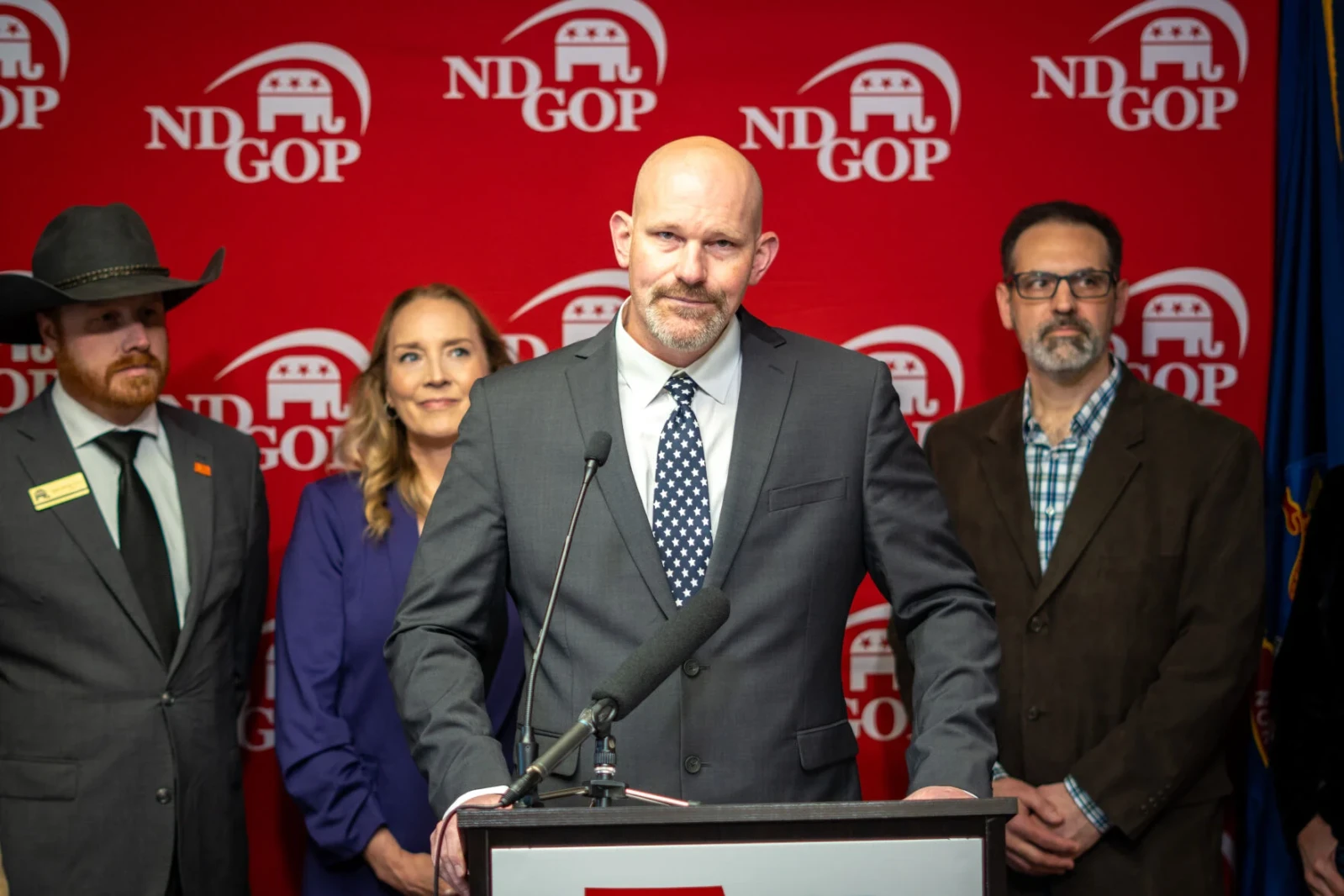
As the dust settles on the 2026 election cycle, the North Dakota Republican Party finds itself in a position that can best be described as a hollow victory. While the party maintained its iron grip on the state legislature and saw its candidates win statewide races with ease, the institutional machinery of the North Dakota Republican Party (NDGOP) effectively ceased to function. In an account reported by InForum, the party’s performance was characterized not by its electoral outcomes, but by a total abandonment of its core responsibilities to its own candidates.
The MAGA populists running the North Dakota Republican Party tried to muscle traditional conservatives this election cycle. Instead, the NDGOP ended 2026 broke and irrelevant. https://t.co/mIWYLH1thh
The numbers behind this organizational failure are stark. By the end of September, the NDGOP reported a cash balance of just $87,000 in its state-level filing. The situation appeared even more precarious by October 20, when the party disclosed less than $14,000 in cash on hand in its federal report. For context, the Democratic-NPL maintained a significantly healthier financial standing, reporting a balance of nearly $384,000 in its state report and roughly $34,000 in its federal filing.
A Party Without a Presence
The financial deficit translated into a complete absence of logistical support on the ground. Candidates and supporters reported that the party failed to organize election night events, neglected to distribute yard signs, and did not operate phone banks. The frustration among elected officials is palpable.
They’re absolutely worthless, and you can quote me any time on that. They didn’t do anything.
This assessment from state Sen. Janne Myrdal, who secured reelection in District 19 with over 67% of the vote, reflects a sentiment echoed by Republican candidates across the state. The party, once an engine for conservative organization, essentially left its candidates to fend for themselves.
The Cost of Internal Conflict
This operational decay followed a period of intense internal friction. The party leadership, now under the control of MAGA-aligned populists, spent much of the cycle attempting to consolidate power by targeting incumbents they viewed as insufficiently ideologically pure. This culminated in the censuring of Gov. Kelly Armstrong over his support for property tax relief and his veto of legislation aimed at book bans.
Chairman Matthew Simon’s attempt to exert control over the party machinery backfired significantly. By attacking incumbents, the leadership alienated the very people they were meant to support. The result was a mass exodus from the party’s state convention in Minot, where statewide and legislative incumbents declined to attend. In a retaliatory, yet largely toothless move, the populist faction passed resolutions to strip these candidates of their party affiliation and proposed fines for those who strayed from the party platform.
These maneuvers proved to be largely symbolic. When Gov. Armstrong backed a slate of traditional Republican candidates against populist challengers in the legislative primaries, his team won 19 of 20 races. The few populist candidates who did advance to the general election, such as Jill Chandler and Kathy Skroch, ultimately faced defeat.
The Democratic Misstep in District 11
While the NDGOP’s internal strife dominated the headlines, the Democratic-NPL also struggled with its own tactical failures. In Fargo’s District 11, the party’s inability to navigate a vacancy created by the passing of state Rep. Liz Conmy led to a chaotic ballot situation. Rather than running a write-in candidate to ensure a standard Democratic-NPL presence, leadership engaged in disputes over the interpretation of election law. Ultimately, candidate Cara Cody-Braun appeared on the ballot as an independent and lost.
The consequence was the election of Doug Sharbono, a far-right populist, alongside Anastassiya Andrianova, who represents the far-left wing of the party. The voters of District 11 are now represented by two figures at opposite ends of the ideological spectrum, a outcome that serves as a pointed critique of the party’s decision-making.
What Lies Ahead for the NDGOP
Despite the overwhelming evidence of the party’s diminished capacity and the clear rejection of its populist slate by primary voters, the current leadership shows little sign of changing course. Reports indicate that Chairman Simon intends to seek another term, while his allies are allegedly attempting to establish a committee to dictate how Republican lawmakers should vote on specific issues.
The practical reality is that the legislators who survived this election cycle did so with little to no help from the party. To many of these elected officials, the current NDGOP infrastructure has become a liability rather than an asset. As the dust settles, the party faces a reckoning that goes beyond simple election results: it must decide whether to continue its attempt to function as an ideological gatekeeper or to reconcile with the traditional base it has spent the last two years alienating.
Related reading
Permit Approved for New Veterinary Hospital at Former Thompson Center
A New Purpose for the Former Thompson Center Site in East Columbia The empty two-story building at 200...
Architecture Research Office designs new pavilion in Providence park
The 195 District Park in Providence, Rhode Island, has a new centerpiece. Architecture Research Office (ARO), the New...

3 Grant Tiers for Pennsylvania Arts and Cultural Organizations
Pennsylvania Creative Industries Launch Pathways Program for Underserved Communities The Commonwealth of Pennsylvania has officially opened the Pathways...
Tulsa Recruiting Company Future Soldiers Take Oath at University of Tulsa Game
Twenty-five Future Soldiers Take Oath at Tulsa Halftime The roar of the crowd at the University of Tulsa...