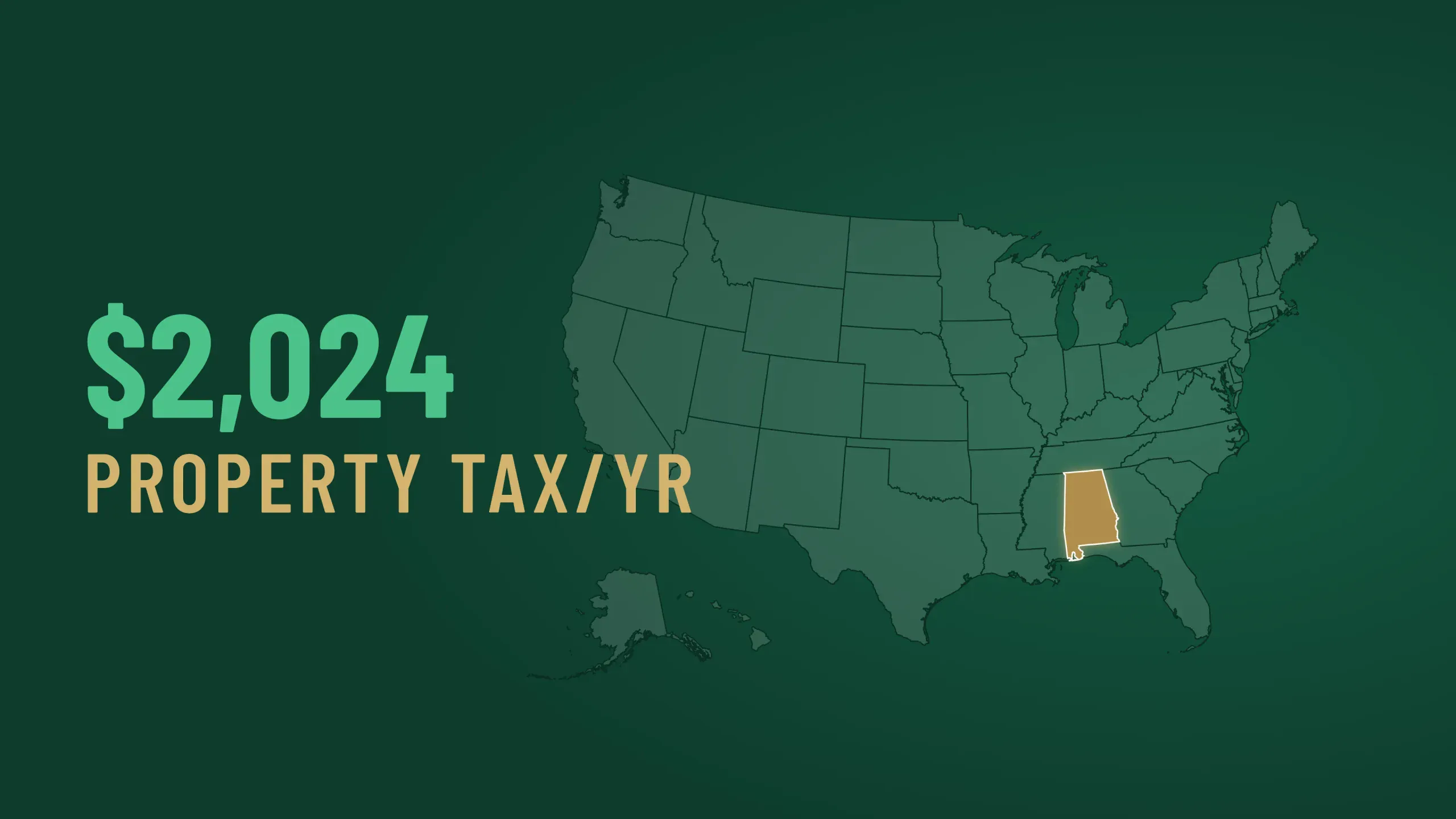
Retirees moving to Huntsville, Alabama, often arrive with a specific math equation in mind. They are looking at the massive gap between the property tax bills they paid in states like Illinois—where a single household might shell out $13,000 annually—and the modest $2,000 bill attached to a typical home in the Rocket City. This stark difference is the primary engine driving migration to the region, but as reported by 247wallst.com, focusing solely on the property tax assessment misses a much larger, quieter drain on a retiree’s monthly budget.
The allure of Huntsville is rooted in its tax structure. Alabama does not tax federal Social Security benefits, and it provides a full exemption for payments from defined benefit retirement plans, or traditional pensions. For those drawing from 401(k)s or IRAs, the state offers a $6,000 exclusion for taxpayers aged 65 and older. When you add in the ability to deduct federal income tax paid from your state taxable income, the fiscal environment appears highly favorable for those on a fixed income. However, the reality of the monthly ledger is more complex than a simple tax rate comparison.
The Hidden Math of Living Costs
To understand what retirement actually costs in Huntsville, one must look at the total household outflow. While the national average household expenditure in 2025 reached $81,905, Alabama’s lower price level—sitting at 88.823 against a national benchmark of 100—effectively adjusts that annual spend down to approximately $72,750. For a couple owning their home outright, this breaks down to about $6,063 per month. That figure accounts for property taxes, Medicare Part B premiums, and the reality of the local utility market.
The electricity bill is a common point of sticker shock for newcomers. While the 12-month average residential bill in Alabama sits around $187, the summer months tell a different story. In August 2026, the average household consumed 1,555 kWh, pushing the monthly utility cost to approximately $254. Residents must also account for the $1,736 Medicare Part A deductible, which applies to each hospital benefit period. With the Huntsville Hospital system serving as the major referral hub for North Alabama and southern Tennessee, having that cash reserve readily available is a functional necessity of life in the city.
| Monthly Expense Category | Estimated Cost |
|---|---|
| Property Tax (Median Home) | $169 |
| Electricity (12-Month Average) | $187 |
| Medicare Part B (Two People) | $406 |
| General Living Expenses | $5,301 |
| Total | $6,063 |
The Sales Tax Reality
While property taxes are low, the state’s combined sales tax rate averages 9.46%. In the Normal area of Huntsville, that rate sits at 9%—a combination of 4% state, 0.5% county, and 4.5% city levies. This is the tax that catches many retirees off guard. If a household puts $25,000 of taxable purchases through the register annually, they will pay $2,250 in sales tax. That single line item exceeds the property tax bill on a median-priced home.

The economic pressure is compounded by the region’s rapid development. The relocation of the U.S. Space Command headquarters near NASA’s Marshall Space Flight Center has fueled significant home price appreciation. Over the last five years, home prices across the metro area have climbed 42.96%. While this is a boon for existing homeowners, it changes the entry cost for retirees looking to relocate. Furthermore, the geography of North Alabama brings the risk of spring tornadoes, necessitating a careful review of insurance deductibles and the potential cost of installing a storm shelter.
Portfolio Requirements for a Fixed Income
For a couple where both spouses draw an average Social Security check, the 2026 COLA adjustment brings their annual benefit to $38,532. After accounting for federal and state taxes—and utilizing the age-based deductions available under Ala. Code § 40-18-15—the math suggests a significant portfolio requirement. Using a standard 4% withdrawal rate, a couple would need approximately $925,000 in savings to sustain this lifestyle. Those planning for a horizon exceeding 30 years are often advised to use a 3.5% withdrawal rate, which pushes the necessary nest egg closer to $1.06 million.
The decision to retire in Huntsville ultimately rests on a trade-off. You are opting into a system that rewards the ownership of a home and the receipt of traditional pension income, but you are also assuming the burden of a high consumption tax. For those who can time their major purchases and maintain the necessary cash reserves for healthcare and home maintenance, the Rocket City offers a distinct financial profile. Whether that profile provides the long-term stability sought by retirees depends on how well they can navigate the shift from being taxed on what they own to being taxed on what they spend.
Keep reading

Democrats aim to lower costs but face Trump’s veto power
Democrats secured majorities in both the House and Senate this week, positioning them to challenge President Donald Trump...

Gabriel Garcia’s Criminal History Revealed After Lakewood Officer Killed
A Community Grieves as Details Emerge on Accused Shooter’s History The city of Lakewood is mourning the loss...
Arkansas beats Northwestern State 89-59 to move to 2-0
The scene at Bud Walton Arena on Friday was a far cry from the typical hushed intensity of...

Phoenix Police Seek Suspects After Shooting at Halloween Party
Phoenix police are actively searching for multiple suspects following a violent confrontation at a Halloween party that left...