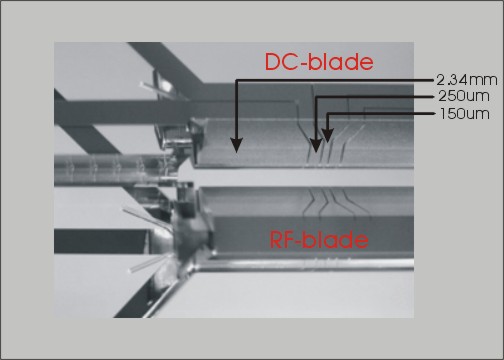
Researchers at Rice University, Duke University, and Translume Inc. have unveiled a monolithic three-dimensional ion trap capable of handling heavy ions like ytterbium. Published in Physical Review Applied, the breakthrough aims to bring complex quantum simulations out of specialized facilities and into standard academic laboratories.
Bridging the Gap Between Blade and Chip Traps
Simulating complex quantum systems has long pushed classical supercomputers to their limits. Because interacting particles grow exponentially with system size, classical processors quickly run out of processing power and memory. To bypass this bottleneck, physicists turn to trapped-ion simulators, suspending individual charged atoms in space via carefully shaped electric fields and manipulating them with lasers to mimic target physical systems.
Until now, researchers had to choose between two imperfect architectures. Blade-style ion traps deliver strong performance but require manual assembly, limiting their geometric precision and making consistent reproduction difficult. Microfabricated chip traps offer greater precision, modularity, and easy scaling, but historically lag behind blade traps in raw performance.
While earlier monolithic three-dimensional designs attempted to combine the best of both approaches, they remained restricted to light ions such as calcium. Heavier ionic species like ytterbium are widely favored for quantum information science due to their mature optical access and well-developed laser-cooling schemes, but they introduce steep engineering hurdles.
In our monolithic ion trap, we wanted to combine the high-performance features and accessibility of the blade trap with the scalability and modularity of the chip trap in a way that was compatible with the heavier ions.
Abhishek Menon, graduate student and corresponding author, via Bioengineer
Engineering Through Glass, Trenches, and Glowing Prototypes
The collaborative team—led by researchers at Rice University alongside partners at Duke University and glass-microfabrication company Translume Inc.—began construction with a solid block of fused silica glass. Using lasers and chemical processes derived from Translume’s femtoEtch process, the team marked and hollowed out channels for the ions alongside precise trenches for the electrodes.
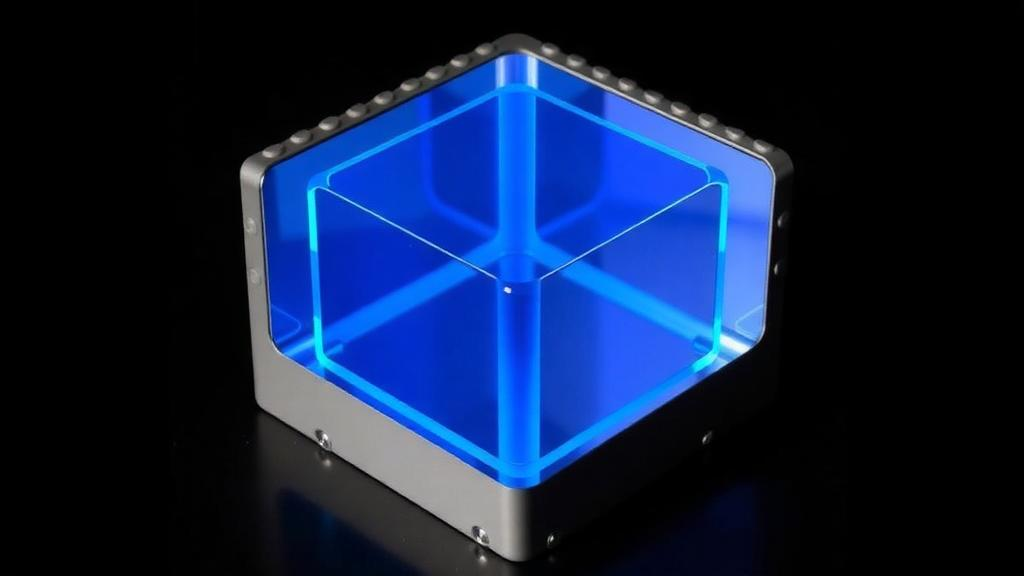
Those trenches proved essential during the subsequent coating phase, where the entire structure was covered in sputtered gold. By physically isolating the electrodes, the trenches prevented short circuits during manufacturing and protected the device from dielectric breakdown under high-voltage conditions in a vacuum.
Getting the hardware right required an iterative design process. The first prototype suffered from severe electrical and thermal management failures, glowing visibly when high radio-frequency voltage was applied. A second iteration resolved those thermal flaws but introduced unwanted axial micromotion and high ion-heating rates.
Only with the third generation did the team secure a viable device. This final layout integrated an improved heat sink, utilized a plasma-based surface treatment to drive down ion-heating rates, and minimized axial micromotion to ensure stable ion trapping.

Performance Benchmarks and Academic Accessibility
Laboratory testing revealed that the third-generation trap operates reliably at high radio-frequency voltages exceeding 450 volts peak-to-peak, yielding deep trapping potentials in the electron volt range. Benchmarking with ytterbium ions exhibited heating rates as low as approximately one quanta per second—performance levels that rival cryogenic ion traps while operating at room temperature. The design also achieved multidirectional optical access reaching a 0.7 numerical aperture.
The monolithic trap makes trapped-ion simulators more accessible to academic labs, allowing researchers to simplify challenging quantum problems into ones we can solve, which we then map onto the bigger, more complex problems.
Roman Zhuravel, study co-author and assistant research professor, via Interesting Engineering
By expanding monolithic architectures to support heavy ions, the platform opens experimental quantum simulation to a much wider scientific community. Potential applications extend from fundamental quantum networking and metrology to modeling biological phenomena, including charge transfer in photosynthesis.
The research was backed by the U.S. Department of Energy Office of Science, the Welch Foundation, the Office of Naval Research, the National Science Foundation, the Army Research Office, and the U.S. Army Research Laboratory.
Related reading

Apple’s first foldable smartphone is set to be released on October 23rd
Apple’s first foldable smartphone, the iPhone Duo, has triggered massive demand, selling out online within hours of its...

Hackers Use Stolen ConnectWise Cloud Backup Credential to Access Microsoft 365 Tenants
Hackers compromised a trusted Microsoft 365 backup application credential belonging to ConnectWise Cloud Backup, using it to sign...

Verizon Announces $10 Monthly Fee for iPhone Handoff
Apple’s iPhone Handoff feature allows users to share a single phone number across two active iPhones running iOS...

Shoppers looking to bypass multiple AI subscriptions can secure lifetime browser access to more
Shoppers looking to bypass multiple AI subscriptions can secure lifetime browser access to more than 20 distinct models...