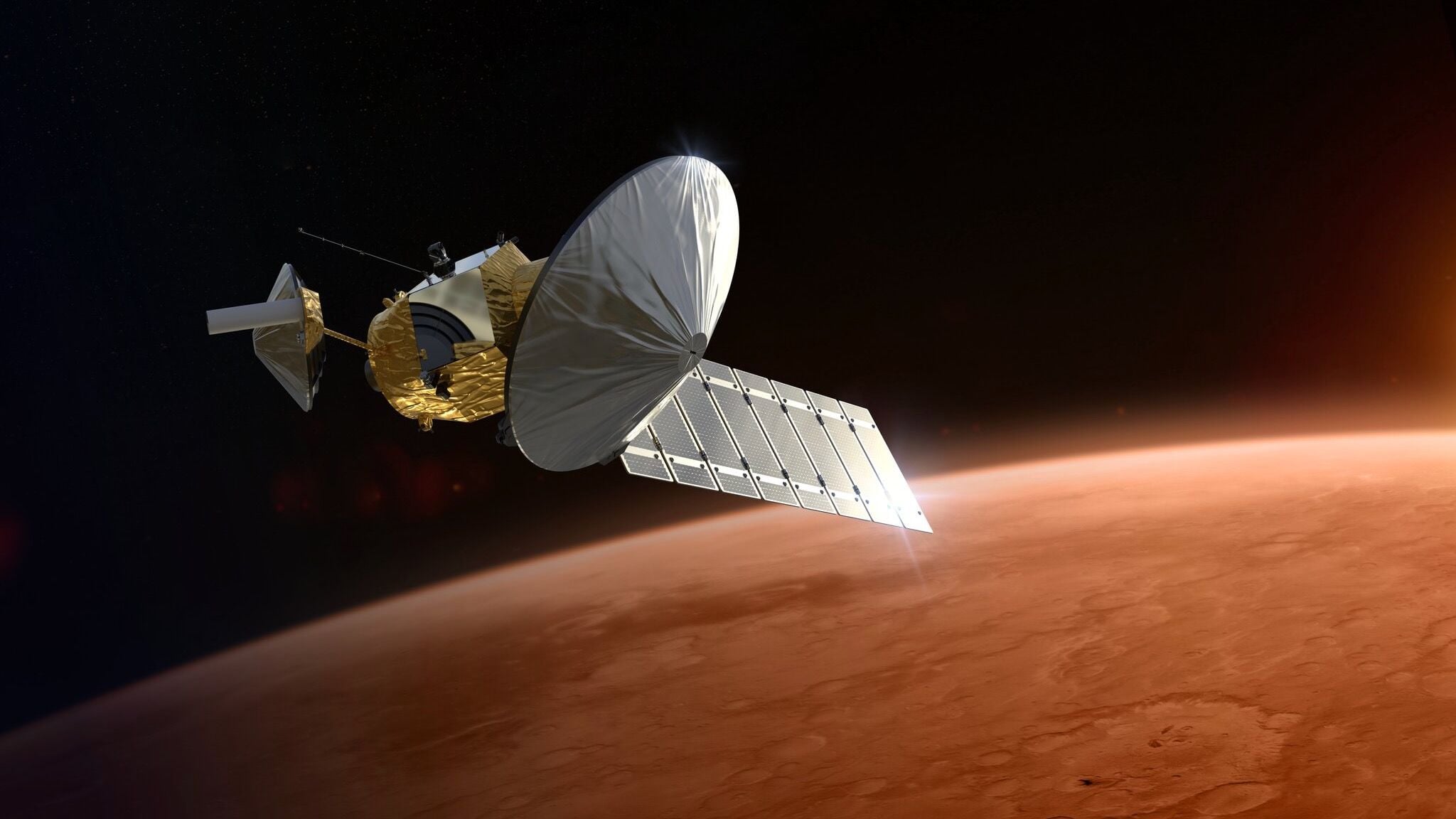
Rocket Lab filed a formal protest with the Government Accountability Office on September 11, 2026, challenging NASA’s decision to award Blue Origin a $700 million contract for the Mars Telecommunications Network. The company argues the selection violated congressional eligibility rules and relied on a flawed technical review.
The $700 Million Mars Communications Contract and the Congressional Mandate
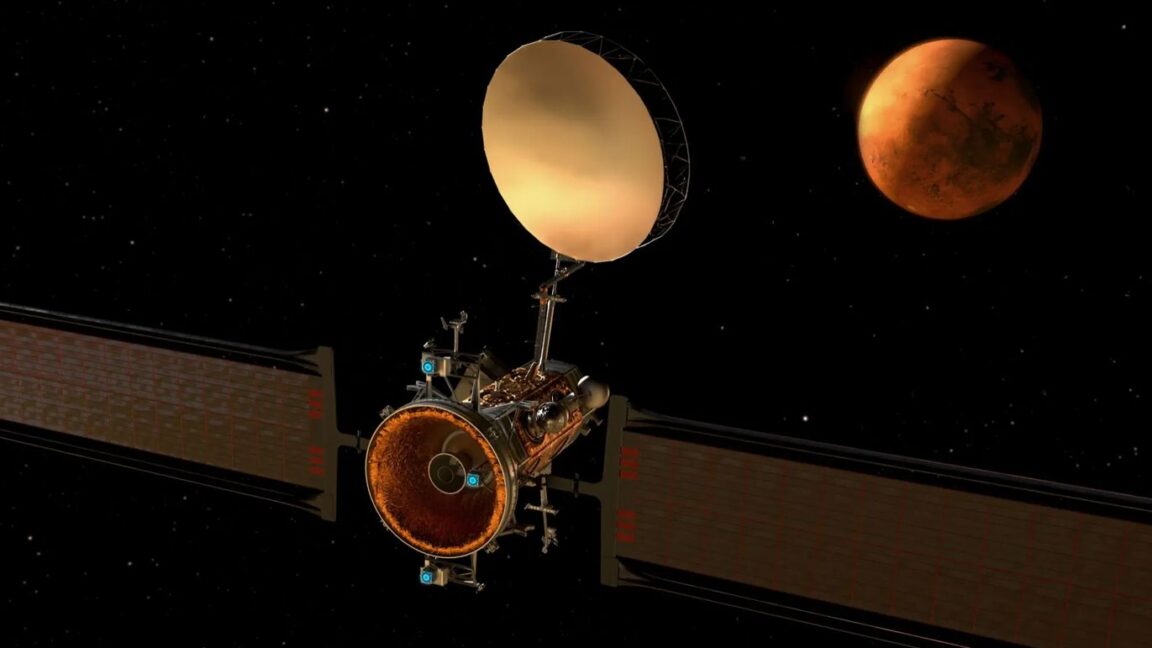
The dispute centers on a high-stakes infrastructure prize. Rocket Lab still holds out hope that it can build NASA’s next Mars orbiter. The agency picked Blue Origin for that job earlier in month, awarding Jeff Bezos’ spaceflight company $700 million to develop, launch and operate the Mars Telecommunications Network (MTN). Today (Sept. 11), however, Rocket Lab announced that it has challenged that decision, filing a formal protest with the Government Accountability Office (GAO). In theory, developing a spacecraft that will fly to Mars, insert itself into orbit around the red planet, and relay transmissions back and forth to large satellite dishes on Earth is a relatively straightforward proposition. NASA’s procurement of a Mars Telecommunications Network
spacecraft, however, has turned out to be one of the most engrossing dramas of the year for the US space agency. The agency finally reached a decision earlier this month, selecting Blue Origin to develop, launch, and operate a $700 million spacecraft at Mars. However, the main competitor for the award, Rocket Lab, was not happy—at all. On Friday, the company filed a protest of NASA’s decision with the US Government Accountability Office. The origin of the Mars Telecommunications Network spacecraft came as part of the supplemental funding package for NASA provided by the One Big Beautiful Bil.
Why Rocket Lab Is Challenging NASA at the GAO
When NASA handed the contract to Blue Origin, Rocket Lab immediately pushed back. On September 11, 2026, Rocket Lab filed a protest with the U.S. Government Accountability Office (GAO), arguing that NASA’s selection process did not follow the eligibility requirements set by Congress and that the agency’s assessment of Rocket Lab’s technical proposal contained errors. The dispute could put NASA’s next communications link around Mars under review just as the agency prepares to replace aging spacecraft that currently relay data between Earth and missions on the Red Planet. NASA selected Jeff Bezos’ Blue Origin earlier in September, with the company required to deliver the Mars Telecommunications Network spacecraft by December 31, 2028. Rocket Lab is now asking the GAO to examine how that decision was made. Rocket Lab says its objection is not simply about losing the competition. The company argues that NASA’s award decision may have conflicted with requirements established by Congress and that its own technical proposal was judged unfairly.
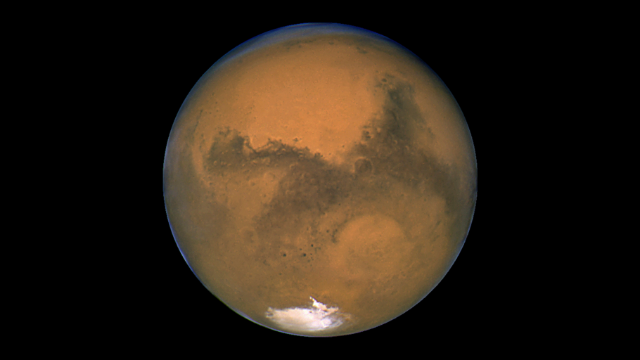
NASA's award decision appears to be inconsistent with the eligibility criteria mandated by Congress. In addition, the agency’s punitive review of Rocket Lab's technical volume was inconsistent, making incorrect assertions and conclusions. In a
Procurement standards exist to ensure fair competition and protect public investment,the California-based company added.
We are pursuing this review to ensure those standards are upheld for critical infrastructure that will underpin American exploration at Mars for decades t.
Philip Metzger said, “Congress passed a law that authorized this project, and Congress was really specific about what companies would be allowed to bid on the contract. They had to already have done a study on a Mars sample return, and they had to have already bid a Mars telecommunications relay as part of that.” Metzger is a University of Central Florida planetary scientist and director of the Stephen W. Hawking Center for Microgravity Research. He said this would support future robotic and human missions. It’s also expected to give us a better idea of whether there’s other life out there. “Rocket Lab claims they’re the only company that met that requirement. However, NASA has reported that it received two bids. The other one was apparently Blue Origin, and then Rocket Lab protested. They’re claiming that NASA didn’t follow the law, and second of all, they’re claiming that NASA was punitive in its review of Rocket Lab and made incorrect assumptions.”
Industry Perspectives and Precedent for Protests
NASA has awarded a contract to Lockheed Martin Space of Littleton, Colorado, to build the Mars Ascent Vehicle (MAV), a small, lightweight rocket to launch rock, sediment, and atmospheric samples from the surface of the Red Planet. The award brings NASA a step closer to the first robotic round-trip to bring samples safely to Earth through the Mars Sample Return program. This groundbreaking endeavor is destined to inspire the world when the first robotic round-trip mission retrieves a sample from another planet – a significant step that will ultimately help send the first astronauts to Mars,
NASA Administrator Bill Nelson said. America’s investment in our Mars Sample Return program will fulfill a top priority planetary science goal and demonstrate our commitment to global partnerships, ensuring NASA remains a leader in exploration and discovery.
Set to become the first rocket fired off another planet, the MAV is a crucial part of a campaign to retrieve samples collected by NASA’s Perseverance rover and deliver them to Earth for advanced study. NASA’s Sample Retrieval Lander, another important part of the campaign, would carry the MAV to Mars’ surface, landing near or in Jezero Crater to gather the samples cached by Perseverance. The samples would be returned to the lander, which would serve as the l.
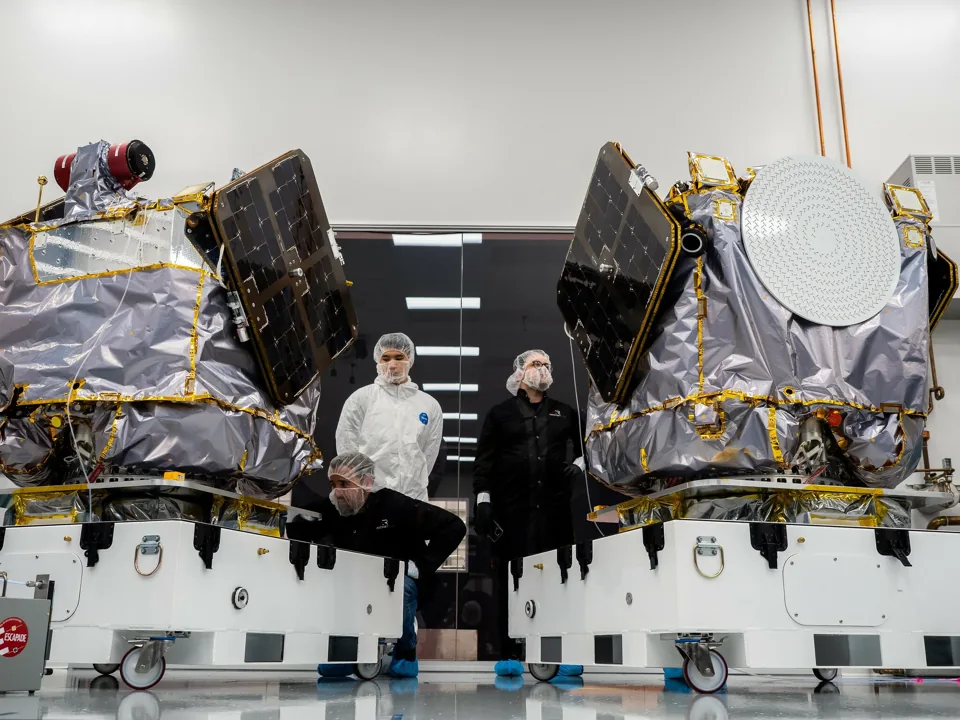
Rocket Lab’s long-awaited first mission to Mars has been pushed back again, with NASA now aiming for a launch no earlier than September 29, 2025, for the two small spacecraft that were originally set to blast off in October 2024. The ESCAPADE mission, meant to study how Mars lost its atmosphere, got delayed because of technical issues with Blue Origin’s New Glenn rocket. That vehicle made its successful debut flight in January 2025, but NASA chose to shift ESCAPADE to New Glenn’s second outing to allow more time for preparations and cut down on risks. The mission uses two identical spacecraft, named Blue and Gold, that will orbit Mars and watch how solar particles from the sun interact with the planet’s weak magnetic field. Researchers think this interaction slowly stripped away the thick atmosphere Mars had long ago, turning it into the cold, dry place we see now. NASA explained the delay by pointing to concerns that rushing preparations might lead to expensive steps like removing and replacing fuel in the spacecraft. Interplanetary launches require precision and reliability,
the agency noted. Taking extra time now reduces risk later.
The spacecraft came from Rocket Lab, the company based in California that’s gained attention for its compact Electron rockets. In 2020, NASA gave Rocket Lab a $57 m.
What Happens Next in the GAO Review
Filing a GAO protest does not automatically overturn an award or strip Blue Origin of its contract. Instead, it triggers a formal federal review of NASA’s evaluation paperwork and compliance with congressional procurement standards. For now, Blue Origin remains the selected contractor while the GAO weighs Rocket Lab’s objections over technical scoring and congressional eligibility criteria.
Worth a look

Mozambique Formally Protects Mount Mabu as Community Conservation Area
Mozambique formally protected the 9,341-hectare Mount Mabu area in the Lugela district on August 24, granting land stewardship...
Researchers Identify Denisovan Remains and Tools in China’s Bianfu Cave
Researchers analyzing bones and stone tools from Bianfu Cave in China’s Yunnan Province have identified seven Denisovan remains...

Webb Telescope Finds Chariklo’s Rings Are Changing Over Years
Astronomers using the James Webb Space Telescope (JWST) have discovered that the two narrow rings surrounding the distant...

SpaceX Launches Final Three O3b mPOWER Satellites for SES
SpaceX successfully launched the final three O3b mPOWER satellites for SES on September 13, 2026, from Cape Canaveral...