Remote Voting Sites Fail to Open Across Rural Alaska as Midterm Balloting Begins
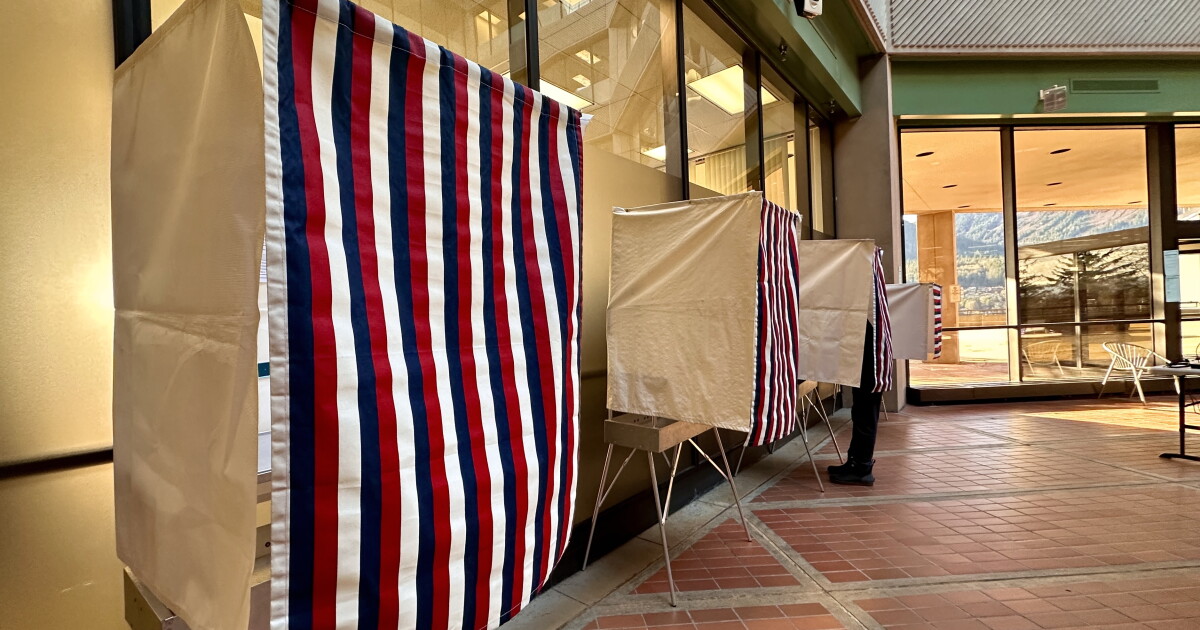
More than a week after early and in-person absentee voting kicked off across Alaska on October 19, polling places in several remote rural communities have failed to fully open their doors to voters, according to reports outlined by state officials.
The exact scale of the disruption remains contested. In a letter sent to the Alaska Division of Elections and Lt. Gov. Nancy Dahlstrom, Anchorage Democratic Sen. Bill Wielechowski flagged voters in 18 communities who reported running into closed doors at their local voting stations.
At least 18 early voting centers in rural Alaska have not opened as of Friday, state Sen. Bill Wielechowski (D) says.The commonality? All the affected areas have at least a 60% Alaska Native population — with nearly a dozen having Alaska Native populations upwards of 90%:… pic.twitter.com/Yw36KEoD5v
“The information that I got was from some groups that have people on the ground in these villages who literally went to the polling place on (Oct.) 19th and the 20th, and they were not open,” Wielechowski said in an interview.
Elections officials have pushed back against that specific count while confirming that multiple sites indeed missed their scheduled openings. In a responding letter to Wielechowski, Division of Elections Director Carol Beecher stated that three locations had explicitly “declined to open” while another three failed to respond entirely to state inquiries.
“Each of the absentee voting locations listed in your letter provided a signed agreement to the Division listing the location and hours,” Beecher wrote, noting that this schedule was listed on the division’s website and updated as needed.
Disputed Counts and Missing Updates on the Ground
The state maintains that 12 of the 18 sites flagged by Wielechowski were actually open. Contacted by Alaska Public Media, municipal and village officials in 10 communities confirmed their voting sites were operating, though frequently on inconsistent schedules rather than standard hours.

Meanwhile, operational realities varied widely by region. Officials in Huslia and Toksook Bay reported that voting was restricted to appointment-only formats. In Gambell, an official confirmed that balloting finally started on Friday, arriving later than initially planned. Over in Newhalen, local officials moved to close early absentee voting ahead of schedule to ensure existing ballots could be mailed out in time.
None of those operational shifts appeared on the Division of Elections website. Five villages—Ekwok, Goodnews Bay, Kongiganak, Mertarvik, and Scammon Bay—were formally designated on the state portal as temporarily closed, while Chignik Bay, Fort Wainwright, and Levelock were quietly removed from the directory entirely without explanation.
Kendra Kloster, director of government relations for the Alaska Federation of Natives, pointed out that the communications breakdown inevitably fuels voter confusion. She noted that while small communities handling multiple local priorities might only manage limited early voting days, the state has a responsibility to broadcast those schedules clearly.
“I don’t want to dictate to a community exactly how they can do it. Maybe they can only offer a few days of early voting because they have so many things on their plate, and I totally understand. If that’s the case, then I think that information just needs to be clearly communicated, so it isn’t seen as not being available or being open when it is,” Kloster said in an interview.
Western Alaska Faces Ballot Delivery and Clerical Concerns
The Division of Elections stated it mailed ballots to absentee voting officials across 109 communities in Western Alaska, aiming to establish access in as many remote areas as possible. However, the agency declined to clarify why eight specific sites experienced temporary closures or disappeared from public tracking pages.
Wielechowski also raised alarms regarding potential clerical errors by local voting officials that could jeopardize completed ballots. Beecher countered that concern by pointing to state law, assuring that absentee in-person ballots are protected from rejection due to mistakes made by absentee voting officials.
“Absentee in-person ballots are not rejected because of mistakes made by AVOs,” Beecher wrote.
The friction surrounding remote access echoes broader debates over election administration in Alaska. Earlier this year, Gov. Mike Dunleavy vetoed a package of legislative voting reforms championed by Wielechowski that proponents argued would have smoothed out these exact operational bottlenecks before the midterm cycle.

Wauna Credit Union Experts Share Tips for Holiday Budgeting
On Tuesday morning, Charles Dennis and Willow Oelke from Wauna Credit Union joined ARC PDX to discuss practical...

AI-generated Wyoming map misrepresents Interstate 80 geography
An AI-generated map circulating on social media has triggered a wave of confusion by misrepresenting the geography of...

Wisconsin Technical Colleges Lose Federal Child Care Funding for Student Parents
For years, the bills Devvin Thomas Sr. received each semester for his son’s campus child care were a...

WVU Fraternity Houses Raided Amid Hazing Investigation
Police Raid Two WVU Fraternity Houses in Hazing Investigation Campus police and local law enforcement officers descended on...