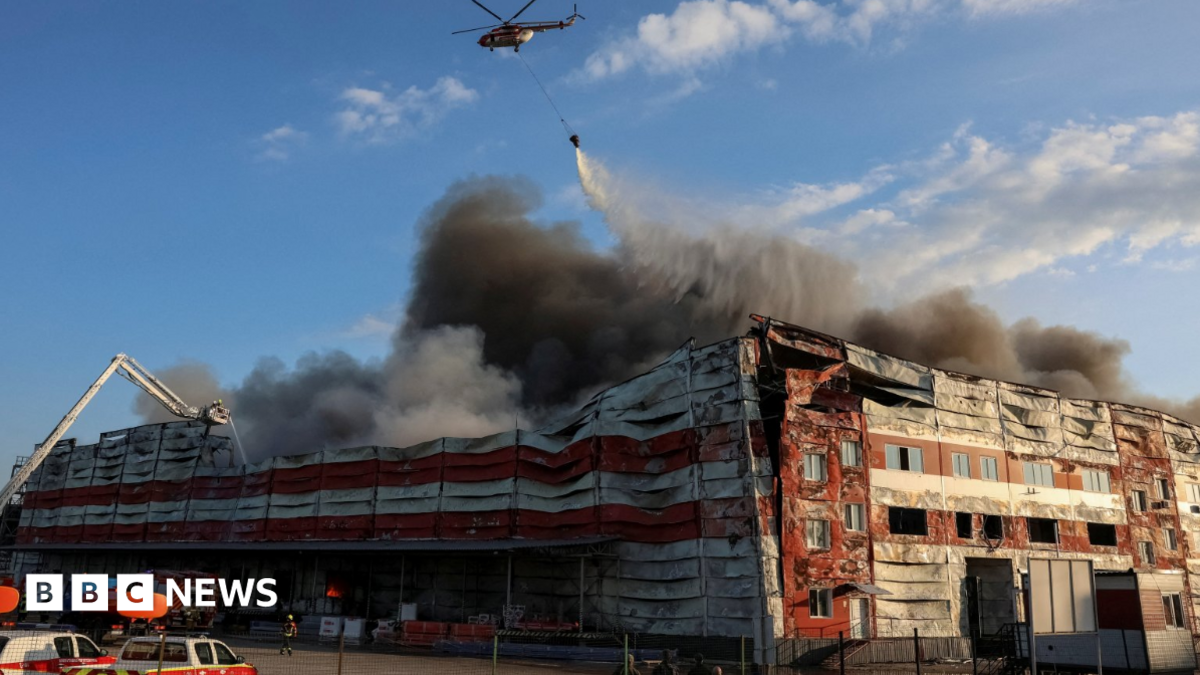
Russia launched one of its most significant ballistic missile barrages against Kyiv and Kharkiv on Sunday, July 19, 2026. The five-hour overnight assault involved over 40 missiles and 125 drones, killing at least four people and wounding dozens more, while triggering fires across multiple urban districts in the capital.
Casualties and Infrastructure Damage in Kyiv and Kharkiv
The coordinated strikes hit residential and non-residential areas across six districts in Kyiv.

In Kyiv, the scale of the destruction forced emergency services to navigate burning apartments and collapsed infrastructure. Residents sheltering in the Lukyanivska metro station experienced a partial collapse of the ground-floor vestibule due to a massive blast wave. Mayor Vitaliy Klitschko confirmed that the city sustained damage to a dormitory, a supermarket, and various office buildings, with three individuals reported to be in serious condition.
President Zelenskyy’s Response and Military Priorities
President Volodymyr Zelenskyy characterized the event as one of the most massive ballistic attacks
on the capital since the 2022 invasion. Highlighting the tactical urgency of the situation, the president emphasized the ongoing struggle to secure adequate defensive hardware.
“Protection against ballistic missiles is our constant and top priority right now. Interceptors are needed every day.”
President Volodymyr Zelenskyy, via Aljazeera
Zelenskyy’s focus on anti-ballistic capabilities follows reports that Ukraine and the United States have reached a political agreement to license the domestic production of Patriot interceptor missiles. While officials hope manufacturing could begin by the end of 2026, the current shortage remains a critical vulnerability as Russia continues to cycle through large-scale waves of Iskander and hypersonic Zircon missiles.
Escalation in the Black Sea and Russian Logistics
The Sunday barrage occurred against a backdrop of intensified reciprocal strikes. Ukraine’s SBU and Armed Forces confirmed successful hits on three Russian oil tankers in the Black Sea and fuel-sector facilities in the Stavropol region. The Caspian Pipeline Consortium, which facilitates oil transport for Kazakhstan, confirmed that its terminal was struck and loading operations were subsequently suspended.
Political Tensions and Domestic Unrest
The military situation is further complicated by internal political friction in Kyiv. The intensity of the latest attacks is occurring as diplomatic efforts remain stalled. Concurrently, public dissatisfaction has surfaced following the decision to sack Minister of Defence Mykhailo Fedorov.
For civilians on the ground, the political and military maneuvering offers little respite from the immediate danger.
Uncertainty Regarding Future Air Defense Capabilities
While the Ukrainian military successfully downed 18 of the 41 missiles launched, the sustained frequency of these attacks—seven major waves in July alone—has created a precarious environment for the capital. As the war enters its fifth year, the central question remains whether the promised domestic production of Patriot interceptors can be operationalized fast enough to mitigate the strategic advantage Russia currently maintains through its ballistic missile inventory. Observers are now watching for any potential shift in NATO’s posture or international military support that might alter the current trajectory of these attritional strikes.
Related reading

Haines Critically Injured in Wangaratta, Man Charged
Australian independent MP Helen Haines lost both legs after being struck by a car outside her office in...
Daily_Brief: #Sudanese drone strike kills 153 in disputed #Abyei market, #South_Sudanese official
A drone strike on the Amiet Market fuel depot in the disputed border region of Abyei killed at...

Italy’s Cabinet Approves Measures in Response to Protests in Northern Italy
Italy approved sending 500 troops to Milan alongside stricter legal penalties on Tuesday, responding to weekend cost-of-living protests...
Teresa Kok wins RM250,000 defamation payout from Akmal over halal certification dispute
Seputeh MP Teresa Kok has won a RM250,000 defamation payout from Umno Youth chief Dr Muhamad Akmal Saleh...