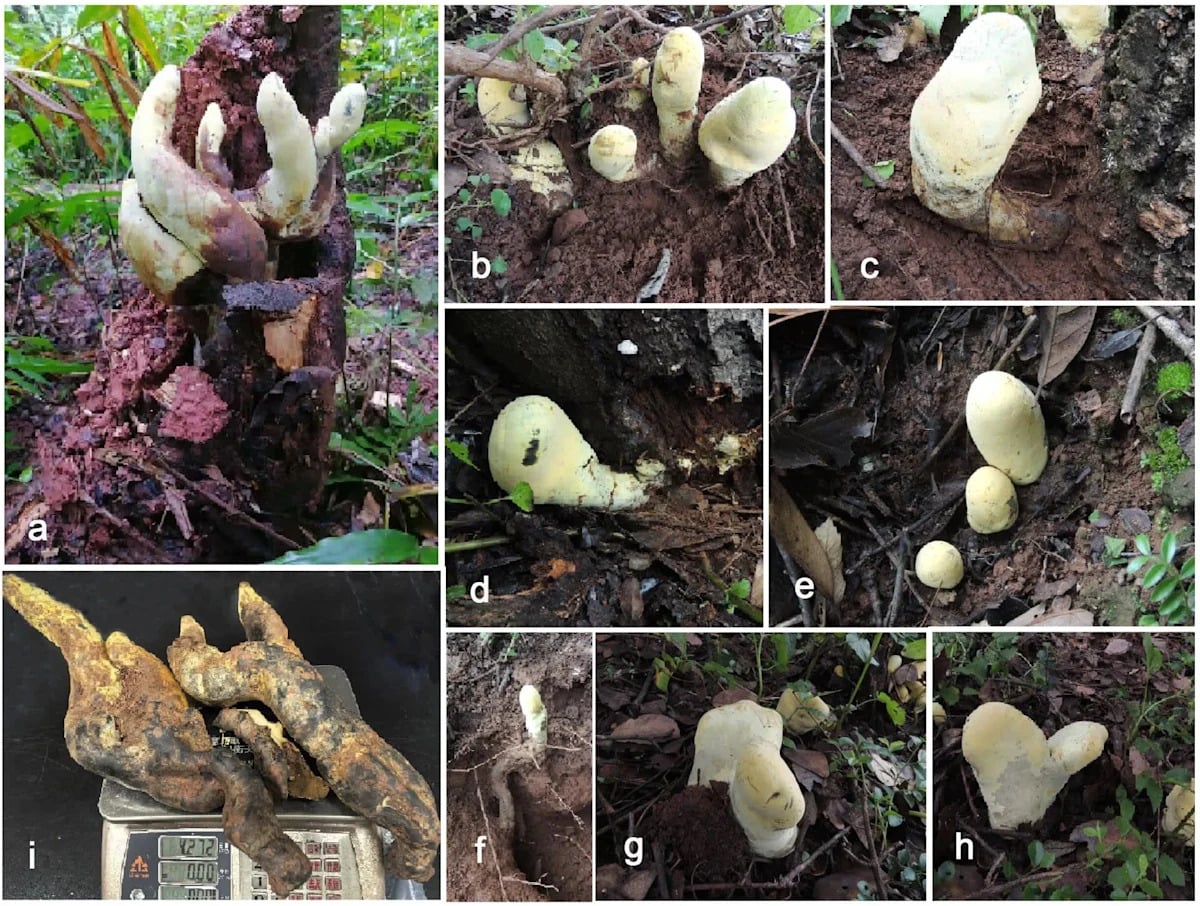
Researchers in southwestern China have discovered a towering new fungus species, Dianjunus rex, that grows up to 50 centimeters tall and weighs nearly five pounds. Genetic analysis indicates its newly established family, Dianjunaceae, originated approximately 65 million years ago following the Cretaceous-Paleogene mass extinction.
Deep in the forests of Yunnan Province, scientists from the Kunming Institute of Botany alongside international collaborators from Thailand and Mexico have uncovered a massive fungal species. This discovery challenges previous assumptions about physical limits within its phylum.
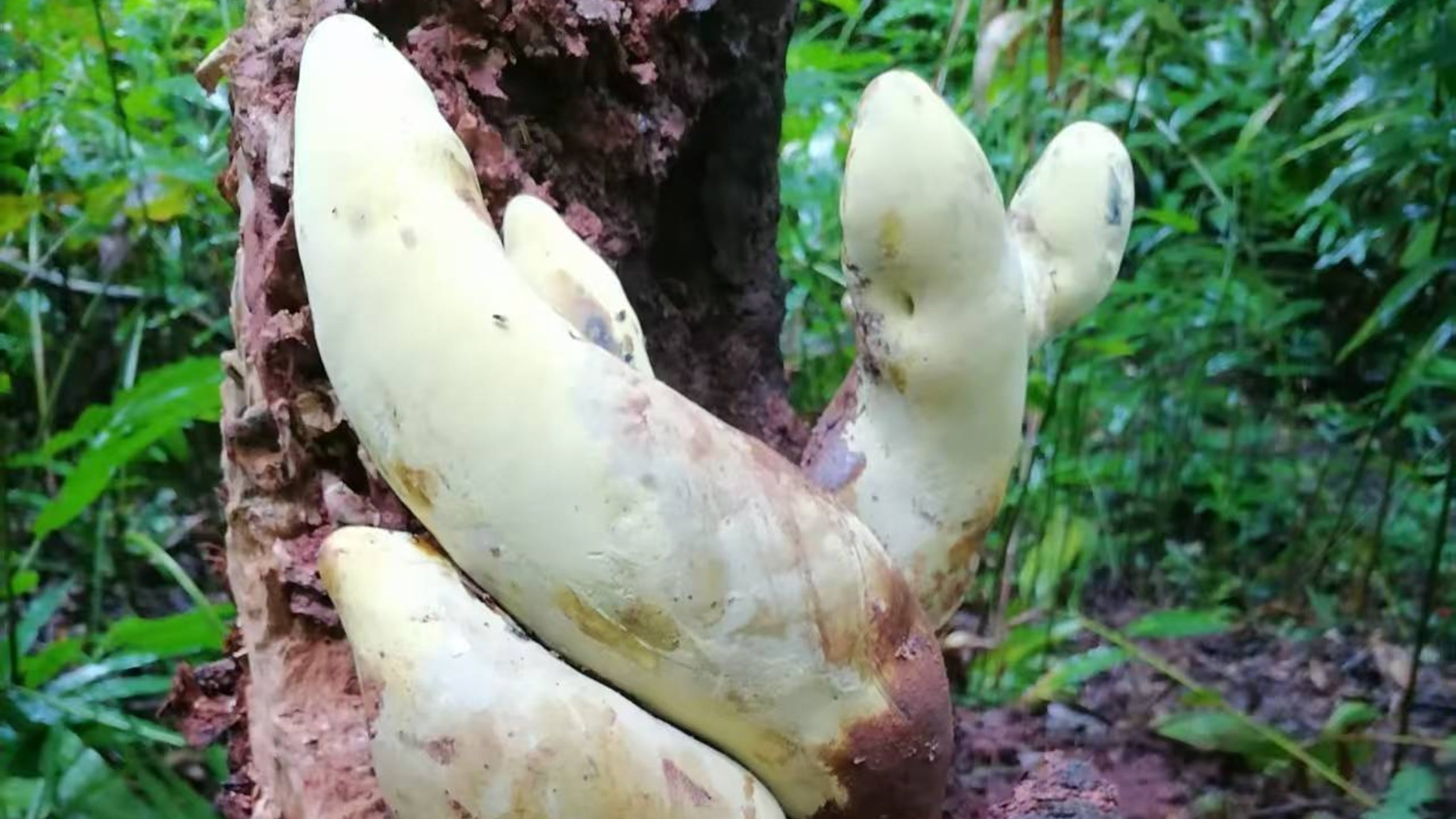
Named Dianjunus rex—or D. rex for short—the organism produces vertical fruiting bodies, known as stromata, that can stretch up to 50 centimeters high, roughly equivalent to the height of a traffic cone.
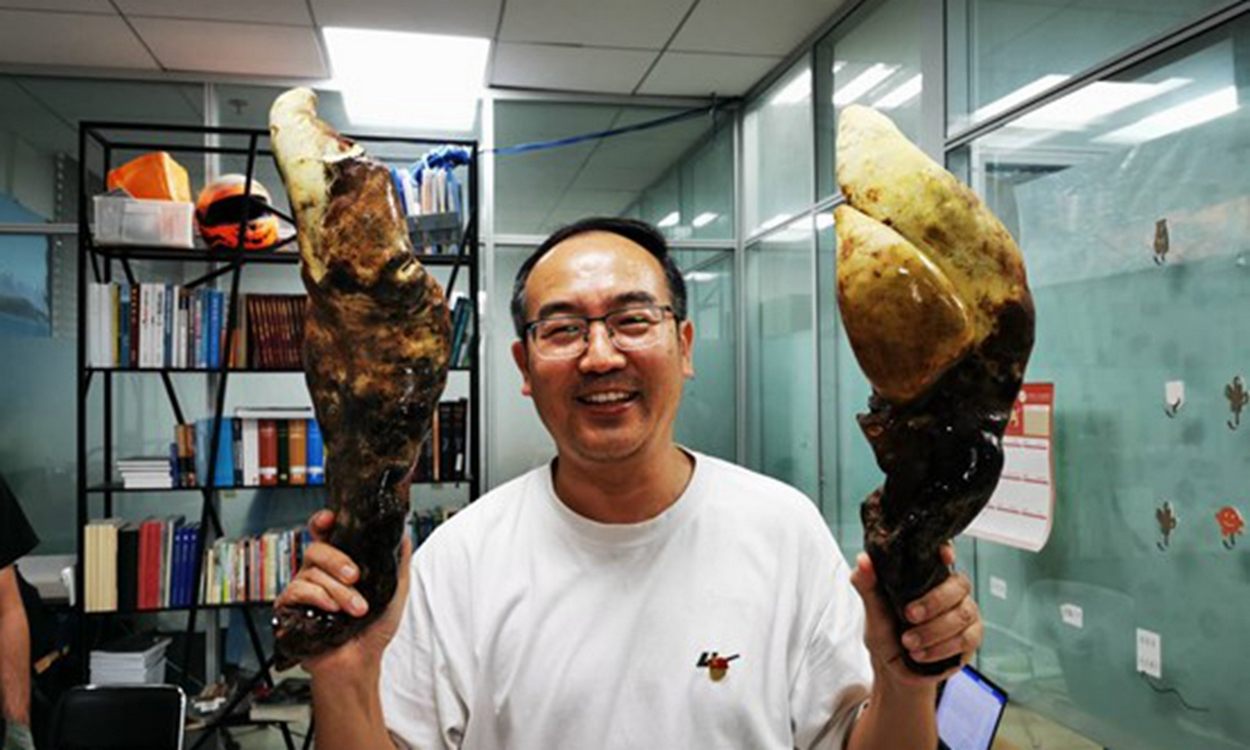
Larger specimens on record tip the scales at 2.2 kilograms, or about 4.9 pounds.
The discovery emerged from fieldwork conducted across temperate coniferous forests near Damaidi and Yipinglang, as well as tropical rainforests near Nanbang. Researchers collected the pale yellow, stout columns growing from the woody roots and decaying stumps of the Chinese cork oak.
While only the upper columns remain visible above the soil, a long black stalk stays buried underground, accounting for much of the organism’s total mass.
Genetics Reveal the Dianjunaceae Family Lineage
Laboratory analysis of the fungus’s morphology and genome established that D. rex does not fit cleanly alongside known relatives. Instead, the organism forms both a new genus and an entirely new family, named Dianjunaceae, within the order Xylariales in the phylum Ascomycota.
Genetic comparisons against hundreds of fungi with established evolutionary timelines place the emergence of the Dianjunaceae family at roughly 65 million years ago.
That molecular clock estimate places the lineage’s origins approximately one million years after the Cretaceous-Paleogene mass extinction event. That cataclysm, triggered by an asteroid impact, eliminated roughly three-quarters of Earth’s plant and animal species, including non-avian dinosaurs.
Researchers suggest that the sudden influx of dead plant material across global forests created fresh ecological opportunities for wood-decomposing fungi.
This timing raises an intriguing possibility. After the mass extinction, forests experienced dramatic changes, including the sudden availability of large amounts of dead plant material. For wood-associated decomposing fungi, such environmental disruption may have created new ecological opportunities.
Dr Indunil C Senanayake, Germplasm Bank of Wild Species at the Kunming Institute of Botany
Evolutionary Trade-Offs Behind the Giant Fruiting Bodies
Before this discovery, record-holders among ascomycete fruiting bodies maxed out between 20 and 30 centimeters tall. The massive structure of D. rex requires substantial energy investment, prompting researchers to investigate the evolutionary advantages of such towering growth.
A fruiting body which towers above surrounding vegetation and debris could have better dispersal of spores by wind in dense forests. However, such a large structure requires substantial energy investment, suggesting that this strategy likely evolved only where the ecological benefits outweighed the costs.
Dr Indunil C Senanayake, Germplasm Bank of Wild Species at the Kunming Institute of Botany
Genomic sequencing also revealed that the fungus carries unusually few genes dedicated to producing plant-degrading enzymes. This trait appears in other fungi that spend portions of their lifecycle safely hidden inside living plants without causing harm.
Scientists are currently studying whether D. rex initially inhabits living Chinese cork oak roots before consuming the wood after the tree dies.
Biodiversity Potential Across Subtropical China
Yunnan Province already accounts for more than 6,000 documented fungal species, with broader estimates suggesting the real total exceeds 100,000. Researchers emphasize that local fungal diversity has historically been underestimated due to difficult field conditions, seasonal fruiting cycles, and a traditional research focus on commercially valuable species.
This remarkable species represents a new fungal family, Dianjunaceae, and provides a rare window into the evolution of extreme fungal body forms. The discovery illustrates how much fungus biodiversity remains to be discovered in East Asian forests.
Dr Indunil C Senanayake, Germplasm Bank of Wild Species at the Kunming Institute of Botany
Field teams have deposited voucher specimens at the Kunming Institute of Botany collections while they continue investigating the organism’s geographic range and underground lifecycle.
Worth a look
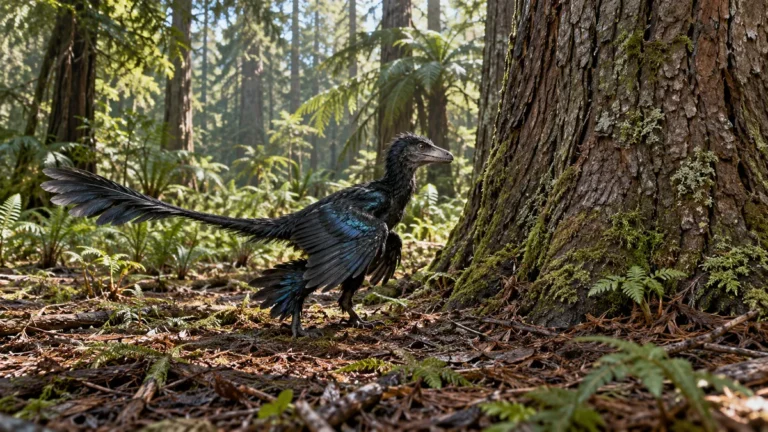
Microraptor was a very small, feathered dinosaur with wings on its legs as well as its arms
Discovered in northeastern China, Microraptor is a diminutive, feathered dinosaur renowned for its four wings and shimmering plumage,...

SpaceX Launches Starfall Return Capsule for Second Time
SpaceX launched the uncrewed Starfall reentry capsule for the second time on October 20, 2026, from Cape Canaveral...

Orionid Meteor Shower Peaks October 21-22, 2026
The annual Orionid meteor shower reaches its peak during the pre-dawn hours of October 21-22, 2026.
Researchers Validate Space-Based Methane Detection
Researchers have completed the largest controlled test of space-based methane monitoring, publishing results in October 2026 showing that...