Understanding the VATER Association at Seattle Children’s Hospital
For families navigating a new diagnosis of VATER—or the more expansive VACTERL—association, the medical journey often begins in a whirlwind of specialist referrals. Seattle Children’s Hospital, a primary center for pediatric care, identifies this condition not as a single disease, but as a specific, non-random grouping of congenital anomalies. The acronym serves as a clinical roadmap, helping pediatricians coordinate care across departments ranging from cardiology to orthopedics.
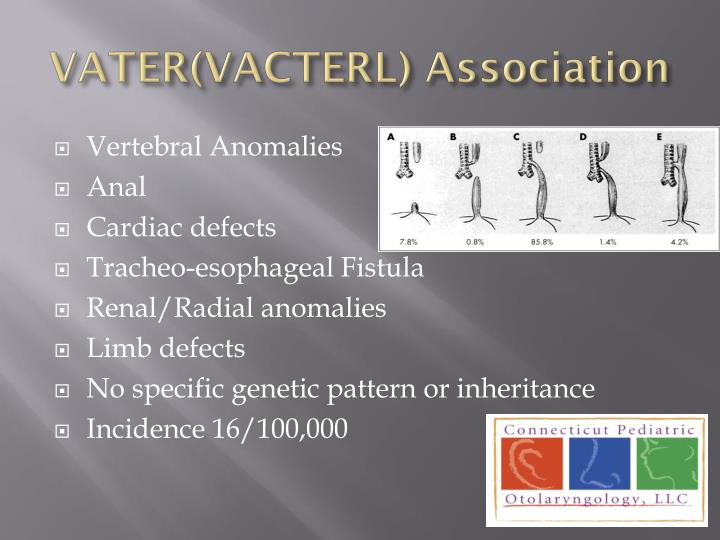
At its core, VATER stands for Vertebral defects, Anal atresia, Cardiac defects, Tracheoesophageal fistulas, Esophageal atresia, and Renal abnormalities. When clinicians add the “C” and “L,” the acronym expands to VACTERL, incorporating limb abnormalities. Because these conditions rarely follow a uniform pattern, no two children experience the exact same clinical presentation. The condition is notably non-hereditary, occurring sporadically.
The Clinical Components of VATER
The complexity of the association lies in the diversity of the organs involved. Treatment requires a multidisciplinary approach because the anomalies, while linked, affect distinct biological systems. According to guidelines provided by Seattle Children’s Hospital, the following systems are most commonly monitored:
- Vertebral: This involves the spine or backbone. Clinicians screen for scoliosis, curvature of the spine, the presence of extra ribs, or hemivertebra, where one side of the spine fails to form properly.
- Anal atresia: This refers to an imperforate anus or the absence of a rectum. It may also involve fistulas, which are abnormal passages between organs, such as the rectum and the vagina.
- Cardiac: Heart defects are common, with ventricular septal defects—or openings between the two sides of the heart—being a primary concern for pediatric cardiologists.
- Tracheoesophageal and Esophageal: These involve the windpipe and food pipe. A tracheoesophageal fistula is an abnormal passage between the two, while esophageal atresia describes a situation where the food pipe is absent or closed.
- Renal: Kidney abnormalities can include a horseshoe-shaped kidney or an underdeveloped urethra, the tube connecting the bladder to the kidney.
- Limb: These abnormalities can manifest as hexadactyly (extra fingers or toes), humeral hypoplasia (underdeveloped upper arms), radial dysplasia (abnormalities of the forearm bone), or atypical thumb placement.
Coordinating Specialized Care
Because the condition impacts so many systems, the treatment plan is inherently fragmented by necessity. A child might require a cardiac specialist to clear them for surgery, a gastrointestinal surgeon to address esophageal or anal issues, and an orthopedist to manage spinal curvature. In this hierarchy of care, the hand surgeon is typically the final consultant brought into the process.
Surgery is not a guaranteed outcome for every patient. Treatment for limb and hand function is highly tailored to the individual child’s needs. If a child has underlying heart defects, surgeons must secure clearance from a cardiac specialist before proceeding with any orthopedic interventions. Follow-up care focuses on long-term monitoring of function rather than a standardized surgical path.
The Economic and Human Stakes
The burden of VATER/VACTERL extends beyond the immediate surgical needs. Families often find themselves managing a complex schedule of follow-up visits, diagnostic imaging, and therapy sessions. The rarity of the condition—which affects roughly 1 in 10,000 to 1 in 40,000 live births—means that specialized centers like Seattle Children’s Hospital play a critical role in standardizing care protocols that local clinics may not be equipped to handle.
While the medical community has made significant strides in diagnosing these anomalies in utero or shortly after birth, the long-term management of VATER remains a lifelong commitment for many families. The transition from acute neonatal care to chronic monitoring represents a significant shift in the lives of parents and caregivers. The focus remains on improving the functional capacity of the child, ensuring that cardiac, renal, and skeletal health are balanced against the immediate needs of the digestive and respiratory systems.

Blue Compass RV Acquires Cheyenne Camping Center in Iowa
Blue Compass RV Expands into Quad Cities Blue Compass RV has acquired Cheyenne Camping Center, a family-owned dealership...

Florida Defies National Blue Wave to Protect Conservative Principles
Florida’s Conservative Pivot Amid a National Blue Tsunami As the dust settles from the November 3, 2026, general...
Pinball Castle Brings Retro Gaming Resurgence to Berkeley Springs
From Server Racks to Pinball Cabinets in Berkeley Springs In the quiet Appalachian town of Berkeley Springs, West...

Sacramento Republic FC vs. El Paso Locomotive FC: USL Championship Conference Semifinals Preview
A High-Stakes Return to the Western Conference Semifinals Sacramento Republic FC heads into a pivotal Western Conference Semifinal...