
Washington budget faces a $4 billion hole next year.
The state will spend $3.75 billion more than it collects this budget, while the following budget opens with that $4 billion shortfall, Seattle Red reported.
This isn’t just some abstract line item; it means where taxpayer money went needs a real accounting before any Democrat in Olympia mentions revenue.
“For years, the state compounded our budget challenges by assuming we would see 4.5% growth, even if the forecast council told us that number would be lower,” said Governor Bob Ferguson.
The November 16 forecast from the Economic and Revenue Forecast Council gave lawmakers $76.5 billion for the current budget and $82.5 billion for 2027-29, linking to the forecast from the Economic and Revenue Forecast Council.
Collections came in $195 million above September’s estimate for now, but $75 million below it for later, showing a mixed picture of immediate fiscal health.
Office of Financial Management Director K.D. Chapman-See directed agencies to find up to 15% in cuts through mid-2028, starting with programs outside their core missions, and these options are due on Monday.
The sheer scale of the fiscal shift is stark when you look at the operating budget growth; ten years ago it was about $38 billion, now it stands at $80.2 billion after this year’s supplemental, even as inflation rose 39% and population grew 14%.
“Between rising costs and billions of dollars in federal cuts, including massive cuts to health care, we are facing a significant challenge in the first year of the next budget,” said Governor Bob Ferguson.
The human stake here is felt across public services, especially since OFM estimates H.R. 1 could cost hospitals up to $1.3 billion a year in reimbursements, impacting healthcare access for Washington residents.
Representative Travis Couture called the situation a spending addiction, and Matt Marshall agreed, pointing out nobody in the majority has detailed what the extra $42 billion actually bought.
The Devil’s Advocate perspective suggests the problem isn’t just the $4 billion figure, as the Washington Policy Center puts the full two-year shortfall closer to $6 billion or $7 billion, noting forecasters find the $5.1 billion less revenue scenario more likely.
Ferguson mentioned a budget stability starting July 1, 2028, tied to the millionaires’ income tax expected to pay out $3.5 billion, but this tax still faces a legal challenge and relies on no high-earner exodus occurring.
Representative Ed Orcutt, the ranking Republican on the House Finance Committee, stated plainly, “They absolutely can. The question is, will they?”
This debate over revenue generation becomes complicated when Ferguson, who said he was skeptical of additional revenue in October 2025, later signed a 9.9% income tax on millionaires.
Lawmakers need to provide one clear number for the full biennium, complete with written assumptions, before asking voters for any more money.
The next budget actually gets 7.9% more money than this one, suggesting the revenue isn’t collapsing outright.
Related reading

New Orleans Judge Orders Evidence Preservation After Tanker Strikes Paddleboat on Mississippi River
Tanker crew must save evidence following New Orleans crash on Saturday. The Atlantic Asphalt tanker struck the American...
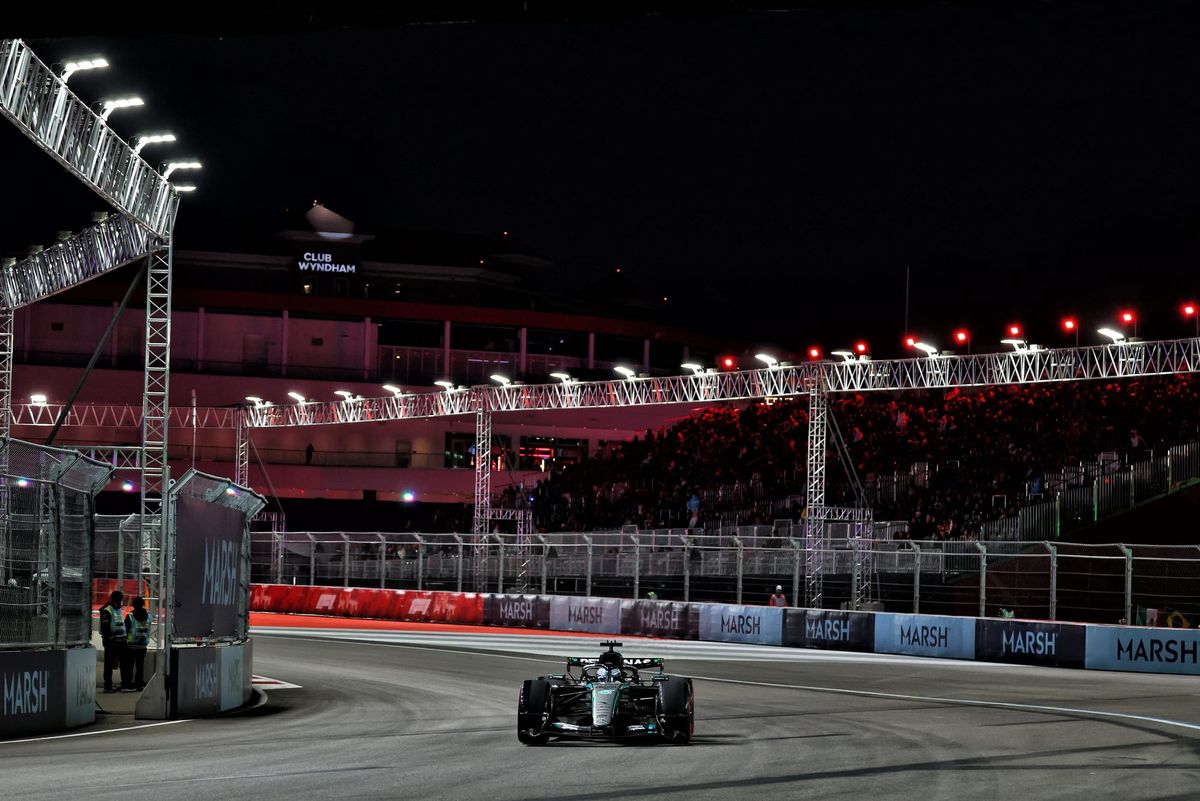
Russell Fastest in Final Vegas F1 Practice After Contact With Verstappen
George Russell edged out Max Verstappen in final Vegas F1 practice at 1m34.041s on Saturday. The nut graf...

ND’s Largest School Districts See Multilingual Enrollment Plateau, Williston Herald
North Dakota's three largest school districts are watching multilingual enrollment plateau after years of sharp growth, a shift...
King Loses Bid To Vacate Sentence In Pennsylvania Superior Court
King lost his bid to vacate his sentence this week in the Pennsylvania Superior Court. The 50-year-old Johnstown...