
A genomic epidemiology study published in the Lancet Infectious Diseases on July 8, 2026, identifies sexually transmitted Shigella sonnei as a distinct public health threat in England. Research led by the University of Cambridge and the UK Health Security Agency (UKHSA) reports that these strains spread faster and exhibit higher antibiotic resistance than other forms.
Genomic Evidence of Rapid Transmission
The study, which analyzed 3,514 samples from patients aged 16 and older, reveals that sexually transmitted Shigella spreads more than twice as far geographically as non-sexually transmitted strains. Over a two-and-a-half-year period, these strains covered an average distance of 117 kilometres, compared to 46 kilometres for non-sexually transmitted cases. This geographic dispersal suggests that the transmission network is not localized to a single city or region, but rather follows the movement patterns of social and sexual networks across the country.

Dr. Mathew Beale, a senior staff scientist at the Wellcome Sanger Institute, described the work as an “impressive and comprehensive analysis” that formally quantifies observations previously only suggested by smaller studies. The research confirms that sexual infection is now a sustained part of Shigella transmission in the United Kingdom, particularly within networks of gay, bisexual, and other men who have sex with men (GBMSM). Genomic sequencing allows researchers to trace the “phylogenetic tree” of the bacteria, identifying clusters that share identical genetic markers, which provides a high-resolution map of how the pathogen jumps between individuals.
Rising Antibiotic Resistance and Global Dissemination
The data indicates that approximately 70% of sexually transmitted Shigella strains are resistant to at least one clinically relevant antibiotic. This figure significantly exceeds the 40% resistance rate found in non-sexually transmitted cases and the 49% observed in travel-associated infections.
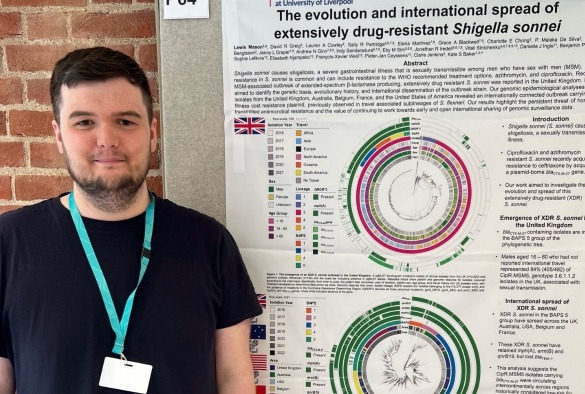
The emergence of extensively drug-resistant (XDR) strains is a primary concern for international health authorities. According to researchers, these bacteria have acquired genes through horizontal gene transfer from commensal gut microbiota, a process likely accelerated by the use of antibiotics like azithromycin to treat other sexually transmitted infections. In a clinical setting, Shigella is typically treated with antibiotics to reduce the duration of illness and prevent further transmission; however, when those bacteria are resistant, standard treatment protocols become ineffective, potentially prolonging the period during which an individual remains infectious.
| Strain Type | Antibiotic Resistance Rate |
|---|---|
| Sexually transmitted | 70% |
| Travel-associated | 49% |
| Non-sexually transmitted | 40% |
Public Health Strategies and Clinical Advice
Health officials are now calling for distinct surveillance and treatment strategies to address the outbreak. Professor Kate Baker, senior author of the study from the University of Cambridge, emphasized the need for clear messaging to affected communities. The challenge lies in the fact that Shigella is historically viewed as a foodborne or waterborne illness, leading to potential misdiagnoses when patients present with gastrointestinal symptoms in sexual health clinics rather than primary care settings.
“Many men who have sex with men are unaware of the serious and increasing risk posed by sexually transmitted shigella,” Professor Baker said. “It is vital that this message reaches the communities most affected, so we can help to prevent the spread.”
- If feeling unwell or recovering from a recent bout of diarrhea, avoid sexual activity for at least two weeks after full recovery.
- Disclose sexual history to medical providers when seeking care for gastrointestinal symptoms.
- Request a full sexual health screen if you suspect you have been exposed to Shigella.
Marc Tweed of the Terrence Higgins Trust characterized the situation as a “real cause for concern” for specific sexual networks. He urged anyone experiencing symptoms—such as watery diarrhea, abdominal pain, or fever—to contact a local sexual health clinic for an appointment. Public health policy in the UK traditionally focuses on hygiene and food safety for Shigella control; however, this study highlights the urgent need for integrating sexual health screening into the broader gastrointestinal surveillance framework.
Limitations and Future Surveillance
While the Lancet Infectious Diseases study provides a robust overview, some experts have noted methodological constraints. Dr. Beale pointed out that the study assumes most patients without recent travel history belong to the GBMSM community, a reliance on proxy data that may lead to an overestimation of case numbers. Furthermore, he noted that because patients often travel to metropolitan clubs and return home before presenting to a GP, laboratory locations may not accurately reflect where the infection was acquired.

The reliance on genomic data also means that surveillance is dependent on the availability of laboratory testing. In many cases, patients with mild symptoms may not seek medical attention, meaning the 3,514 samples analyzed represent only a portion of the actual infection burden within the UK. The study underscores the necessity of improved diagnostic pathways, ensuring that clinicians are aware of the sexual transmission route to provide appropriate testing and counseling.
As of July 2026, the scientific community continues to map these international outbreaks. Researchers from the UK, France, Belgium, Australia, and the United States are collaborating to monitor the evolution of these bacteria. This international cooperation is vital because Shigella strains move rapidly across borders via international travel and global social networks. By sharing genomic sequences, global health agencies aim to detect emerging resistance patterns in real-time, hoping to predict and prevent future surges in drug-resistant gastrointestinal infections before they become endemic in new regions.
Find more reporting in our News section.

Pakistan Imposes Emergency and Governor’s Rule in Khyber Pakhtunkhwa
Pakistan declared a state of emergency in Khyber Pakhtunkhwa on Sunday, October 11, 2026, suspending the provincial government...

Abiy Ahmed Sworn In as Prime Minister With Focus on Red Sea Access
Prime Minister Abiy Ahmed was sworn into a new five-year term on Monday, October 5, 2026, following his...
Pope Leo XIV Rejects Death Penalty as Attack on Human Dignity
Pope Leo XIV has rejected the death penalty as an attack on human dignity, posting on X that...

SpaceX Launches 21 U.S. Space Force Satellites After Delay
Following a five-day delay from an earlier countdown abort, a SpaceX Falcon 9 rocket successfully launched 21 data...