The Bipartisan American Affordability and Jobs Act cleared the U.S. Senate on Thursday by a 62‑33 vote and now heads to the House, where South Dakota’s lone representative, Dusty Johnson, predicts widespread support.
The legislation, known as BAAJA, rewrites federal permitting rules for energy infrastructure. Sen. John Thune, R‑S.D., called it a restoration of balance that “ensures that local stakeholders are adequately consulted on projects in their communities, and it prevents federal agencies in Washington from holding up projects through unnecessary bureaucratic delays.” President Donald Trump has endorsed the bill.
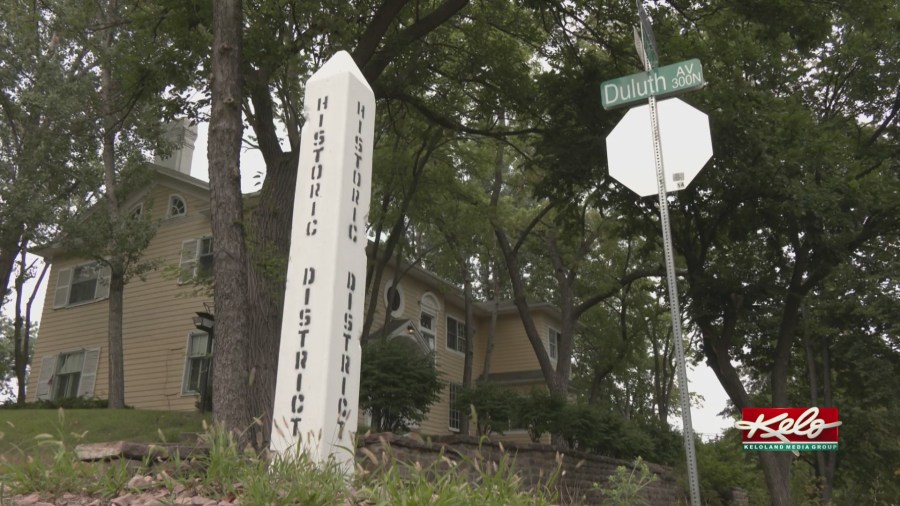
In Sioux Falls, the Cathedral Historic District Neighborhood Association is mobilizing opposition. The group warned residents in a letter that the measure “makes big cuts to Section 106 of the National Historic Preservation Act.” Member Bob Trzynka told AOL the change “strips away a certain level of protection for historic neighborhoods and historic structures like the Cathedral neighborhood and historic structures like the Washington Pavilion.”
Johnson acknowledged the bill is not perfect but defended the principle of state and local stewardship. “There are absolutely historic neighborhoods and homes that are worth protecting, but there’s a role for local governments to help with that protection,” he said Monday.
“The idea that the only place we can truly find protection that matters is in Washington, I think is, it shows how broken our concept of progress is.”
Trzynka invoked the post‑war era as a cautionary tale. “Nobody wants to have Big Brother in their lives, but at the same point, we’ve seen what happens when you strip away those protections,” he said. “We tried this experiment after World War II, and what ended up happening is these historic neighborhoods like ours, like McKennan Park, like All Saints, a lot of those neighborhoods got carved up. Buildings got torn down.”
Sen. Mike Rounds, R‑S.D., broke with Thune and voted against the motion to proceed. His office stated the bill would transfer contested transmission‑line cases to the Federal Energy Regulatory Commission if not resolved within 12 months, “giving a weighted advantage to the developer.” Rounds argued South Dakota landowners “deserve to negotiate with stakeholders at the state and local level before federal intervention is required.”
Sen. Mike Rounds, R‑S.D., broke with his state’s senior senator and voted against the motion to proceed on H.R.2347, his office told KELOLAND News on Monday.

He added that he hopes to continue working with colleagues to address the concern.
Rep. Dusty Johnson said Monday that both Democrats and Republicans agree there is too much government regulation for large projects, reinforcing his prediction of widespread House support. President Donald Trump has also endorsed the measure.
Rep. Dusty Johnson (R‑S.D., U.S. House since 2019) predicts the Bipartisan American Affordability and Jobs Act will pass the House with broad bipartisan backing, arguing that both parties agree large‑project regulation is excessive and that local governments — not only Washington — should steward historic neighborhoods.
As South Dakota Public Utilities Commissioner (2005‑2011), he led state‑level regulatory reviews of energy infrastructure, including a 2010 delegation that met FCC commissioners to defend rural providers against federal broadband mandates, reinforcing his record of favoring state and local permitting authority over federal control.
The Cathedral Historic District Neighborhood Association is urging residents to contact Johnson to protect the National Historic Preservation Act. Member Bob Trzynka warned that stripping away protections led to historic neighborhoods such as McKennan Park and All Saints being carved up after World War II.
Worth a look
- Baltimore Clinic Enrolls Patients in Spinal Cord Injury Drug Trial for NVG-291
- Lawmakers Blast Trump Lobbying for Nvidia CEO Huang, Plan Hearings
- P&S Robotics Falls Short of 2026 IPO Profit Forecast, Posts Operating Loss (world-today-news.com)
- Ohio Delegation Urges Trump to Site Space Force Academy at Wright-Patterson (archyde.com)

Baltimore Clinic Enrolls Patients in Spinal Cord Injury Drug Trial for NVG-291
Dr. Daniel Becker, founder and director of the International Neurorehabilitation Institute in Lutherville, Md., said recovery typically plateaus...

Lawmakers Blast Trump Lobbying for Nvidia CEO Huang, Plan Hearings
The board said it had received assurances from “senior levels of the United States government” that Huang posed...

2023 Kia Sportage SX-Prestige FWD Detailed in Listing
A 2023 Kia Sportage SX-Prestige with front-wheel drive and an eight-speed automatic transmission is described in a vehicle...

Boise ER Doctor Sued Again After Teen’s Snowboarding Death; Prior $13.5M Malpractice Verdict Cited
A new lawsuit targets a Boise ER doctor after a teen's snowboarding death, citing a prior $13.5 million...