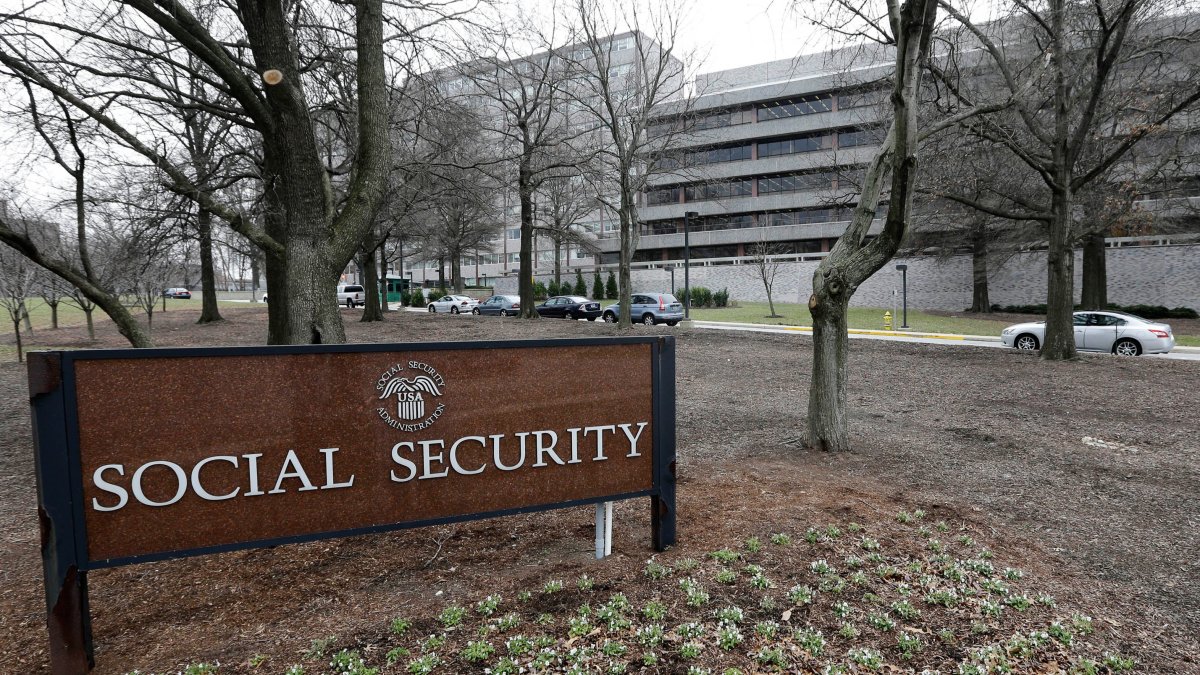
The Old-Age and Survivors Insurance Trust Fund will run dry in the fourth quarter of 2032 — a full quarter earlier than projected last year — leaving retirees facing an automatic 22% benefit cut unless Congress acts, the 2026 Social Security Trustees Report shows.
The depletion date moved up because the One Big Beautiful Bill Act, signed in July 2025, added a temporary senior tax deduction that drains revenue from the trust fund.
At the same time, the share of U.S. earnings subject to Social Security payroll taxes has fallen from 41% of GDP in 1983 to roughly 34% in 2025, a shift AARP’s Public Policy Institute says has cost the program $10.8 trillion in lost revenue and interest between 1984 and 2034.
“Social Security’s finances have weakened in large part because the economy has changed while its revenue system has not,” said Richard Johnson, vice president of financial security at the AARP Public Policy Institute.
The fund’s deficit hit a record $221 billion in fiscal 2026, with costs climbing to $1.5 trillion while income rose to $1.3 trillion, according to the Kobeissi Letter analysis. Reserves have fallen to $2.18 trillion, their lowest level since 2007.
We must fix Social Security now. Anyone who opposes fixing it now should read this column. https://t.co/NAy3oqj4ne
The 2032 Cliff: What the Numbers Show
When the OASI trust fund is exhausted, incoming payroll taxes will cover only 78% of scheduled benefits. For a retiree expecting a $2,000 monthly check, that means $1,560 — a $5,280 annual shortfall. The Committee for a Responsible Federal Budget projects average monthly cuts of roughly $500 nationally, with the highest losses in Connecticut ($556), New Jersey ($554) and New Hampshire ($553).
The 2026 Trustees Report moved the depletion date from the first quarter of 2033 to the fourth quarter of 2032. The Motley Fool noted that the “Big, Beautiful Bill” accelerated insolvency by reducing the pool of earned income subject to payroll taxes through 2028 via temporary deductions for seniors, tips and overtime.

Low Fertility and Rising Aging Populations Impact Social Security
U.S. fertility hit a record low of 1.6 births per woman in 2024, continuing a trend that has been going on since the early 2000s, according to an analysis of data by Johns Hopkins University. Meanwhile, the share of the population over 65 keeps rising, increasing the ratio of beneficiaries to workers.
The payroll tax applies only to the first $184,500 of wages in 2026, rising to $192,300 in 2027. Earnings above that cap are not subject to Social Security tax, unlike Medicare. AARP estimates that if the taxable share of earnings had remained at its 1983 level of 41% of GDP, full benefits could have been paid until 2059.
“These trends have received relatively little attention in the ongoing Social Security debate,” Johnson wrote in the AARP analysis released Nov. 11.
BREAKING: The US Social Security Trust Fund’s deficit jumped +$39 billion YoY in Fiscal Year 2026, to a record -$221 billion. This fund finances retirement benefits and payments to eligible survivors of deceased workers. This comes as the fund’s costs, primarily benefit… pic.twitter.com/YlThEV1GBc
The growth of pass-through business structures — where owners report profits as personal income rather than wages — has further shrunk the payroll tax base, Johnson said. That shift may account for as much as a third of the recent revenue shortfall.
In 2026, workers and employers each pay 6.2% on covered wages; the self-employed pay 12.4%. The share of earnings covered by Social Security payroll taxes fell to around 83% in 2000 and has mostly stabilized at that level, according to the institute.

Political Options: Lift the Cap, Tax Investment Income, or Cut Benefits
Sen. Bernie Sanders, who becomes the Senate’s Social Security subcommittee chair in January, proposes scrapping the cap on wages above $250,000 and applying payroll taxes to business and investment income. He says that would generate enough revenue to raise benefits by $2,400 a year.
William McBride, chief economist at the Tax Foundation, warned that lifting the cap would add more than 12 percentage points to the marginal tax rate on high earners, an “unprecedented increase” that could raise unemployment.
A University of Maryland survey in February found 79% of respondents support raising taxes on wages over $400,000. Yet lawmakers may delay action until the 2032 deadline forces their hand.
What Retirees and Near-Retirees Can Do Now
If you’re expecting a $2,500 monthly Social Security benefit that may be reduced by 22% to $1,950, you could face an annual income shortfall of $6,600. The shortfall must be covered by savings, part-time work, or spending cuts.
Retirees already collecting benefits cannot wait out the cut; the 78% replacement rate applies to all benefits paid after 2032. Those between full retirement age and 70 can suspend payments to earn delayed retirement credits, yielding a larger base against which the 22% cut is applied.

“Realistically, a tax-only solution to closing long-term Social Security…shortfalls would require significant middle-class tax increases,” Alicia Munnell, senior adviser at the Center for Retirement Research at Boston College, noted.
Congress has six years. The senators elected in the Nov. 3 midterms will be in office when the trust fund runs out, and their decisions may be critical in making tax changes that can affect Social Security.
Disclaimer: The information provided in this article is for educational and market analysis purposes only and does not constitute financial, investment, or legal advice. Always consult with a certified financial professional before making investment decisions.
Worth a look
- Celtics Start White, Walsh, George, Tatum, Queta vs Nuggets; Mazzulla Stresses Margins
- California Water Service Group to Rename to Watermark Utilities Nov. 30, 2026
- Wheatgrass Juice Powder Shows Anticancer Potential Against Prostate and Lung Cancer Cells in Lab Study (world-today-news.com)
- 3.6% for Social Security, 2.6% for FERS, and a Bill Still Pending for VA (daybreakwire.com)

Celtics Start White, Walsh, George, Tatum, Queta vs Nuggets; Mazzulla Stresses Margins
The Boston Celtics will start Derrick White, Jordan Walsh, Paul George, Jayson Tatum and Neemias Queta against the...

California Water Service Group to Rename to Watermark Utilities Nov. 30, 2026
California Water Service Group announced on Nov. 18 that it will change its holding company name to Watermark...

USDA Proposed Rule Would Cut SNAP for 6.3 Million by Ending Broad-Based Categorical Eligibility
Six point three million people would lose food assistance in 2029 under a USDA proposed rule published November...

NCAA Refuses to Clear Arizona’s RJ Godfrey Despite Court Injunction
Arizona forward RJ Godfrey will not play against No. 3 UConn on Wednesday night after the NCAA refused...