Somalia ordered the United Arab Emirates ambassador to leave within 72 hours on Thursday, severing diplomatic ties in a dispute that has escalated from port contracts into accusations of an “open invasion.”
The expulsion, announced by Information Minister Abdifatah Kasim Mohamud, came two days after President Hassan Sheikh Mohamud used a televised address to accuse Abu Dhabi of bankrolling federal member states to undermine his government. The UAE foreign ministry responded hours later, denouncing what it called an “escalatory and hostile approach” that undermines bilateral cooperation, according to a statement posted on X.
UAE Denounces Somali Government’s Hostile Approach and Reaffirms Pride in Its Relations with the Somali People https://t.co/oL1YWbXXO4 pic.twitter.com/g9BlUr0AXL
From port deals to persona non grata
The rupture traces back to January, when Somalia cancelled every agreement with the UAE — security cooperation, defence pacts, and commercial contracts covering the ports of Berbera, Bosaso and Kismayo. Mogadishu said it held evidence of Emirati activities threatening national sovereignty, a charge Abu Dhabi rejected.
Tensions spiked after Israel recognised Somaliland, the breakaway region that declared independence in 1991. The UAE has been Somaliland’s largest foreign partner for years, developing Berbera into a deep-water port and logistics hub while signing security agreements Mogadishu considers illegal.
“Mogadishu considers UAE’s actions to be a violation, as it believes as the internationally recognised sovereign government, all international agreements should go through it,” Omar Mahmood, senior analyst at the International Crisis Group, told Al Jazeera.
Why does Somalia consider its national sovereignty and security at stake in its relations with the UAE? The National Security Advisor to the President, H. E. Amb. @HagiAwesAhmed, explains the government’s position, outlining the concerns behind the Council of Ministers’ decision… pic.twitter.com/S436cIHikH
Competing narratives on the ground
President Mohamud on Tuesday alleged the UAE provided “political and financial support to certain regional states, enabling them to oppose the federal government.” He named Puntland and Jubaland — both of which dismissed Mogadishu’s January cancellation of port deals — as recipients of Emirati backing that fuels “political discord.”
Anwar Gargash, diplomatic adviser to the UAE President, pushed back on X, writing that Mohamud’s positions “showed how much his positions and policies had changed” and questioning whether the Somali leader was “putting his personal interests ahead of those of his country.” Gargash added that the UAE had supported Somalia “during some of its most difficult periods” and warned that internal disputes were damaging relations with partners.
President @HassanSMohamud reaffirmed Somalia’s unwavering commitment to defending its sovereignty, territorial integrity and national unity, while addressing the actions undermining the country’s statehood. The President called on all Somalis to stand united, reject foreign… pic.twitter.com/t1kNgSP08X
The UAE foreign ministry said it had already closed its embassy in Mogadishu and withdrawn diplomatic staff in January over what it described as hostile Somali actions. It reaffirmed commitment to ties with the Somali people, distinguishing the population from the federal government.
Security ties that bind — and now fray
The diplomatic rupture threatens a security relationship that has persisted despite the port dispute. The UAE trained hundreds of Somali troops from 2014 to 2018 and still covers salaries and logistics for roughly 3,400 military police and special forces personnel in and around Mogadishu, according to senior Somali sources.
Somalia’s federal government has limited authority beyond the capital, relying on African Union peacekeepers and U.S. air strikes against al-Shabab. Emirati funding for elite units gave Abu Dhabi direct operational influence — influence Mogadishu now brands as interference.
Regional echoes
President Mohamud linked the UAE’s role in Somalia to its alleged involvement in Libya, Yemen and Sudan, where Emirati support for the Rapid Support Forces has drawn international condemnation. The UAE has repeatedly denied arming the RSF.
PRESS STATEMENT Further to the President's national address, the Federal Republic of Somalia rejects continued UAE interference in its internal affairs. Somalia will take all necessary lawful measures to safeguard its sovereignty, territorial integrity and national unity. pic.twitter.com/2RgXnW4oke
For Washington, the fallout complicates counter-terrorism operations in a corridor linking the Indian Ocean to the Suez Canal. The U.S. maintains a military presence in Somalia and has relied on Emirati coordination for regional logistics — coordination that may now fracture along the same fault lines dividing Mogadishu and Abu Dhabi.
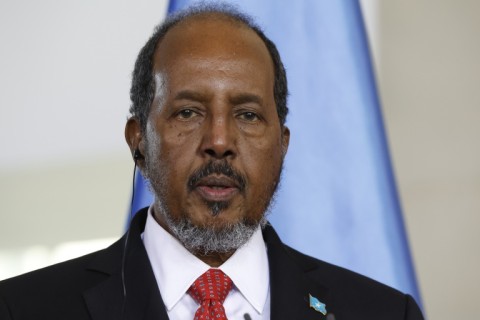
Hassan Sheikh Mohamud, born in 1955 in Hiiran region, co-founded SIMAD University and served as its dean before entering politics. He first won the presidency in 2012, becoming the first Somali leader elected under a new federal constitution after decades of transitional rule.
Time magazine named him among the 100 most influential people in 2013. After losing a re-election bid in 2017, he founded the Union for Peace and Development Party and returned to power in 2022, making him the first president to serve non-consecutive terms since the state’s collapse in 1991.
“Measures will be taken against anyone who cooperates with UAE in the invasion against Somalia,” Minister Mohamud said Thursday, urging “all Somalis to defend their country and unite against the open invasion.” The UAE ambassador’s 72-hour deadline expires Sunday.
In their Thursday weekly meeting chaired by PM @HamzaAbdiBarre, the Council of Ministers instructed the Ministry of Foreign Affairs to recall #Somalia’s Ambassador to the #UAE for consultations and ordered the UAE’s Ambassador to return to his country within 72 hours. pic.twitter.com/2aU8CLmh5V
More on Somalia
Related reading
- AARP Report: 63 Million U.S. Caregivers Face Rising Costs
- Funding Gaps and Taliban Bans Shut 300 Afghan Clinics, Cut off 1m Women
- What the FTC's Personalized-Pricing Orders Ask Delta, Uber and Walmart (daybreakwire.com)
- Lukashenko Inspects Smorgoni Oil Plant, Orders Production Balance Review (archyde.com)

AARP Report: 63 Million U.S. Caregivers Face Rising Costs
A 2025 report from AARP and the National Alliance for Caregiving puts the number of family caregivers in...

Funding Gaps and Taliban Bans Shut 300 Afghan Clinics, Cut off 1m Women
Nearly 300 humanitarian health facilities have shut down or suspended operations across Afghanistan, cutting off more than one...

Two Iranian Men Convicted of Spying on Journalists for IRGC Under National Security Act
Two Iranian men were convicted at Woolwich Crown Court on Thursday of spying on dissident journalists and a...

Percy Jackson Returns to Disney+ With ‘the Titan’s Curse’ Adaptation
Percy Jackson and the Olympians returns Friday for its third season, adapting The Titan's Curse for the first...